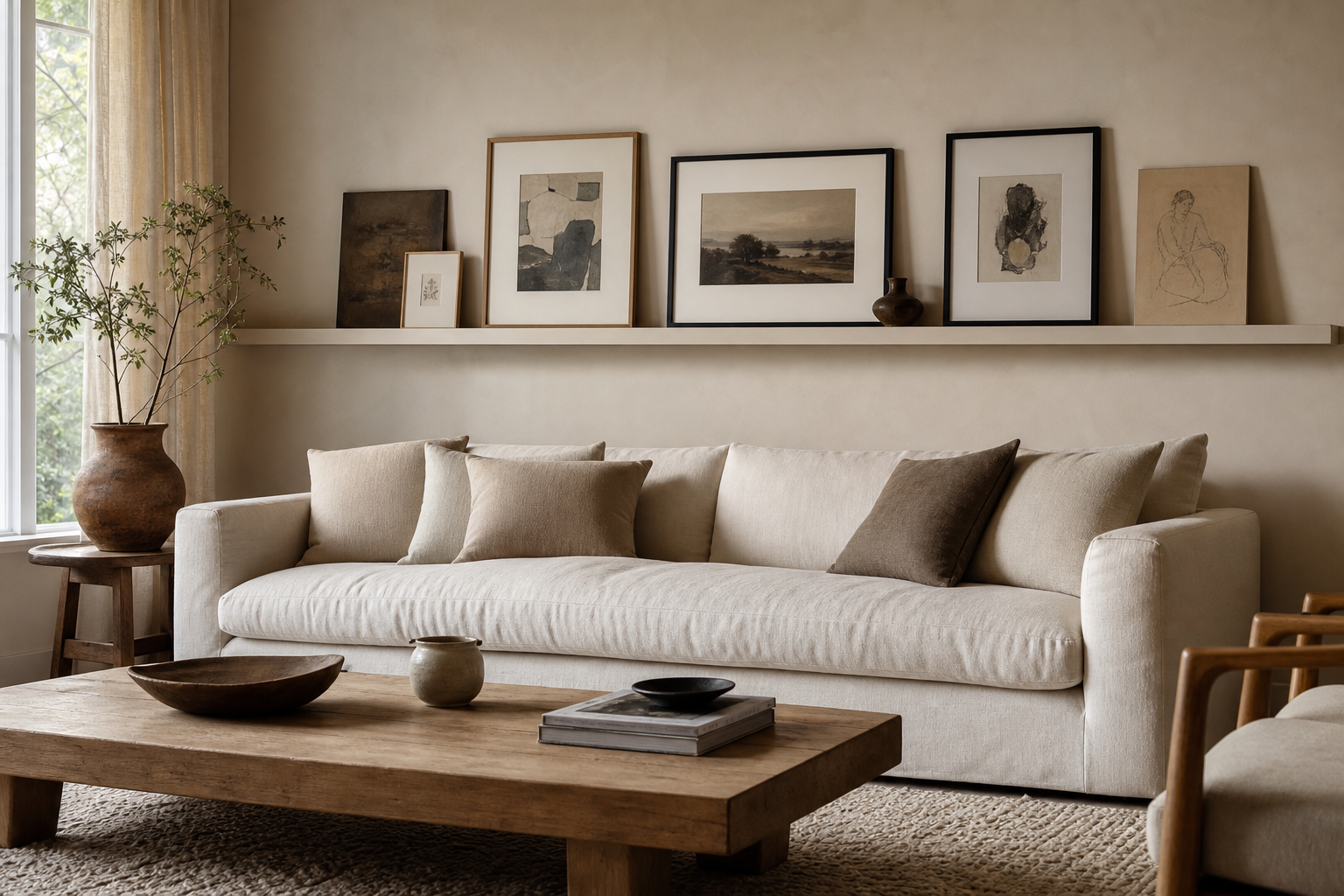

A single long picture ledge gives the sofa wall order without forcing every frame into a permanent grid. The shelf aligns broadly with the pale upholstered sofa below and carries black, timber-toned, and pale frames in varied sizes. Warm neutral walls, a low rectangular table, side chair, pottery, greenery, and tall filtered windows support the same quiet palette. The ledge works because one decisive horizontal line contains several different images.
The Long Ledge Gives the Sofa Wall One Clear Datum
The ledge spans nearly the full width of the sofa, which makes it feel architectural rather than like a small accessory. Its long horizontal line relates directly to the sofa below. Because the art sits on one continuous shelf, the wall has order even though the frames vary in size.
The ledge extends across most of the sofa width but stops before the side greenery, keeping art connected to seating rather than treating the entire wall as display.
Some frames overlap slightly, while others stand with more breathing room. That layering gives the wall depth without needing nails for every piece. The mix of black, wood and pale frames adds contrast, but the restrained artwork colors keep the arrangement calm.
The traditional living room picture-light article uses fixed illumination and formal spacing. This arrangement gains flexibility from overlapping frames on one shallow shelf.
Frame Sizes Step Down Across the Shelf
The cream sofa is visually quiet, which allows the picture ledge to become the main wall feature. Its low back leaves enough space for the art to be seen clearly. The fabric texture also softens the wall composition. A busier sofa fabric would compete with the frames above it.
The largest landscape sits near the center while narrower portraits and pale mounts occupy the sides. Their top edges vary, preventing the long composition from becoming a rigid stripe.
The wood coffee table repeats the warm tones in the frames and side table. That connection keeps the ledge from feeling isolated on the wall. Low bowls and books on the table add a second layer of horizontal styling, but they stay below the sightline of the art.
A Low Table Repeats the Strong Horizontal
Side daylight from the window gives the plaster wall gentle shadow and makes the ledge line easier to read. It also keeps the neutral palette from feeling flat. The curtain and large clay vessel near the window add softness and height without competing with the framed pieces.
The broad table top is lower and heavier than the ledge, balancing the fine line overhead. Its dark warm tone also connects with selected frames without matching all of them.
Warm Neutral Walls Hold Contrasting Frame Edges
Start with the largest frame near the center, then layer smaller pieces to one side. Keep at least a few gaps so the ledge does not become a solid block. Use one or two frame colors repeatedly. In this room, black and timber tone accents give the arrangement structure.
Avoid filling the ledge edge to edge. A picture ledge needs pauses just as much as it needs art. This wall works because the frames vary in height but stay connected by a narrow palette and one clean shelf line.
Editing a Picture Ledge as the Collection Changes
A picture ledge is strongest when it behaves like a designed horizon for the room. Here, that single line organizes art, sofa, coffee table and daylight into one calm warm neutral composition.
Start with the largest frame, preserve visible wall between clusters, and keep the outer pieces inside the seating zone. Constantly adding small frames would eventually erase the useful hierarchy.
The ledge's thin shadow separates the art collection from the wall and confirms a shallow shelf rather than individually hung frames.
Sofa cushions repeat pale and warm gray notes from the artwork but remain largely unpatterned, keeping attention above seated height.
Frame colors alternate rather than forming one repeated sequence, yet the shared ledge and muted images hold them together.
A tall branch arrangement sits beyond the sofa end and counterbalances the denser frame group without entering the shelf itself.
The ledge sits high enough that the tallest frame remains above the sofa cushions, preserving a narrow band of warm wall between seating and display. That gap keeps the art accessible to the eye without making seated movement feel constrained.