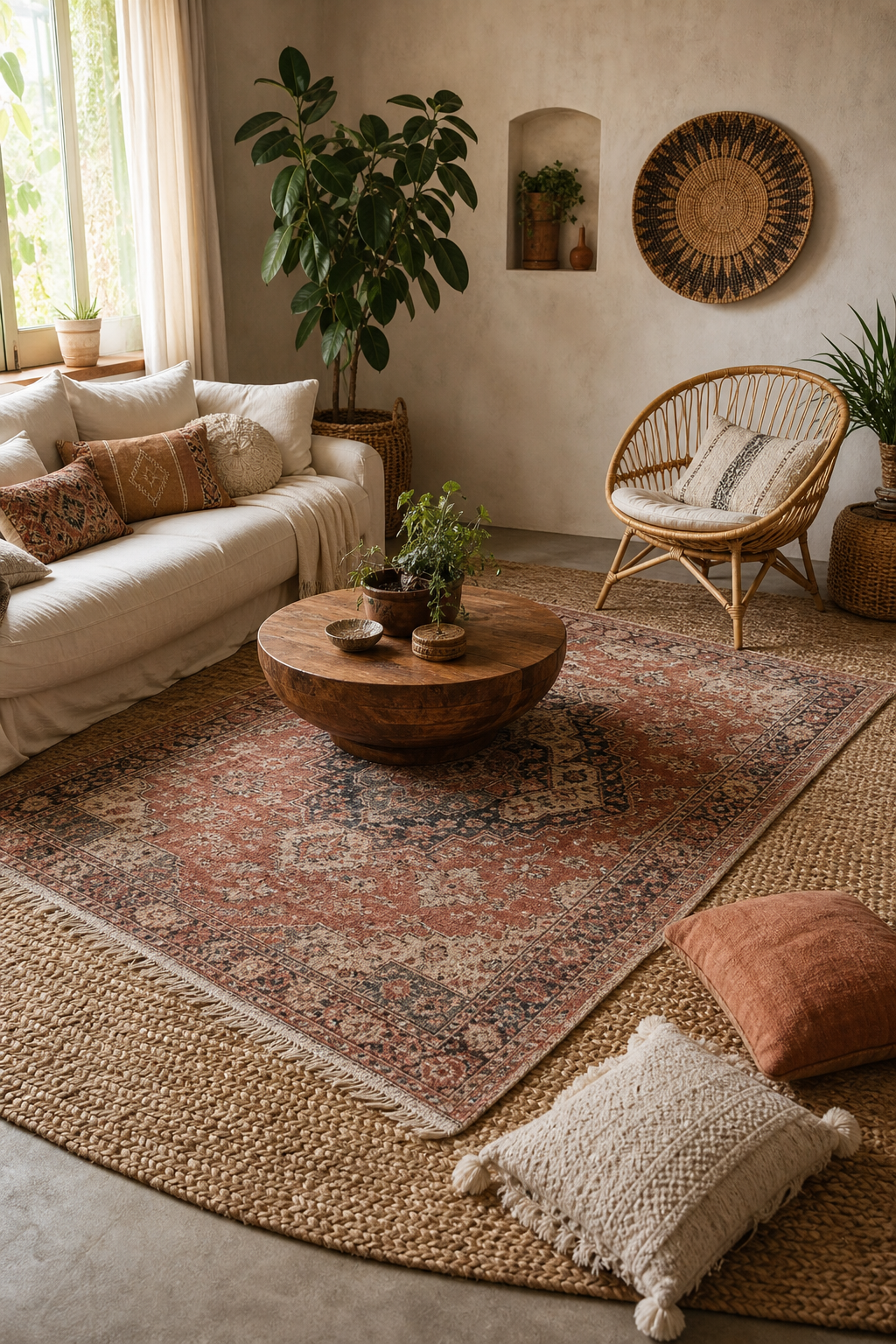

Two rugs give this living room a clear center without relying on a matching furniture set. A broad plain woven base extends beneath the seating, while a smaller faded patterned rug sits diagonally above it and concentrates rust, cream, and dark accents around the low round table. A pale sofa, open woven chair, floor cushions, plants, pottery, and wall baskets repeat texture at different heights. Layering works because the two floor fields have distinct roles.
The Woven Base Defines the Full Seating Footprint
The two rugs occupy the largest visible surface in the living room, so they naturally become the organizing feature. The woven base layer defines the full seating area, while the patterned rug creates the more intimate center. This is the reason the room feels collected rather than random. The furniture belongs to the rug arrangement.
The lower rug reaches beyond sofa and chair fronts, creating a complete neutral boundary for the conversation area. Its broad quiet weave prevents the smaller pattern from looking undersized on the exposed floor.
The plain woven base rug extends beyond the sofa, chair and coffee table, which makes the seating area feel complete. Its plain texture gives the room a broad, neutral foundation. Without that larger base, the smaller patterned rug would feel too small and decorative. The woven base layer gives it room to breathe.
The top rug brings denser motif and darker color to the table zone. The curved-hearth living-room analysis uses architecture to set the center; this boho room instead builds focus entirely through overlapping textiles.
Visible Overlap Makes the Layering Intentional
The smaller patterned rug sits under the coffee table and brings rust, black and faded cream into the center of the room. That color concentration pulls the eye down to the conversation area. Because the rug is placed over the jute, its pattern feels grounded rather than loud.
A generous border of the base remains visible at every side, making the layered intention unmistakable. The top rug is not aligned perfectly with the lower edge, which adds informality without losing the shared center.
The Round Table Anchors the Top Rug
The round timber-toned coffee table sits directly on the patterned rug, locking the layered arrangement in place visually. Its circular shape softens the rectangular rug edges. The warm wood tone also connects to the rattan chair and woven accessories, so the table feels part of the room's texture story.
Pale Seating Leaves Pattern at Floor Level
The cream sofa stays quiet so the layered rugs can carry the pattern. Its soft fabric gives the room comfort without adding another strong print. The open woven lounge chair adds a different woven texture at the edge of the top rug, reinforcing the boho character without crowding the floor.
The sofa stays close to cream, and the woven chair remains open enough for floor pattern to continue around it. Neither adds a strong print, allowing rugs to carry most of the room's color and rhythm.
Floor Cushions Extend the Casual Use of the Rugs
The cushions on the rug extend the casual seating idea. They make the floor feel usable, which is important in a room where the layered rugs are the main feature. Their colors relate to the patterned rug, so they feel connected rather than scattered.
Plants and Wall Baskets Lift Texture Upward
Start with a large jute or other plain woven rug that is big enough to sit under the front area of the seating pieces. That base should be calm and textural. Then add a smaller vintage or patterned rug under the coffee table. Let the overlap show on all sides so the layering looks intentional.
Combining Two Rugs Without Visual Clutter
I would avoid a third patterned rug in this living room. The jute and vintage layers already provide enough contrast. I would also avoid a transparent coffee table here. The solid wood table gives the rug arrangement the weight it needs.
Start with the larger seating footprint, then add a top rug whose pattern is concentrated rather than equally busy across the whole room. A third patterned layer or high-contrast upholstery would compete with the carefully limited overlap.
The top rug stops before the sofa feet at one side and extends toward the floor cushions at the other, reinforcing the casual asymmetry. Pottery and baskets repeat its warm notes above floor level without copying the motif.