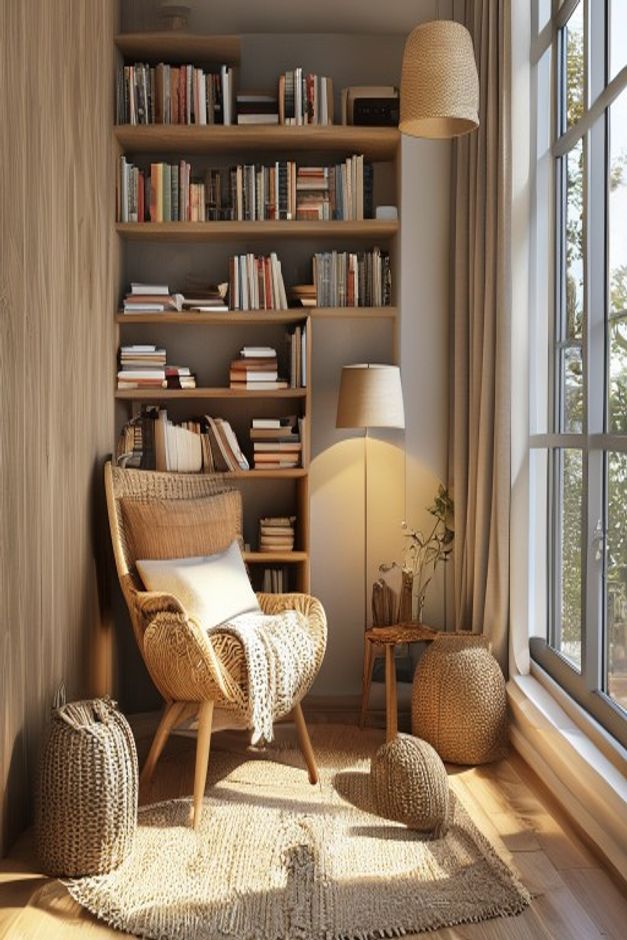

This reading nook shows how a small, underutilized corner can be transformed into a sanctuary of stillness through the deliberate layering of natural materials. By prioritizing tactile comfort and a monochromatic palette of beige, tan, and warm wood, the space achieves a sense of cohesion that feels both intentional and effortlessly lived-in. It offers a useful reference for homeowners who want to bridge the gap between structured storage and the relaxed, inviting nature of bohemian design, as it proves that a limited color palette does not equate to a lack of visual interest.
The architectural success of this arrangement lies in the balance between the rigid verticality of the built-in wooden bookshelves and the fluid, rounded forms of the seating. By anchoring the space with a rattan armchair that features wooden legs, the design acknowledges the need for both durability and aesthetic grace. This corner invites a deeper exploration of how light, shadow, and materiality intersect to define a room’s character, offering a blueprint for those seeking to cultivate a personal library that feels like a natural extension of the home rather than an afterthought.
Why Rattan Remains the Ideal Choice for Bohemian Seating
Rattan is frequently selected for bohemian interiors because of its inherent ability to bridge the gap between indoor comfort and outdoor vitality. Its woven structure provides a unique visual rhythm that feels light and airy, preventing the nook from becoming overwhelmed by the substantial presence of the adjacent built-in shelving. By choosing a rattan armchair, you introduce a material that ages gracefully, developing a deeper patina over time that complements the surrounding warm wood tones found throughout the library wall.
Beyond its aesthetic appeal, the structural integrity of rattan allows for ergonomic support without the bulk of traditional upholstered furniture. The open-weave patterns allow natural light to pass through the frame, maintaining the room’s sense of openness while providing a sturdy place to settle in with a book. When paired with soft textile upholstery, the material shifts from being purely functional to becoming a centerpiece of comfort, proving that you do not need heavy, overstuffed furniture to create a sense of deep relaxation.
Maximizing Verticality with Built-In Wooden Shelving
The integration of floor-to-ceiling wooden bookshelves transforms a simple corner into a dedicated library space, emphasizing the height of the room and providing a grounding element for the decor. These shelves act as the architectural spine of the nook, organizing the visual chaos of books into a structured, rhythmic pattern that draws the eye upward. For those interested in this approach, designing a Japandi reading nook with floor-to-ceiling built-in shelving offers further insight into how vertical storage can define a room’s purpose while maintaining a minimalist aesthetic.
Using wood that matches the tone of the furniture creates a sense of continuity that makes the nook feel like a seamless part of the larger home architecture. By keeping the shelves open, the design encourages a curated display where books, small potted plant sprigs, and decorative objects can breathe. This strategy avoids the claustrophobic feeling often associated with closed cabinetry, instead opting for an airy, accessible atmosphere that invites interaction and frequent use of the collection.
A Throw Softens the Rattan Chair
In a space dominated by wood and rattan, soft textiles are essential for softening the acoustic environment and enhancing the physical comfort of the seating area. A well-placed throw blanket draped over the back of the chair introduces a layer of warmth, both literally and visually, breaking up the rigid lines of the woven rattan. This interplay between the hard, structural elements and the soft, pliable fabrics is what gives the bohemian style its characteristic depth and inviting quality.
Decorative pillows further refine the experience, allowing for subtle variations in texture that elevate the monochromatic beige and tan color palette. By incorporating different weaves and fabric weights, you create a tactile landscape that encourages one to linger longer. These small additions are not merely decorative; they serve a functional purpose by providing lumbar support and adjusting the depth of the chair to suit individual preferences, ensuring that the nook remains as comfortable as it is beautiful.
Curating Lighting for Atmosphere and Function
Effective lighting in a reading nook requires a dual-layered approach that addresses both the need for focused task illumination and the desire for ambient mood. The combination of a floor lamp with a fabric shade and a woven pendant light provides a sophisticated solution that balances brightness with softness. The fabric shade diffuses the light, preventing harsh glare while the woven pendant adds a layer of texture that echoes the rattan of the chair, creating a cohesive design language.
When selecting fixtures, consider how their materials interact with the existing wood and rattan elements. A woven pendant, for instance, casts intricate shadows that add a dynamic quality to the walls, changing the room’s character as the day progresses from bright morning light to the cozy glow of evening. This thoughtful selection of lighting ensures that the space remains functional for reading while simultaneously contributing to the overall bohemian aesthetic through its choice of natural materials and warm, diffused illumination.
Grounding the Space with Natural Fiber Rugs
A jute or sisal rug serves as the perfect foundation for a bohemian reading nook, providing a neutral, textured base that defines the seating area without competing with other design elements. These natural fibers are incredibly durable and offer a subtle, earthy aesthetic that reinforces the connection to nature inherent in the bohemian style. Their slightly coarse texture contrasts beautifully with the smoothness of the wood shelving and the softness of the chair’s upholstery, adding another layer of sensory interest to the floor plane.
Beyond aesthetics, the rug acts as a visual anchor, pulling the rattan chair, the small wooden side table, and the woven floor poufs together into a unified arrangement. This grouping creates a sense of enclosure, signaling that this corner is a distinct zone separate from the rest of the room. By choosing a rug in a light, neutral tone, you maintain the bright, airy feel of the space while ensuring that the floor remains a comfortable and inviting surface for bare feet.
A Small Side Table Keeps Reading Essentials Close
The inclusion of a small wooden side table and woven floor poufs demonstrates the importance of modularity in a compact reading nook. A side table provides a necessary surface for a cup of tea or a stack of books, keeping essentials within reach without requiring a massive footprint. By opting for a piece that matches the wood tones of the bookshelves, you maintain the visual harmony of the space, ensuring that every object feels like it belongs to a larger, unified collection.
Woven floor poufs offer additional seating or a place to rest one’s feet, further enhancing the casual, flexible nature of the bohemian style. These pieces are easily moved, allowing the nook to adapt to different activities, whether you are hosting a guest or simply curling up for an afternoon of reading. This versatility is a hallmark of thoughtful design, proving that even in a small area, you can achieve a high level of utility through the strategic selection of low-profile, multi-functional furniture.
Empty Shelf Space Prevents the Nook From Feeling Cluttered
While bohemian design is often associated with a maximalist aesthetic, this nook highlights the power of negative space in creating a serene environment. By leaving portions of the bookshelves empty and keeping the floor area relatively clear, the design allows the room to breathe. This restraint is crucial in preventing the space from feeling cluttered, especially when working with varied textures like rattan, wood, and woven fabrics.
Allowing for empty space also draws attention to the items that are present, such as a single potted plant sprig or a specific collection of books. This curated approach ensures that each object has room to be appreciated, contributing to a sense of calm that is essential for a reading nook. For those who appreciate the balance between structure and ornament, exploring the art of symmetry in reading nook design can provide further inspiration on how to arrange objects for maximum impact without sacrificing the relaxed bohemian vibe.
Cultivating a Personal Sanctuary through Organic Elements
Homeowners can learn from this space that a truly successful nook is not about filling every corner with decor, but about choosing a few high-quality, natural materials that harmonize with the room’s architecture. By focusing on comfort, light, and the thoughtful arrangement of personal items, you can create a sanctuary that is uniquely yours. For those looking to add a touch of life to their reading corner, incorporating greenery into a quiet luxury nook is a final step in bringing that essential natural energy into your daily reading ritual.
How do I choose the right rattan chair for a small space?
Prioritize chairs with open-weave designs and slim profiles to ensure the room maintains a sense of visual lightness and doesn’t feel cramped.
What is the best way to style bookshelves in a reading nook?
Mix your book collection with decorative objects and small plants to create a balanced, curated display that feels personal rather than purely functional.
How can I keep a monochromatic bohemian room from feeling boring?
Use a variety of textures, such as jute, rattan, linen, and wood, to add depth and visual interest without relying on a complex or distracting color palette.