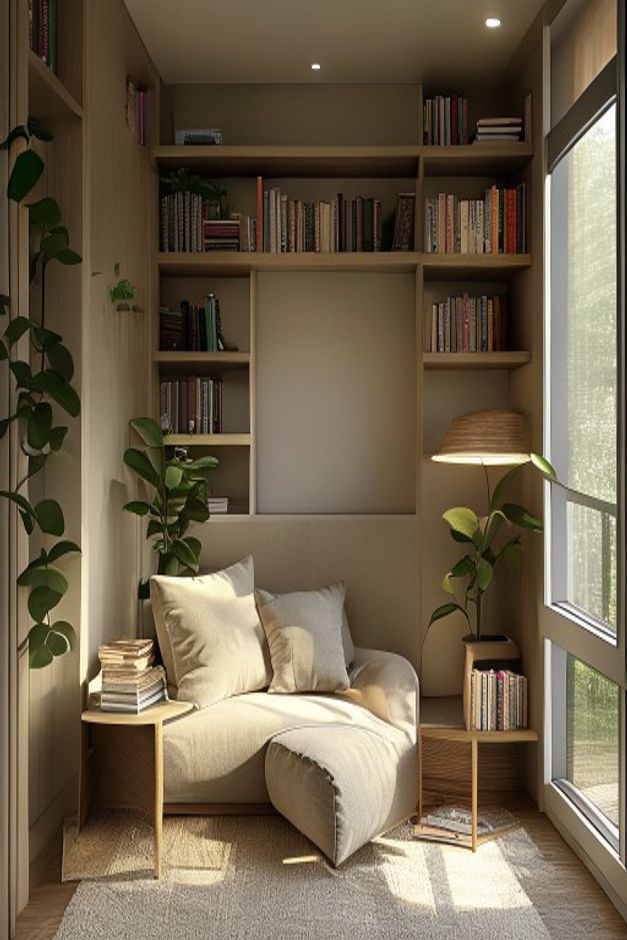

The composition demonstrates how a confined alcove can be transformed into a sanctuary of intellectual repose. By prioritizing symmetrical built-in shelving and a singular, high-comfort lounge chair, the design achieves a state of equilibrium that is rarely found in more cluttered residential environments. The result is effective because it strips away the unnecessary, leaving only the essential elements required for deep focus and relaxation.
The intentionality behind the color palette, which leans heavily into beige, cream, and warm wood, creates a cohesive envelope that feels both expansive and secure. This approach to interior architecture suggests that luxury is not defined by opulence, but by the thoughtful curation of materials and the deliberate management of negative space. As we examine the specific components of this alcove, we uncover the principles that allow such a small footprint to hold significant aesthetic weight.
The Role of Symmetry in Small Alcove Design
Symmetry acts as the primary architectural anchor in this space, with floor-to-ceiling wooden shelving flanking the central seating area to create a sense of order. By mirroring the storage units on either side of the chair, the designer establishes a visual rhythm that guides the eye toward the center of the nook. This structural balance is essential in narrow spaces, as it prevents the room from feeling lopsided or disorganized, even when filled with a large collection of books.
Beyond the aesthetic appeal, this symmetrical layout serves a functional purpose by keeping all reading materials within immediate reach of the occupant. The integration of the library shelving into the wall structure ensures that the nook remains uncluttered, allowing the focus to remain entirely on the act of reading. When you apply this level of precision to your own home, you create a dedicated zone for contemplation that feels intentionally designed rather than accidentally furnished.
Defining the Quiet Luxury Color Palette
The color story here is one of restraint, utilizing a base of cream and beige to provide a soft, neutral backdrop that reflects light without overwhelming the senses. Muted green accents, introduced through indoor plants and trailing vines, provide a necessary organic contrast to the structured wood surfaces. This combination prevents the neutral room from feeling sterile, instead imbuing it with a sense of life and natural vitality that is crucial for a restorative environment.
Working with such a monochromatic palette requires a keen understanding of texture to prevent the space from appearing flat. By layering linen-textured upholstery against smooth, light oak wood veneer, the design introduces tactile depth that the eye can perceive even when the lighting is dimmed. For those interested in expanding this aesthetic, exploring Quiet Luxury Bedroom Color Ideas can provide further insight into how these neutral tones translate across different residential zones.
Selecting the Ideal Upholstered Lounge Chair
The central lounge chair is the heart of this nook, and its selection is clearly driven by the need for ergonomic support combined with a refined, understated silhouette. Featuring an integrated ottoman, the piece allows for a fully reclined posture, which is a non-negotiable requirement for long-form reading. The choice of a soft, linen-textured fabric reinforces the quiet luxury ethos, prioritizing comfort and tactile pleasure over flashy, high-sheen materials.
When choosing a chair for your own nook, consider how the scale of the furniture interacts with the surrounding cabinetry to ensure there is enough clearance for movement. A piece that feels too large will suffocate the alcove, while one that is too small will fail to anchor the space effectively. The objective is to find a balance where the chair feels like a permanent fixture of the architecture, seamlessly integrated into the built-in library environment.
The Importance of Integrated Library Shelving
Built-in shelving units are the silent workhorses of this design, providing the necessary vertical storage that defines the nook’s character. By utilizing light oak wood veneer, the shelves add a layer of warmth that grounds the lighter cream tones of the room. This material choice is particularly effective in residential design because it ages gracefully and provides a timeless aesthetic that does not succumb to passing trends.
The arrangement of books within these shelves is clearly curated, suggesting that the library itself is a decorative element as much as it is a functional one. Maintaining a tidy, organized collection on open shelves prevents the visual chaos that often plagues home libraries. When the storage itself is beautiful, the items it holds become part of the overall design narrative, contributing to the serene atmosphere of the entire alcove.
Lighting Strategies for Ambient Comfort
Lighting in this reading nook is managed through a combination of recessed ceiling spotlights and a distinct mushroom-shaped floor lamp. The recessed lights provide a consistent, even wash of illumination that is perfect for general navigation, while the floor lamp offers a warmer, more localized glow for evening reading sessions. This dual-layered approach allows the occupant to adjust the mood of the room depending on the time of day or the intensity of the task at hand.
The mushroom lamp serves as a sculptural piece that adds a touch of mid-century influence to the otherwise modern, clean-lined space. Its warm ambient light softens the edges of the wooden shelving and the linen upholstery, creating a cozy atmosphere that invites one to linger. Understanding how to layer light in this manner is a fundamental skill, much like the principles discussed in Mastering the Warm Neutral Kitchen: The Island as a Design Anchor, where lighting also plays a pivotal role in defining the usability of a specific zone.
Incorporating Nature for Organic Balance
Indoor plants are strategically placed to soften the rigid lines of the bookshelves and provide a connection to the natural world. The use of trailing vines adds a sense of movement and softness that contrasts beautifully with the static, vertical nature of the wood shelving. This infusion of greenery is a hallmark of quiet luxury, as it brings a sense of life and freshness into a space that might otherwise feel too enclosed or artificial.
Choosing the right plants for a reading nook involves considering the amount of ambient light available and the maintenance requirements of the species. In this instance, the plants appear healthy and vibrant, suggesting that the nook receives enough natural light to support their growth. By integrating nature into the design, you ensure that the space remains dynamic and evolving, rather than a static display of furniture and books.
The Role of Textiles in Tactile Comfort
Textiles are the final layer that elevates this nook from a simple storage area to a high-end retreat. The woven rug underfoot adds a layer of warmth and sound absorption, which is essential for maintaining the quiet, meditative quality of the space. Linen-textured upholstery on the chair provides a sophisticated finish that is both durable and incredibly comfortable for extended periods of use.
When selecting fabrics for your own nook, prioritize natural fibers that breathe and offer a pleasant tactile experience. The interplay between the smooth wood, the soft linen, and the woven rug creates a sensory experience that is subtle but deeply satisfying. Much like the design philosophy found in Warm Neutral Bedroom Linen Curtain Ideas, the choice of high-quality, natural textiles is what separates a standard room from one that truly embodies the quiet luxury aesthetic.
Curating a Space for Intellectual Focus
Homeowners can learn that luxury is found in the edit—the decision to keep only what serves the purpose of the space. By focusing on a neutral palette, natural textures, and a singular, high-quality seating piece, you can create a nook that feels like a personal retreat. This approach allows for a timeless design that remains relevant and comforting for years to come, proving that the most powerful design decisions are often the most restrained ones.
Frequently Asked Questions
How do I choose the right chair for a small reading nook?
Prioritize ergonomic comfort and scale; ensure the chair fits the alcove without obstructing movement while offering enough support for extended reading sessions.
What is the best way to integrate shelving into a reading nook?
Use floor-to-ceiling built-ins that match the wall color or wood tones to create a cohesive, architectural look that maximizes vertical storage without feeling cluttered.
How can I add warmth to a neutral reading nook?
Introduce natural textures like linen, wool, or woven rugs and incorporate organic elements such as indoor plants to soften the lines of the furniture and cabinetry.