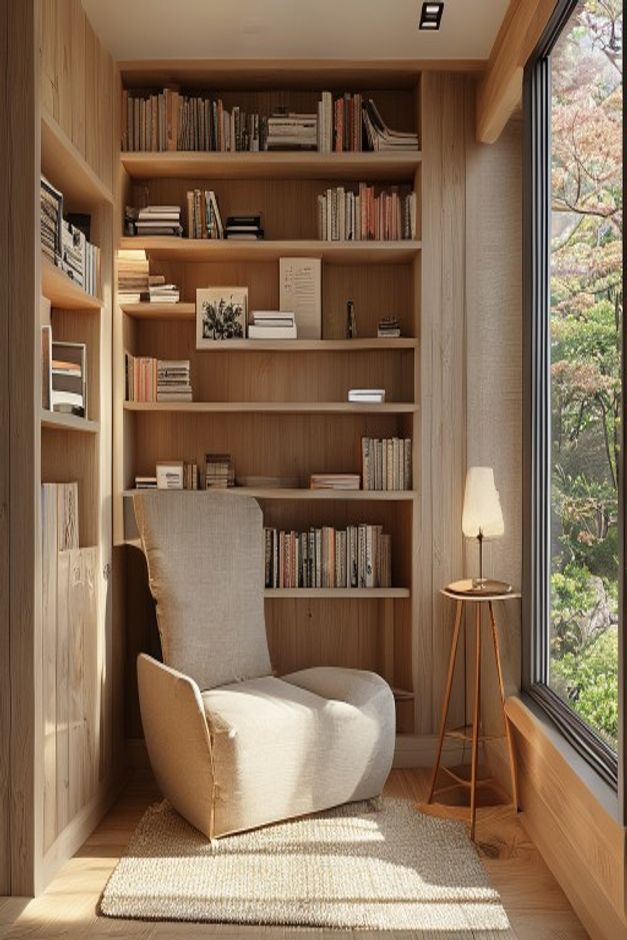

This reading nook serves as a masterclass in spatial efficiency and the quiet elegance of the Japandi aesthetic, offering a blueprint for how residential architecture can prioritize both utility and tranquility. By integrating floor-to-ceiling wooden shelving directly into the structural envelope of the room, the design eliminates visual clutter, allowing the curated collection of books to act as the primary texture within the space. Studying this environment reveals how intentional joinery can transform a simple corner into a sophisticated retreat that balances the warmth of light-toned wood with the rigorous discipline of minimalist composition.
Beyond the immediate appeal of the storage, the layout demonstrates a sophisticated understanding of light and shadow, utilizing the natural influx from the floor-to-ceiling window to animate the grain of the wood. This approach to interior design highlights the necessity of marrying structural elements with soft, inviting textiles, ensuring that the room remains a place for reflection rather than merely a storage vessel. For those looking to replicate this harmony, the key lies in the seamless transition between the architectural components and the furniture, creating a unified experience that feels both grounded and expansive.
The Architectural Impact of Integrated Floor-to-Ceiling Shelving
The decision to utilize the entire vertical span of the wall for a built-in wooden bookshelf fundamentally shifts the room’s proportions, drawing the eye upward and emphasizing the height of the ceiling. This verticality is not merely a functional choice for maximizing storage; it is a deliberate architectural gesture that anchors the nook within the broader context of the home. By extending the shelving to the ceiling, the designer avoids the disjointed appearance often caused by standalone units, instead creating a monolithic structure that feels like a permanent, essential part of the building’s anatomy.
Constructed from light-toned wood, these shelves provide a neutral backdrop that softens the overall aesthetic while maintaining a clean, linear profile. The absence of heavy hardware or ornate detailing allows the horizontal lines of the shelving to define the space, creating a rhythmic pattern that guides the viewer’s gaze across the room. This disciplined approach to storage ensures that the books themselves become the primary decorative element, their varied colors and sizes providing a necessary organic contrast to the precision of the woodwork.
Selecting the Right Upholstery for Japandi Comfort
An upholstered high-back lounge chair acts as the anchor for this reading nook, providing a necessary counterpoint to the rigid geometry of the surrounding wooden shelving. The choice of a textured, linen-look fabric introduces a tactile dimension that invites physical engagement, bridging the gap between the hard, structural surfaces of the bookshelves and the human need for comfort. This selection is crucial for maintaining the Japandi ethos, where the focus remains on natural materials that age gracefully and provide a sense of sensory grounding.
The high-back profile of the chair serves an additional purpose, creating a sense of enclosure that defines the nook as a private zone within the larger floor plan. By opting for a neutral, cream-toned upholstery, the furniture piece harmonizes with the light oak palette of the shelves, ensuring that the visual weight remains balanced across the room. This strategy of tonal consistency prevents the furniture from overwhelming the compact space, allowing the chair to function as a seamless extension of the architectural environment rather than an isolated object.
Optimizing Natural Light in Compact Reading Spaces
The inclusion of a floor-to-ceiling window is perhaps the most critical element in the success of this reading nook, as it provides a constant source of natural illumination that highlights the quality of the materials. When light washes over the light-toned wood paneling, it reveals the subtle textures and grains that define the Japandi style, making the space feel vibrant and alive throughout the day. This connection to the exterior is essential for creating a sense of openness in a corner that might otherwise feel constrained by its built-in storage.
To manage this light effectively, the design incorporates a delicate balance of transparency and structure, ensuring that the room remains bright without becoming harsh. The interplay between the natural light and the recessed ceiling spotlight allows for a layered lighting scheme that adapts to different times of day. By using directed illumination to highlight specific sections of the bookshelf, the designer creates a sense of depth and intrigue, transforming the storage area into a dynamic feature that changes character as the sun shifts.
The Role of Minimalist Furniture in Spatial Flow
A tripod side table placed near the lounge chair exemplifies the Japandi commitment to functional simplicity, offering a stable surface without occupying significant floor space. Its slender, minimalist form complements the clean lines of the bookshelves, preventing the room from feeling overcrowded or cluttered. This piece of furniture is designed to be unobtrusive, serving its purpose as a resting place for a book or a beverage while allowing the surrounding architectural details to remain the primary focus of the room.
When considering furniture for a similar setup, it is vital to prioritize pieces that share a common design language, such as tapered legs or rounded edges, which soften the overall look. The tripod table, in particular, offers a lighter visual footprint than a four-legged alternative, which is essential in a corner nook where floor space is at a premium. By selecting furniture that feels intentional and sparse, homeowners can maintain the serene atmosphere that defines this style, ensuring that every object has a clear and necessary function.
Harmonizing Textures and Tones for a Cohesive Interior
The color palette, dominated by light oak, beige, and cream, creates a tranquil environment that is conducive to deep reading and relaxation. This monochromatic approach to color is a hallmark of the Japandi style, as it minimizes visual noise and allows the focus to remain on the quality of the materials. The woven area rug adds a layer of warmth to the floor, grounding the furniture and providing a soft texture that contrasts beautifully with the smooth surfaces of the wooden shelving.
Achieving this level of cohesion requires a careful selection of materials that share similar undertones, ensuring that the wood, fabric, and flooring work together in concert. The use of light-toned surfaces throughout the nook reflects light evenly, making the space feel larger and more inviting. By limiting the color palette to these soft, earthy tones, the designer creates a sanctuary that feels timeless and detached from the fleeting trends of contemporary interior design.
Curating Books and Art for Personal Expression
While the built-in bookshelves provide the structure, the curated collection of books and the inclusion of minimalist art prints offer the opportunity for personal expression. The way books are arranged—whether by color, height, or subject—can significantly influence the mood of the room, turning the storage unit into a living library. The minimalist art prints, placed strategically on the wall, provide subtle visual interest without breaking the serene flow of the design, acting as quiet accents that complement the overall aesthetic.
This curation process is an essential part of the Japandi philosophy, where the items we choose to display are as important as the architecture that houses them. By selecting a limited number of high-quality prints and arranging books with intention, the occupant ensures that the space remains uncluttered and purposeful. This approach encourages a mindful interaction with one’s belongings, transforming the reading nook from a simple storage area into a space that reflects the owner’s intellectual and aesthetic values.
Integrating Lighting for Functional and Atmospheric Depth
Lighting in a reading nook must serve two distinct purposes: providing adequate illumination for reading and creating a relaxing atmosphere for downtime. The combination of a table lamp with a conical shade and a recessed ceiling spotlight achieves this balance perfectly. The lamp provides focused, task-oriented light, while the recessed light offers an ambient glow that can be adjusted to suit the mood of the room. This layered approach ensures that the space is as functional at night as it is during the day.
The conical shade of the lamp is particularly effective, as it directs light downward, preventing glare and creating a cozy, intimate circle of illumination around the chair. This detail is crucial for long reading sessions, as it reduces eye strain and helps the occupant focus on the task at hand. By integrating these lighting elements directly into the design of the nook, the designer ensures that the room remains versatile and comfortable, regardless of the time or the activity.
Lessons in Sustainable and Timeless Residential Design
The most important takeaway from this reading nook is the value of investing in high-quality, built-in solutions that prioritize longevity over short-term trends. By choosing durable materials like light-toned wood and timeless furniture silhouettes, homeowners can create spaces that remain relevant and beautiful for decades. This approach to design is inherently sustainable, as it reduces the need for frequent updates and encourages a more mindful relationship with the home environment.
How can I ensure my built-in shelves look intentional?
Ensure your shelves are custom-fitted to the wall dimensions and maintain a consistent depth throughout, using a single wood finish to create a cohesive, monolithic appearance.
What is the best way to light a reading nook?
Combine focused task lighting, such as a lamp with a directional shade, with soft ambient lighting like recessed spots to create a versatile and comfortable reading environment.
How do I keep a small reading nook from feeling cluttered?
Limit your decor to a few curated items, keep your book collection organized by size or color, and choose minimalist furniture with a light visual footprint to maintain an airy atmosphere.
Compare this floor-to-ceiling arrangement with built-in shelving that frames a coastal reading nook.
The same light-wood discipline also appears in a Japandi home office with a built-in wood desk.