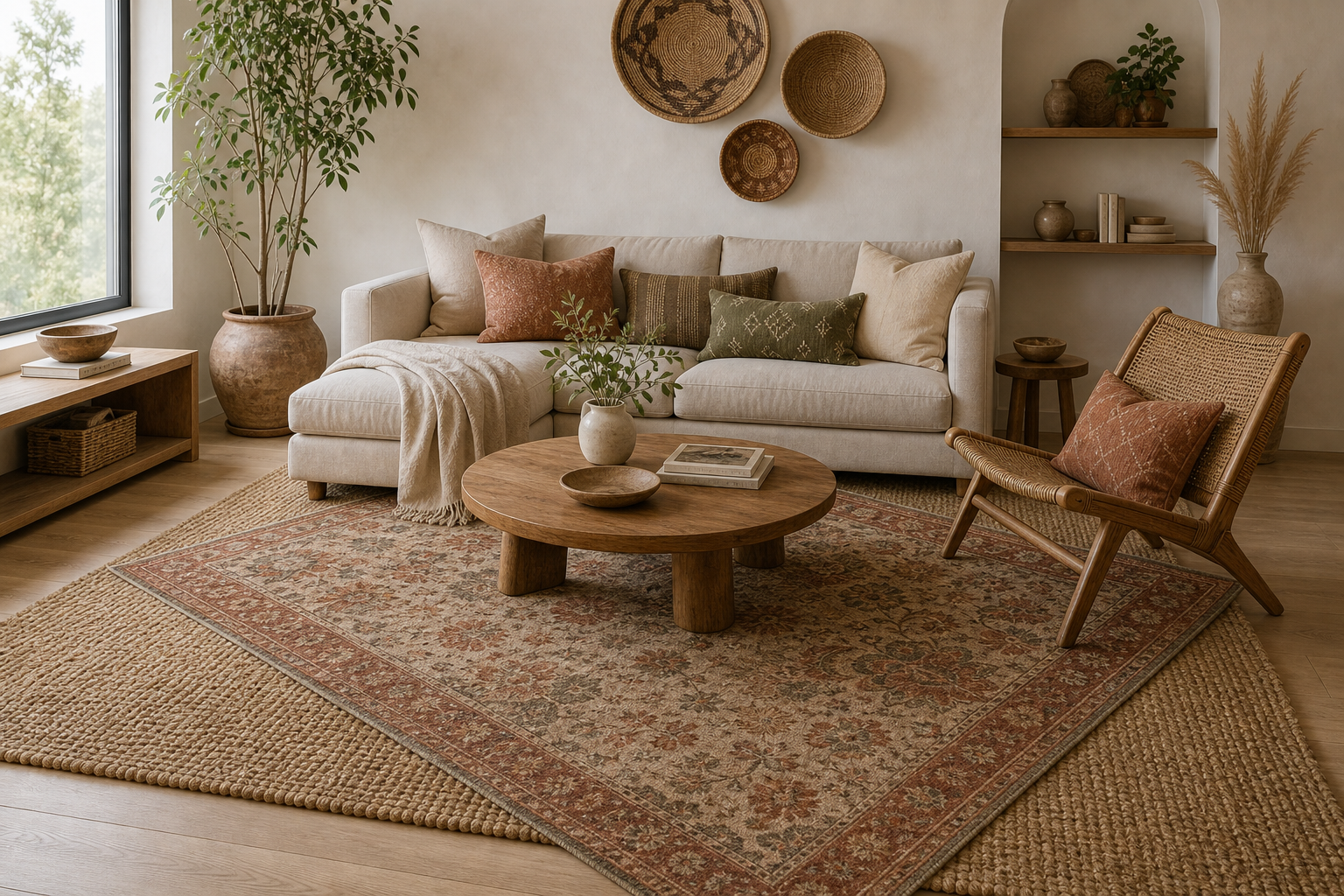

The floor carries the strongest design decision in this living room. A warm patterned rug sits over a much larger woven base, creating a detailed center within a quieter perimeter. The low sofa, rounded timber table, and open-frame lounge chair all remain inside or directly beside that layered field. Wall baskets and pale shelving repeat the tactile quality at different heights, so the rugs feel connected to the room rather than placed as an isolated styling gesture.
The Patterned Rug Establishes the Center
The large woven base rug establishes the full seating footprint, stretching beyond the sofa and chair so the furniture reads as one group. The vintage patterned rug then creates a smaller center of gravity. Its rust and muted floral tones pull attention toward the coffee table without making the rest of the room look unfinished.
The top rug contains a dense border and central motif, yet enough of the plain woven base remains visible on every side to frame it. That broad margin prevents the smaller textile from appearing undersized and gives the seating group a clear outer limit.
A Larger Woven Base Controls the Boundary
The larger natural fiber rug is doing the practical work. It gives the sofa, rattan chair and coffee table a shared platform instead of letting each piece float separately on the wood floor. For homeowners, the base layer should be generous. If it only sits under the coffee table, the room loses the grounded quality this image achieves.
The Upper Layer Is Intentionally Off-Center
The smaller patterned rug brings the most detailed color and texture into the center of the room. Placing it over jute keeps the pattern from overwhelming the seating area. The plain lower layer gives the vintage textile room to stand out while still looking relaxed.
Its placement favors the sofa and table rather than the exact center of the room. This slight offset suits the asymmetrical chair and shelving arrangement, while the larger base restores overall balance and keeps the composition from drifting toward the window.
A Round Table Softens the Rug Geometry
The round wood coffee table sits near the overlap of the two rugs, which makes the layered arrangement feel intentional. Its curved shape breaks up the rectangular rug edges. That matters because the top rug has a strong border, and the table prevents the floor composition from becoming too rigid.
The Lounge Chair Occupies the Outer Edge
The rattan chair lands partly within the rug zone, helping the seating area extend beyond the sofa. Its woven frame echoes the jute texture below it, so the chair does not read as a random accent. It continues the same natural fiber language in a more sculptural form.
Wall Baskets Carry Texture Upward
The woven baskets above the sofa repeat the circular and fiber textures introduced by the rugs and chair. This is why the room has rhythm. The texture moves from floor to furniture to wall, giving the boho look structure instead of scattering decorative pieces everywhere.
Three woven wall pieces form a loose cluster above the sofa, echoing circular tabletop and basket shapes without copying the floor pattern. Their elevated position distributes texture through the room and leaves the pale wall visible around each object.
Earthy Tones Keep Two Patterns Coherent
Rust pillows, muted olive accents, cream upholstery and tan jute all belong to the same earthy palette. Because the colors are related, the layered rugs add richness rather than noise. The vintage pattern becomes a focal point, not a separate color story.
Layering Rugs Without Obstructing Circulation
Choose the plain base rug first and size it for the whole seating area. The front sofa legs and chair should connect to that layer so the room has a clear foundation. Then add a smaller vintage-style rug under the coffee table, either straight or slightly angled. Keep the top layer large enough to matter but smaller than the base so the jute border stays visible.
The low-profile table treatment in this modern organic living room coffee-table study offers a cleaner floor composition. Here, the layered textiles deliberately carry more visual information, so furniture shapes remain comparatively simple.
The sofa's front feet rest on the patterned layer while its longer body is supported by the woven base, tying both textiles to the heaviest furniture. The lounge chair touches only the outer field, which keeps its angled frame from covering the central motif. Plant pots and the low shelf occupy the uncarpeted edges, leaving the layered rugs as a precise conversation-zone decision rather than wall-to-wall decoration.