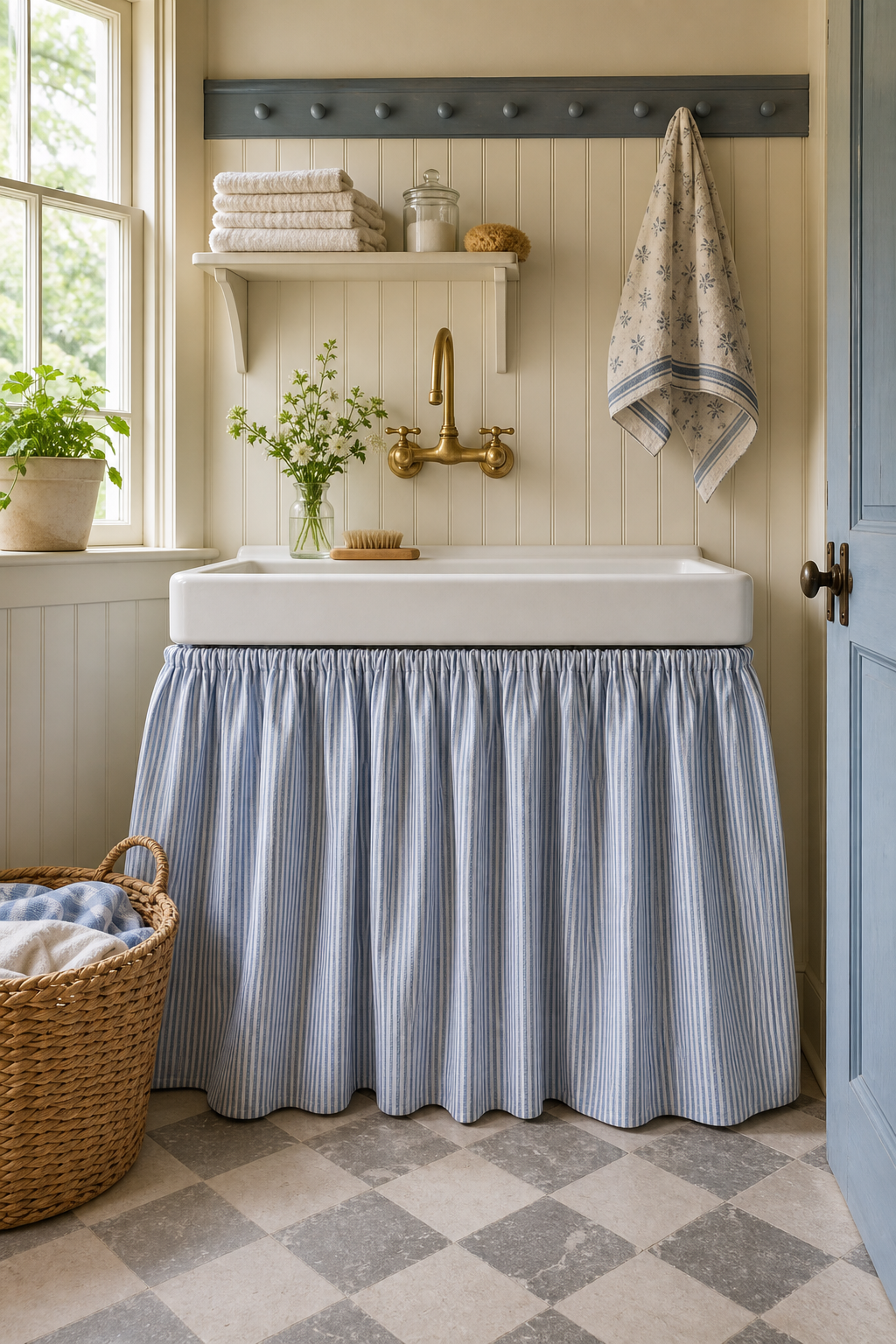

A gathered blue-and-white skirt turns the open base beneath this laundry sink into a soft, concealed zone. Its narrow stripes repeat the vertical rhythm of the pale wall paneling, while a deep white basin creates a crisp horizontal cap above. An open shelf, dark peg rail, folded towels, checkerboard floor, woven basket, and nearby window keep the utility setting specific. Fabric works because it is attached to a real working element, not added as unrelated cottage decoration.
The Skirt Conceals the Sink Base Without Cabinet Doors
The gathered fabric fills the lower half of the sink wall, so it becomes the first thing the eye reads. Its vertical stripe adds rhythm to a room built from simple vertical wall paneling lines. A cabinet front would have felt heavier here. The skirt keeps the utility sink practical while giving the laundry room a softer cottage identity.
Dense gathers hide the area below the basin while allowing the fabric to stop just above the floor. The photograph confirms concealment but does not reveal shelves, bins, or plumbing arrangements behind it, so none are invented.
The vertical wall paneling behind the sink has a steady vertical rhythm, and the striped skirt repeats that direction in fabric. That relationship makes the pattern feel connected to the architecture. Because the stripe is blue and white rather than high contrast, it adds character without overwhelming the compact wall.
The stripe and wall grooves move in the same direction but at different spacing. The cottage skirted-sink bathroom study offers a related textile treatment; this laundry room distinguishes itself through blue striping, a peg rail, and checkerboard floor.
The Deep Basin Gives the Fabric a Firm Upper Edge
The deep white sink gives the wall a crisp horizontal edge above the fabric. That clean pale line prevents the skirt from feeling too informal. The wall-mounted warm-metal faucet also keeps the basin area open. It adds warmth while leaving the sink surface easy to use.
An Open Shelf Keeps Daily Items Within Reach
The open shelf holds folded towels, a glass jar and a small scrub sponge. These are visible utility items, not unrelated styling props. The shelf keeps frequently used pieces within reach while leaving the sink skirt as the main decorative gesture.
Towels and one jar occupy the shallow upper shelf, leaving wall visible around them. Their placement keeps frequently handled objects above the wet zone without turning the entire wall into exposed storage.
A Dark Peg Rail Balances the Lower Textile
The dark peg rail creates a strong horizontal line above the vertical wall paneling. It balances the sink below and gives the wall a practical hanging zone. The patterned towel on the rail echoes the blue in the skirt, but it is placed high enough that the two textiles do not visually merge.
The gray-and-cream checkerboard floor gives the laundry room a durable base. Its pattern is larger and quieter than the skirt, so the two do not fight each other. The floor tiles also make the room feel practical. A laundry space needs surfaces that can handle water, baskets and everyday use.
Floor squares are larger than the fabric stripe and remain within a gray-and-cream range. That scale difference lets two patterns coexist: one organizes the ground plane, the other gives the sink base movement.
The Window Keeps the Compact Wall Bright
Start with a fabric that can be washed and gathered densely enough to hide the open area below the sink. A narrow blue stripe works well because it feels cottage without becoming overly sweet. Mount the skirt directly beneath the sink lip or on a discreet rod, then keep the shelf above simple: towels, soap and one brush are enough.
Using Fabric Where Laundry Work Actually Happens
I would avoid another strong pattern on the wall. The skirt and checkerboard floor already provide the visual interest. I would also avoid plastic storage bins in the open foreground. The woven basket suits the cottage language and keeps the utility function attractive.
Choose washable fabric, allow it to clear the floor, and keep nearby storage simple. Another patterned wall or several exposed baskets would push a compact utility composition beyond the level of detail visible here.
The woven basket stands at the left edge rather than beneath the sink, leaving the skirt fully visible from top to hem. A pale towel on the peg rail repeats the upper shelf textiles without introducing another stripe.