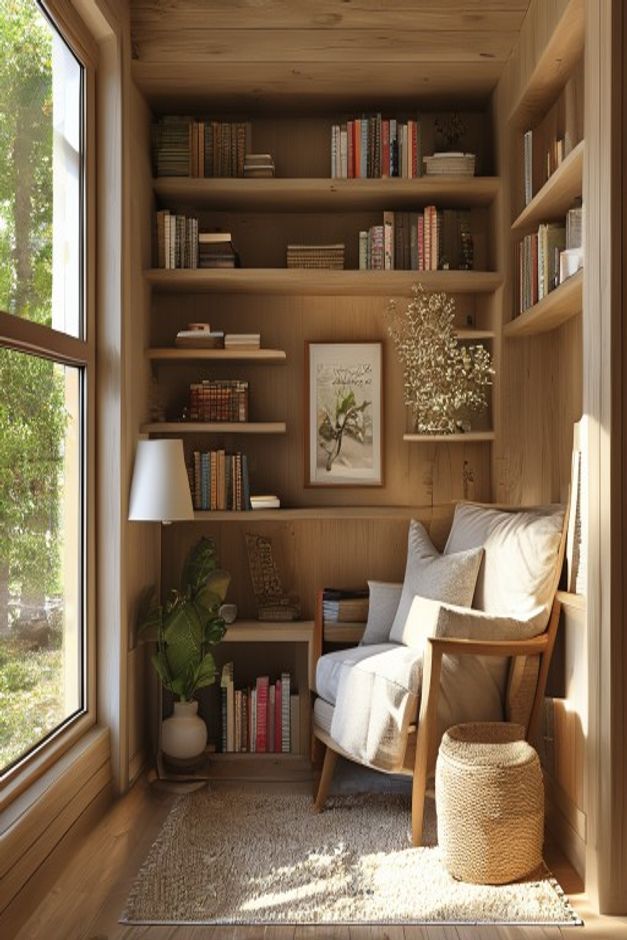

The allure of a dedicated reading nook lies in its ability to provide a psychological retreat from the bustle of domestic life, a quality perfectly captured in this light-filled cottage alcove. By integrating custom storage directly into the architectural envelope, the design achieves a seamless transition between functional utility and aesthetic comfort, proving that even the smallest footprints can offer profound sanctuary. This space serves as a masterclass in monochromatic layering, where the interplay of light-toned wood, cream textiles, and natural fibers creates a cohesive environment that prioritizes tactile serenity.
Studying this particular configuration reveals how verticality and recessed geometry can be manipulated to expand the perceived volume of a room. Rather than relying on heavy ornamentation, the design leans into the inherent warmth of natural materials, allowing the grain of the wood and the weave of the textiles to dictate the room’s character. This approach is essential for those looking to replicate a cottage-inspired aesthetic that feels authentic rather than staged, as it emphasizes the structural bones of the residence as the primary decorative element.
Optimizing Vertical Space with Integrated Alcove Shelving
The decision to install floor-to-ceiling built-in shelving within a recessed alcove is a strategic move that maximizes storage capacity without encroaching on the floor plan. By utilizing the depth of the wall cavity, the shelving system provides a generous home for a curated library while simultaneously framing the seating area. This architectural choice draws the eye upward, enhancing the perceived height of the room and creating a sense of enclosure that is vital for a truly immersive reading experience.
Beyond the structural benefits, these open shelves serve as a gallery for personal expression, where the arrangement of books and decorative objects contributes to the room’s overall rhythm. The light-toned wood finish acts as a neutral backdrop that prevents the collection of items from feeling overwhelming or cluttered. When planning similar Japandi Reading Nook Wood Shelving Ideas, consider how the spacing between shelves can accommodate both vertical and horizontal stacks to create visual interest while maintaining accessibility.
The Role of Light-Toned Wood in Cottage Interiors
Light-toned wood paneling serves as the foundation of this cottage aesthetic, grounding the space in a palette that is both timeless and inherently calming. The choice of a pale, natural finish reflects ambient light, ensuring the alcove remains bright even on overcast days. This material selection is critical for maintaining a sense of openness, particularly in smaller nooks where darker woods might otherwise feel heavy or restrictive.
Integrating this wood across both the shelving units and the surrounding wall panels creates a unified, bespoke appearance that elevates the quality of the finish. The consistency of the grain and the warm undertones of the timber provide a gentle contrast against the cream and beige textiles found throughout the seating area. For those seeking to expand their knowledge of storage solutions, exploring Cottage Bedroom Small Bedroom Storage Ideas can offer further inspiration on how to maintain this material harmony across different zones of the home.
Selecting Upholstery for Comfort and Longevity
The upholstered armchair serves as the anchor of this reading nook, featuring a wooden frame that complements the built-in shelving perfectly. The use of linen-textured fabric introduces a tactile dimension to the space, offering a sophisticated, breathable surface that softens the rigid lines of the surrounding woodwork. This choice of material is not merely aesthetic; it is a practical consideration for a space intended for long periods of stationary relaxation.
When selecting furniture for a similar nook, prioritize upholstery that balances softness with durability to ensure the piece ages gracefully alongside the wooden elements. The cream and beige tones chosen here work to bridge the gap between the natural wood and the lighter walls, creating a seamless visual flow. This layering of textures is what prevents the monochromatic palette from feeling flat, adding depth through the subtle weave of the linen and the smooth finish of the wood.
The Impact of Natural Fiber Rugs on Room Acoustics
A woven natural fiber rug serves as the foundation for the seating zone, providing a subtle contrast to the wooden floor and adding an organic layer to the interior. The texture of the weave is essential for grounding the armchair and the woven basket stool, defining the boundaries of the nook without the need for physical partitions. This material choice is particularly effective in spaces where sound absorption is desired, as the natural fibers help to soften the acoustics of the alcove.
By selecting a neutral-toned rug, the designer ensures that the floor remains a supportive element rather than a distraction from the architectural shelving. The rug’s ability to bridge the gap between the light-toned wood and the soft upholstery creates a cohesive transition that feels intentional and well-considered. For those who enjoy incorporating organic elements into their design, reviewing Bohemian Reading Nook Rattan Chair Ideas can provide additional insights into how woven textures can enhance a cozy reading environment.
Curating Decorative Accents for a Personal Touch
Decorative elements in this nook are kept minimal yet meaningful, with a framed botanical print and a potted plant in a ceramic vase acting as the primary accents. These items introduce a touch of nature that reinforces the cottage theme, bringing a sense of life to the built-in shelving. The placement of a dried floral arrangement further emphasizes the organic, unhurried atmosphere of the space, suggesting a focus on slow living and quiet reflection.
The key to successful curation lies in the restraint shown in the selection of these pieces. By limiting the number of accessories, the designer allows each item to stand out, preventing the shelving from becoming a repository for visual clutter. This approach encourages homeowners to display only those objects that hold genuine significance, ensuring the nook remains a place of inspiration rather than a storage unit for unused items.
Lighting Strategies for Functional Reading Environments
A floor lamp with a white tapered shade provides the necessary task lighting for this reading nook, offering a directed beam that is ideal for evening sessions. The placement of the lamp adjacent to the armchair ensures that the light is positioned correctly for reading, while the white shade helps to diffuse the glow, creating a soft, inviting ambiance. This lighting choice is both functional and aesthetically aligned with the cottage style, favoring classic forms over overly modern or industrial designs.
When planning your own reading area, consider the importance of layered lighting to accommodate different times of the day. While the floor lamp handles the task requirements, the natural light filtering into the alcove provides the necessary brightness for daytime reading. Ensuring that your lighting fixtures complement the architectural style of your built-ins is crucial for a cohesive look that feels like a natural extension of the home.
Integrating Seating for Versatility and Style
The inclusion of a woven basket stool alongside the armchair adds a layer of versatility to the nook, serving as a secondary surface or a place to rest one’s feet. This piece introduces another natural texture, echoing the weave of the rug and creating a dialogue between the different materials in the room. The stool’s lightweight nature allows it to be moved easily, providing flexibility in how the space is used on a day-to-day basis.
By incorporating furniture that serves multiple purposes, you can maximize the utility of a small reading nook without sacrificing its comfort. The combination of the armchair and the stool creates a relaxed, informal seating arrangement that invites the user to linger. This balance of function and form is the hallmark of a well-designed cottage space, where every piece is chosen for its ability to enhance the user’s experience of the room.
The Philosophy of Minimalist Cottage Design
The final takeaway from this reading nook is the power of a restrained design philosophy. By focusing on high-quality materials, intentional storage, and a cohesive color palette, the designer has created a space that feels both luxurious and approachable. This approach demonstrates that you do not need an abundance of space or ornate details to create a meaningful interior; you only need a clear vision of how you intend to use the area and a commitment to materials that age well.
Homeowners can learn that the most successful nooks are those that prioritize the human experience, providing a comfortable, well-lit, and organized environment for quiet pursuits. By applying these principles—integrating storage, layering natural textures, and selecting lighting that serves the user—anyone can transform a neglected corner into a cherished sanctuary. Ultimately, this room serves as a reminder that the best design is that which supports our daily rituals and offers a sense of peace in an increasingly busy world.
Frequently Asked Questions
How can I incorporate built-in shelving into an existing wall?
To add built-in shelving to an existing wall, consider framing out a recessed alcove using standard construction methods, then installing custom-cut wooden shelves that match your interior trim for a seamless, professional finish.
What are the best materials for a cozy cottage reading nook?
Focus on natural, tactile materials such as light-toned woods, linen or cotton upholstery, and woven fiber rugs to establish a warm, inviting atmosphere that feels authentic to the cottage aesthetic.
How do I balance storage and display in a small reading nook?
Achieve balance by using the lower sections of your shelving for heavier storage and the eye-level sections for a curated selection of books and personal decorative items, keeping the overall arrangement sparse to avoid a cluttered appearance.