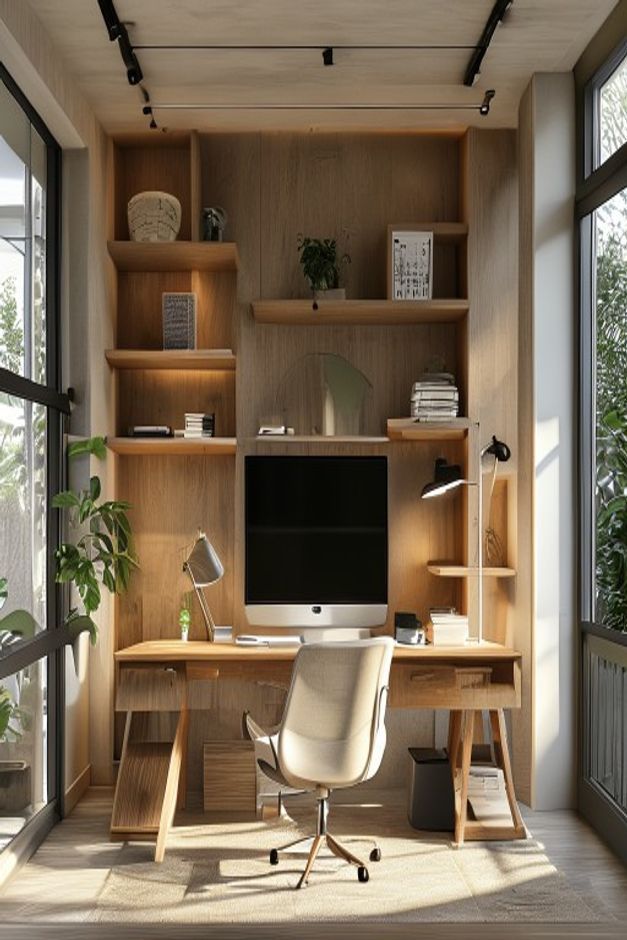

This home office shows how a singular, wall-to-wall unit can redefine a room’s entire functional capacity. By prioritizing a cohesive material palette and symmetrical geometry, the design achieves a level of calm that is often elusive in modern residential workspaces. The result succeeds because it marries the warmth of light-toned wood with the rigorous, clean lines of Japanese-inspired minimalism, proving that storage and utility do not have to compromise aesthetic serenity.
The integration of the desk into the broader shelving structure eliminates the visual clutter associated with standalone furniture pieces. This approach creates a unified architectural shell that allows the user to focus entirely on the task at hand, free from the distraction of disjointed storage components or erratic furniture placement. Understanding the logic behind this built-in system offers a blueprint for homeowners looking to elevate their own office environments through intentional, long-term design investments.
The Architectural Power of Symmetrical Desk Integration
Symmetry acts as the primary organizing principle in this office, grounding the room through a balanced distribution of weight and form. By centering the desk within the built-in unit, the design establishes a clear hierarchy where the workspace is both the literal and figurative heart of the room. This layout ensures that every element, from the shelving above to the storage cabinets below, serves a specific purpose in supporting the central activity of the office.
When you align furniture with the structural lines of the wall, you effectively expand the perceived volume of the room. The seamless transition between the desk surface and the vertical shelving creates a continuous flow that guides the eye across the entire wall plane rather than trapping it in a single corner. This deliberate spatial strategy transforms a standard office wall into a sophisticated, multi-functional piece of architecture that feels permanent and thoughtfully considered. For those exploring similar layouts, Japandi Home Office Wood Desk Ideas provide excellent inspiration for balancing this kind of custom woodwork.
Selecting Materials for a Cohesive Japandi Palette
The choice of light-toned wood veneer provides the foundational warmth that defines the Japandi aesthetic, creating a soft, inviting atmosphere that remains professional. This specific material choice is crucial because it reflects ambient light effectively, keeping the workspace bright even during late-evening sessions. By limiting the palette to these soft woods, beige tones, and crisp black accents, the room avoids the visual noise that often plagues home offices filled with mismatched office supplies and equipment.
Integrating fabric upholstery on the swivel chair introduces a necessary tactile contrast to the rigid, linear nature of the wooden shelving. This interaction between soft and hard surfaces is a hallmark of high-end interior architecture, ensuring the space feels comfortable rather than purely clinical. The metal hardware used throughout the unit is kept minimal, allowing the natural grain of the wood to remain the primary texture of the room, which reinforces the organic philosophy inherent in this design style.
Optimizing Vertical Storage Through Built-In Shelving
Vertical storage is often underutilized in residential offices, yet this room demonstrates how to maximize height without creating a heavy, oppressive feeling. By extending the shelving to the ceiling and incorporating integrated LED strips, the design transforms standard storage into a display gallery for books and ceramic objects. This method of organizing items ensures that everything has a designated place, preventing the accumulation of desk-top clutter that frequently hinders productivity.
The open-shelf configuration allows for a curated approach to storage, where decorative objects are interspersed with functional items like stacked books. This balance is key to maintaining the Japandi ethos, as it prioritizes beauty alongside utility. If you are considering how to integrate such shelving into your own home, it is helpful to look at Mid-Century Modern Home Office Built-In Shelves Ideas to understand how different eras have approached the challenge of wall-to-wall storage systems.
The Role of Layered Lighting in Workspace Productivity
Lighting in this office is treated as a multi-layered system rather than a single overhead source, which is essential for reducing eye strain during long hours of work. The combination of track lighting, integrated shelf strips, and an adjustable desk lamp allows the user to customize the illumination based on the time of day or the specific task being performed. This adaptability is a critical feature of any well-designed home office, as it allows the room to transition seamlessly from a bright, active workspace to a softer, more relaxed environment.
The shelf-integrated LEDs serve a dual purpose: they highlight the contents of the shelves while providing a soft, ambient glow that prevents the wall unit from appearing flat or uninviting. By focusing light on the surfaces where work occurs, the design ensures that the desk area remains the most vibrant part of the room. This thoughtful application of light is a masterclass in how to use illumination to define spatial zones without the need for physical partitions or walls.
Integrating Technology Without Compromising Aesthetics
Managing the visual impact of modern technology is one of the greatest challenges in contemporary interior design, yet this room handles it with ease. By placing an all-in-one desktop computer on a dedicated, uncluttered desk surface, the design avoids the mess of tangled cables and bulky peripheral devices. The desk itself acts as a clean, expansive stage, allowing the technology to exist as a necessary tool rather than a dominant feature that detracts from the room’s overall serenity.
Because the desk is part of a larger built-in structure, it is easier to hide power strips and wiring behind or beneath the unit, maintaining a pristine appearance. This commitment to visual cleanliness is what makes the space feel so professional and orderly. When technology is integrated into the architecture of the room, it ceases to be a distraction and instead becomes a seamless part of the daily workflow, allowing the user to focus entirely on the creative or professional tasks at hand.
The Importance of Tactile Comfort in Office Furniture
While the wooden desk provides the structure, the upholstered swivel chair provides the essential comfort required for sustained focus. The choice of fabric for the chair upholstery softens the overall look of the room, acting as a counterpoint to the rigid, light-toned wooden surfaces of the shelving. This balance is vital; without the softness of the chair, the room might feel too austere or cold, lacking the human element that makes a home office feel like a personal sanctuary.
Ergonomics are clearly prioritized here, as the chair is positioned perfectly in relation to the desk height and the reach of the shelving. This ergonomic synergy is what transforms a simple desk setup into a high-performance workstation. Homeowners should always prioritize the quality of their seating, as it is the one piece of furniture that directly impacts physical health and long-term comfort, regardless of how beautiful the surrounding cabinetry may be.
Curating Decor to Enhance the Japandi Atmosphere
Decor in this office is kept to a minimum, following the principle that every object should serve either a functional or a meditative purpose. A single potted indoor plant brings a necessary splash of life and organic color to the space, breaking up the neutral palette of beige and wood tones. This inclusion of nature is a fundamental aspect of the Japandi style, reminding the user of the world outside while they are engaged in indoor work.
Stacked books and decorative ceramic objects are arranged with precision on the open shelves, creating a sense of order that is both visually pleasing and intellectually stimulating. By limiting the number of decorative items, the design ensures that each piece has room to breathe, preventing the shelves from feeling overcrowded. This disciplined approach to styling is what gives the room its sophisticated, gallery-like quality, proving that restraint is often the most powerful tool in an interior designer’s kit.
Designing for Longevity and Future Adaptability
The beauty of this integrated desk and shelving unit lies in its timelessness; it does not rely on passing trends that will look dated in a few years. By using high-quality materials and a classic, symmetrical layout, the design ensures that the office will remain functional and stylish for decades to come. This focus on longevity is an inherently sustainable approach to home design, as it encourages homeowners to invest in pieces that are meant to last rather than items that require frequent replacement.
How can I incorporate integrated shelving into a small home office?
Focus on wall-to-wall vertical units that reach the ceiling to maximize storage capacity while maintaining a clean, streamlined look that prevents the room from feeling cramped.
What lighting is best for a Japandi-style workspace?
Use a layered approach combining ambient track lighting, integrated LED strips within shelving for depth, and a high-quality adjustable desk lamp for task-specific illumination.
How do I keep an integrated desk area from looking cluttered?
Prioritize closed storage for office supplies and use open shelving only for curated, decorative items and books to maintain a sense of order and visual peace.