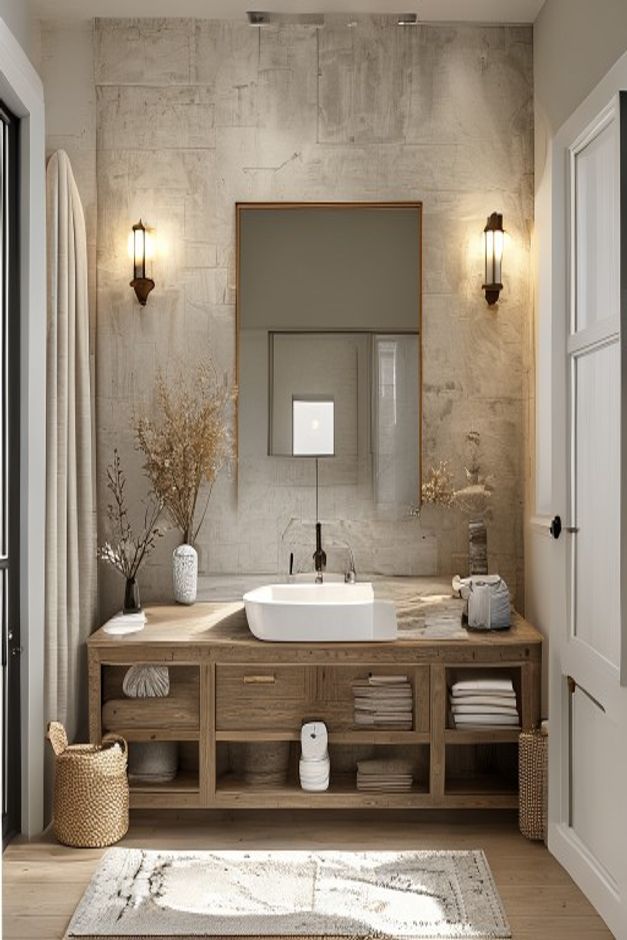

This bathroom serves as a definitive case study in how monochromatic, organic textures can replace complex color schemes to achieve a high-end, serene atmosphere. By prioritizing the tactile quality of the wall surface against the structural warmth of a natural wood vanity, the design achieves a sophisticated equilibrium that feels both grounded and expansive. It is a masterclass in restraint, proving that the interplay of light and shadow on a textured plane is far more impactful than decorative clutter.
Studying this space reveals the architectural potential of the modern farmhouse aesthetic when it moves beyond mere trend-following. The deliberate choice of materials—specifically the interplay between the rough-hewn wall finish and the smooth, ceramic vessel sink—creates a sensory experience that defines the room’s character. For homeowners and designers alike, this space offers a template for creating bathrooms that feel permanent, intentional, and deeply connected to natural forms.
The Architectural Impact of Textured Plaster Walls
Textured plaster walls act as the primary canvas for the entire room, providing a subtle, undulating surface that captures ambient light in ways standard flat paint cannot. This finish adds a layer of depth that feels ancient yet entirely contemporary, softening the hard edges typical of bathroom architecture. By choosing a neutral palette, the designer allows the physical topography of the wall to take center stage, creating a backdrop that is visually complex but aesthetically quiet.
When integrating such a bold wall finish, the surrounding elements must be curated with extreme precision to avoid visual competition. The plaster provides a consistent, unifying skin that wraps the vanity wall, effectively blurring the boundaries between the architectural shell and the furniture itself. This technique is essential for those looking to master Minimalist Bathroom Design: Mastering Textured Plaster and Warm Wood Tones, where the wall becomes an extension of the room’s furniture rather than just a partition.
Selecting the Ideal Natural Wood Vanity
The vanity in this space represents a departure from the heavy, enclosed cabinetry often found in traditional farmhouse designs. By opting for an open-shelf wooden structure, the design invites air and light to circulate beneath the basin, maintaining a sense of openness that is crucial for smaller or mid-sized bathrooms. The warm, honeyed tones of the wood serve as a necessary counterpoint to the cooler, beige-toned plaster, introducing a biological warmth that anchors the room.
Functionality is maintained through integrated storage that remains visible, encouraging a curated approach to bathroom essentials. This open-shelf system demands a high level of organization, as every towel and basket becomes part of the room’s permanent display. It is a bold choice that favors aesthetic honesty over the ability to hide clutter, reinforcing the room’s overall commitment to a clean, intentional lifestyle.
The Role of Symmetrical Lighting Arrangements
Symmetry is a powerful tool for creating order in a room defined by organic, unpredictable textures. The placement of dual wall-mounted sconces on either side of the mirror creates a balanced axis that draws the eye toward the center of the vanity. This deliberate positioning not only provides flattering, cross-directional illumination for daily tasks but also reinforces the architectural rigor of the space, ensuring the room feels stable and well-composed.
Beyond their functional utility, these sconces function as sculptural objects that break up the expanse of the textured wall. Their warm, soft glow emphasizes the peaks and valleys of the plaster, highlighting the craftsmanship of the wall finish during evening hours. By keeping the lighting fixtures simple and consistent with the room’s palette, the designer ensures they complement the environment rather than distracting from the overarching organic theme.
Integrating Ceramic Vessel Sinks for Visual Interest
A ceramic vessel sink serves as the sculptural centerpiece of the vanity, introducing a smooth, clean-lined silhouette that contrasts sharply with the rugged texture of the wall. This choice elevates the vanity area from a simple utility station to a refined design feature. The sink’s crisp edges provide a necessary visual anchor, grounding the more fluid and uneven lines of the plaster and the natural grain of the wood.
When selecting a vessel sink, the scale is paramount to maintaining the room’s balance. By choosing a size that sits comfortably on the wooden vanity without overwhelming the open shelving below, the design achieves a sense of proportion that feels both luxurious and practical. This interaction between the smooth ceramic and the raw timber is a recurring theme in The Art of Asymmetry: Balancing Organic Forms in Modern Bathroom Design, where the contrast of materials dictates the room’s success.
Utilizing Woven Elements for Texture and Warmth
Woven wicker baskets placed on the open vanity shelves introduce a third layer of texture that bridges the gap between the plaster and the wood. These natural fibers bring a raw, artisanal quality to the bathroom, reinforcing the farmhouse roots of the design while providing essential, breathable storage. Their presence adds a layer of domestic comfort, preventing the space from feeling too clinical or overly curated.
These baskets are not merely functional; they are essential for softening the hard geometry of the vanity’s wooden frame. By incorporating organic materials like wicker or dried botanicals, the designer ensures the room feels like a living, breathing space. This approach is highly effective for those following the principles of Modern Organic Bathroom Design: Integrating Potted Greenery and Warm Wood Textures, where the inclusion of nature-inspired decor is key to achieving a cohesive aesthetic.
Maximizing Utility Through Minimalist Mirror Design
The rectangular mirror with a thin frame acts as a silent observer in this design, reflecting the textured wall and the warm wood tones without imposing its own style. Its slim profile is critical; a thicker or more decorative frame would clash with the intentional raw finish of the plaster. By keeping the mirror minimal, the designer allows the surrounding materials to speak for themselves while ensuring the vanity area remains functional.
This mirror placement is also strategic, as it expands the perceived depth of the room by bouncing light back across the textured plaster. It serves as a bridge between the functional tasks of the bathroom and the aesthetic goals of the interior. When paired with the symmetrical sconces, the mirror becomes part of a unified vanity ensemble that feels both timeless and perfectly suited to the modern farmhouse aesthetic.
The Importance of Cohesive Color Palettes
The color palette of beige, taupe, white, and wood tones creates a sanctuary-like environment that feels inherently calming. By restricting the palette to these earth-derived shades, the designer avoids the visual noise that often plagues bathroom interiors. This monochromatic approach forces the eye to focus on the quality of the materials—the grain of the wood, the grit of the plaster, and the smoothness of the ceramic—rather than on competing colors.
Maintaining such a tight color scheme requires discipline during the selection of accessories, such as towels and botanical arrangements. Even the smallest addition, if it falls outside this neutral spectrum, can disrupt the carefully constructed harmony of the space. This is a vital lesson in Minimalist Bathroom Floating Vanity and Tiled Wall Design Principles, where the consistency of tone is the foundation of a successful, high-end interior.
Curating Botanical Accents for Organic Softness
Dried botanical arrangements in simple vases provide the final, necessary touch of life to the bathroom. These elements introduce organic, irregular shapes that echo the textured plaster, grounding the space in nature. Unlike fresh flowers, which require constant maintenance, dried botanicals offer a permanent, subtle elegance that aligns perfectly with the room’s neutral, earth-toned palette.
Their placement near the vanity ensures that the most frequently used area of the bathroom feels welcoming and personal. These small, thoughtful additions prevent the room from feeling like a showroom, infusing it with a sense of history and warmth. It is a reminder that the most successful designs are those that balance high-level architectural decisions with soft, personal details that make a space feel truly lived-in.
How do I choose the right plaster texture for a bathroom?
Select a moisture-resistant plaster finish that offers a subtle, matte topography to catch light, ensuring it is properly sealed for high-humidity environments.
Can open-shelf vanities work in a small bathroom?
Yes, open-shelf vanities create an illusion of space by allowing the floor and wall behind them to remain visible, which helps to prevent the room from feeling cramped.
What is the best way to maintain a modern farmhouse aesthetic?
Stick to a palette of natural, earthy materials like wood, stone, and plaster, while prioritizing symmetrical layouts and minimal, high-quality fixtures to keep the design refined.