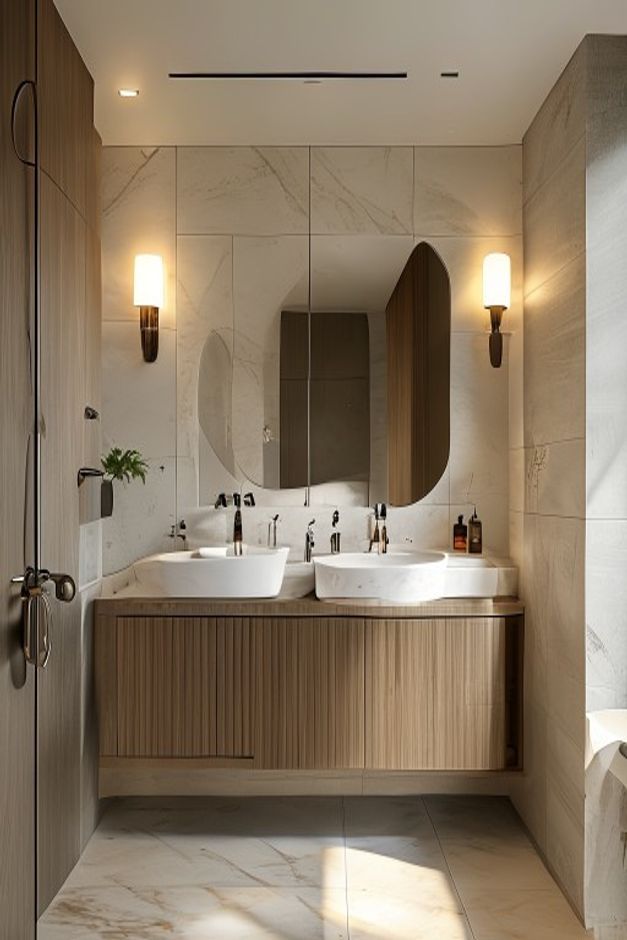

The room demonstrates how to harmonize contrasting geometric shapes with tactile, natural materials. By anchoring the space with a fluted wood vanity and balancing it against an asymmetrical mirror, the layout achieves a sense of sophisticated equilibrium that feels both grounded and intentionally curated. Studying this environment reveals how subtle shifts in form can elevate a standard utility space into a sanctuary of calm.
Designers often struggle to find the middle ground between sterile minimalism and excessive ornamentation, yet this space navigates that tension with precision. The architectural integrity of the room relies on the dialogue between the rigid, large-format wall tiles and the fluid, organic silhouette of the mirror. This juxtaposition provides a blueprint for homeowners looking to integrate soft, natural aesthetics into their own residential projects without sacrificing the functional requirements of a high-traffic area.
The Role of Fluted Wood in Modern Cabinetry
The floating double vanity serves as the primary architectural anchor, utilizing fluted wood veneer to introduce vertical rhythm and tactile depth. This specific treatment of the cabinet doors transforms a flat surface into a dynamic element that catches light and shadow throughout the day. By choosing a floating configuration, the design preserves floor space, enhancing the perception of volume while maintaining a clean, uninterrupted horizontal line across the room.
Beyond its aesthetic appeal, the fluted texture acts as a bridge between the warmth of the natural wood and the coolness of the surrounding surfaces. This mastering the modern organic bathroom: the floating vanity aesthetic approach highlights the importance of texture in monochromatic or neutral-heavy palettes. When the color spectrum is limited to creams and warm woods, the physical structure of the materials becomes the primary vehicle for visual interest and sophistication.
Balancing Asymmetry with Symmetrical Lighting
One of the most compelling aspects of this interior is the decision to pair an asymmetrical mirror with a perfectly symmetrical lighting arrangement. While the mirror introduces a soft, unpredictable silhouette that breaks the rigidity of the wall, the frosted glass sconces flanking it restore a sense of order. This deliberate contrast ensures that the room feels relaxed rather than chaotic, providing a structured framework for the more artistic elements to breathe.
The choice of wall-mounted sconces with frosted glass shades is particularly effective for achieving a diffused, flattering glow that minimizes harsh shadows on the face. By mounting these fixtures at eye level, the design prioritizes utility while reinforcing the vertical axis of the vanity. This strategy demonstrates that even when decorative elements lean toward the organic or unconventional, the underlying lighting plan should remain rooted in traditional ergonomic principles to ensure daily tasks are performed with ease.
Large-Format Tiles as a Backdrop for Minimalism
Large-format marble wall tiles provide a seamless, grout-minimal backdrop that allows the vanity and mirror to stand out without competing for attention. By minimizing the number of visible seams, the tiles create an expansive canvas that feels luxurious and expansive. This choice of material brings a subtle, veined pattern to the room, adding a layer of natural complexity that complements the wood grain of the vanity without overwhelming the senses.
The installation of these tiles emphasizes a commitment to a minimalist bathroom floating vanity and tiled wall design principles, where every surface serves a dual purpose of function and aesthetic contribution. In a modern organic setting, the goal is to reduce visual noise while celebrating the inherent beauty of the chosen materials. These tiles act as a quiet, sophisticated foundation that anchors the room, allowing the more expressive furniture pieces to define the overall character of the space.
The Importance of Warm Wood Tones
Incorporating warm wood tones into a bathroom environment is essential for preventing the space from feeling cold or clinical. The vanity’s wood finish acts as a grounding agent, infusing the room with a sense of organic comfort that resonates with the principles of Japandi bathroom soft lighting ideas. This warmth is essential for creating a spa-like atmosphere where one can feel relaxed and at ease during morning and evening routines.
When working with wood in high-moisture environments, selecting the right veneer or treated timber is paramount for longevity. The visual impact of this warm wood, when contrasted against the dark bronze hardware and cream-colored walls, creates a balanced palette that is both timeless and contemporary. This interplay of light and dark elements ensures that the room maintains a high level of visual contrast, which is crucial for defining the boundaries of individual design features.
Integrating Dark Bronze Hardware for Contrast
Dark bronze hardware provides the necessary punctuation mark in this bathroom, adding a layer of refined contrast against the lighter wood and tile surfaces. The choice of a darker metal finish creates a sophisticated dialogue with the other elements, preventing the room from feeling washed out or overly monochromatic. Every piece of hardware, from the drawer pulls to the faucet fixtures, contributes to a cohesive narrative of understated elegance.
This application of dark metal serves as a bridge between the various textures, tying the vanity to the mirror and the lighting fixtures in a unified aesthetic. By maintaining consistency in the finish of the hardware, the design achieves a sense of intentionality that is often missing in more eclectic spaces. It is a subtle detail, yet it significantly impacts the overall perception of quality and craftsmanship within the room.
The Utility of Dual Vessel Sinks
Dual vessel sinks offer a sculptural quality that elevates the vanity beyond a simple storage solution. These fixtures introduce a sense of individuality and custom design, reinforcing the modern organic theme through their clean, minimalist profiles. By positioning them atop the polished stone countertop, the design creates a clear separation between the functional basin and the storage unit below, adding depth to the vanity ensemble.
The placement of these sinks also dictates the flow of the room, encouraging a symmetrical usage pattern that is highly practical for shared spaces. When paired with the floating vanity, the sinks appear to hover, further enhancing the airy, light-filled quality of the interior. This arrangement is a testament to how functional choices, when executed with a focus on form, can become the defining features of a room’s layout.
Curating Minimalist Bathroom Accessories
Minimalist bathroom accessories are the final touch that prevents the vanity from becoming cluttered or disorganized. By limiting the decor to small, potted greenery and essential items, the design maintains a sense of serenity and focus. This restraint is a critical component of the quiet luxury bathroom: mastering the floating vanity aesthetic, where the quality of the space is measured by what is removed rather than what is added.
Greenery, in particular, acts as a vital link to the outdoors, reinforcing the organic nature of the design. A small plant placed on the vanity adds a touch of life and vibrant color, softening the harder lines of the marble and wood. These small, thoughtful additions demonstrate that a well-designed bathroom is not just about the permanent fixtures, but also about the curated layers that provide personality and warmth.
The Power of Negative Space
Negative space is perhaps the most underrated element in this bathroom, providing the breathing room necessary for the design to succeed. By leaving the walls relatively clear and allowing the vanity to float above the floor, the design avoids the trap of over-furnishing. This deliberate emptiness allows the eye to rest and appreciate the specific textures and shapes of the featured elements.
In modern residential architecture, the management of space is just as important as the selection of furniture. This room succeeds because it respects the volume of the space, ensuring that the vanity and mirror feel appropriately scaled to the wall they occupy. Homeowners can learn from this approach by prioritizing openness and resisting the urge to fill every corner, which ultimately leads to a more peaceful and inviting environment.
How can I achieve a modern organic look in a small bathroom?
Focus on using light, natural materials like wood and stone, and prioritize a floating vanity to maximize floor space. Keep the color palette neutral and use textures, such as fluted wood or matte metals, to add depth without cluttering the room.
Why choose an asymmetrical mirror over a standard rectangular one?
An asymmetrical mirror breaks the rigid geometry of a bathroom, introducing an organic, fluid shape that acts as a focal point. It softens the overall design, making the space feel more curated and less like a standard, mass-produced installation.
Are floating vanities practical for storage?
Yes, floating vanities are highly practical as they offer deep drawers or cabinet space while keeping the floor clear. This design choice makes cleaning easier and creates an illusion of a larger, more airy room, which is ideal for both small and large bathrooms.