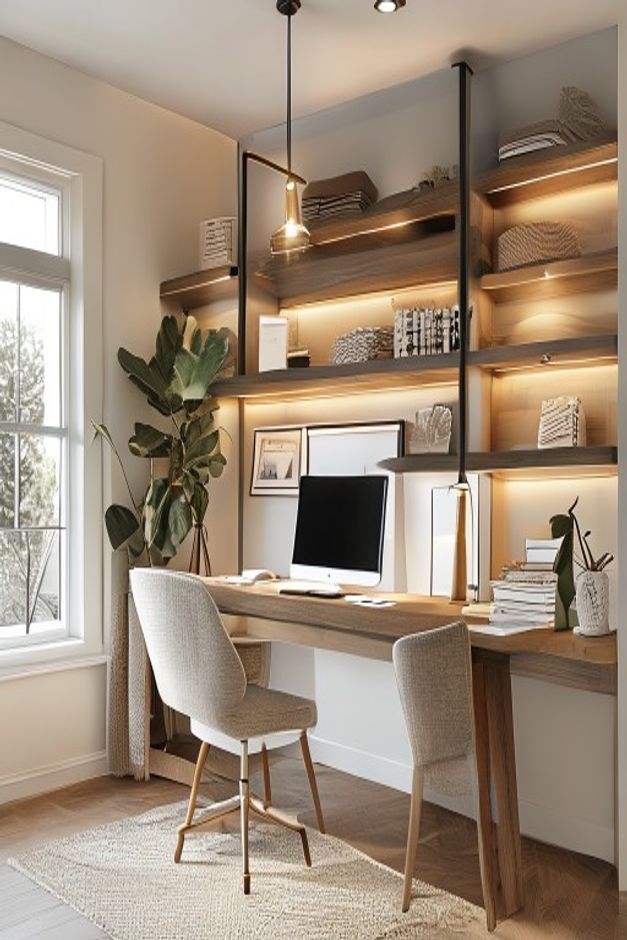

This home office shows how a singular, integrated wall unit can redefine the utility of a niche workspace. By merging the desk surface directly into a vertical shelving system, the design eliminates the clutter typical of standalone furniture, offering a streamlined aesthetic that prioritizes both form and function. It is a compelling study for anyone looking to maximize a small footprint without sacrificing the warmth and character inherent in the modern farmhouse style.
The deliberate use of warm white tones paired with medium wood finishes creates an inviting atmosphere that encourages productivity while maintaining a residential feel. The workspace succeeds because it balances industrial-inspired materials with soft, organic textures, proving that a home office can feel like a curated extension of the living area rather than a sterile corporate environment. We will examine how these specific design choices contribute to a cohesive and highly usable professional sanctuary.
The Architectural Impact of Integrated Desk and Shelving
Integrating a floating desk directly into a shelving unit is a sophisticated architectural move that anchors the entire room. By utilizing a continuous material for both the desk surface and the shelving supports, the design achieves a sense of visual continuity that makes the niche appear larger than it actually is. This approach removes the visual noise created by table legs and bulky drawer units, allowing the eye to travel uninterrupted across the wood-toned surfaces.
When the desk is treated as a structural component of the shelving, it creates a dedicated zone that feels permanent and intentional. This Mastering the Warm Neutral Home Office: A Study in Integrated Desk and Shelving Design approach ensures that the workspace is not merely an afterthought but a central feature of the room. The transition from the horizontal work surface to the vertical storage shelves is seamless, reinforcing the idea that every inch of the wall has been considered for its specific purpose.
Leveraging Integrated LED Lighting for Depth
The use of integrated LED lighting within the shelving unit is perhaps the most critical element in elevating this workspace from basic to bespoke. By placing light sources directly beneath each shelf, the design creates a rhythmic glow that highlights the objects displayed, effectively turning everyday storage into a gallery-like experience. This technique adds significant depth to the wall, preventing the dark corners that often plague built-in units.
Beyond the aesthetic appeal, this lighting strategy serves a practical purpose by providing localized illumination exactly where it is needed most. It reduces eye strain during late-night work sessions and ensures that the contents of the shelves are always visible. The interplay between the warm light and the medium wood tones creates a soft, diffused ambiance that is far more sophisticated than a single overhead light fixture could ever achieve.
Balancing Textures in a Modern Farmhouse Setting
Modern farmhouse design relies heavily on the juxtaposition of contrasting materials to create visual interest. In this office, the coolness of the black metal supports provides a sharp, necessary counterpoint to the warmth of the natural wood shelving and desk. This tension keeps the room from feeling too rustic or too industrial, striking a delicate balance that feels both contemporary and timeless.
Incorporating textured fabric upholstery on the office chairs further softens the space, introducing a tactile element that balances the harder surfaces of the wood and metal. These material choices are essential for creating a comfortable environment where one can spend several hours at a time. By layering these different textures, the designer ensures that the room feels rich and multi-dimensional, rather than flat or one-note.
Maximizing Verticality Through Open Shelving
Open shelving is a hallmark of the modern farmhouse aesthetic, and its application here is both disciplined and decorative. By keeping the shelves open, the design maintains an airy, light-filled quality that prevents the wall unit from feeling heavy or oppressive. This transparency allows for the curation of books and decorative objects, which inject personal character into the professional setting.
The strategic placement of these items is key to maintaining a clean look; it requires a thoughtful approach to styling that avoids clutter while showcasing meaningful pieces. When done correctly, as seen in this workspace, open shelving acts as a canvas for self-expression. It transforms the office wall into a dynamic feature that can evolve over time, reflecting the changing needs and interests of the user.
The Role of Color in Defining Workspace Zones
The color palette—a sophisticated mix of warm white, charcoal black, and medium wood tones—is instrumental in creating a calm and focused environment. The warm white walls act as a neutral backdrop that makes the wood and black metal elements pop, while the charcoal accents provide a modern edge that grounds the space. This limited palette is a classic design strategy for creating a sense of order and tranquility.
Consistency in color application is what allows the various elements of the office to feel like a unified whole. Even the small decorative details, such as the greenery from the potted fiddle leaf fig plant, are chosen to complement the natural tones of the wood. This intentional color coordination is a lesson in restraint, showing that a few well-chosen shades are often more effective than a complex, multi-colored scheme.
Curating Furniture for Small-Scale Efficiency
Selecting furniture for a niche workspace requires a focus on scale and proportion. The choice of two upholstered office chairs with wooden legs is particularly smart, as it provides flexibility for collaboration or simply having extra space to spread out. The wooden legs tie back to the shelving unit, creating a subtle visual echo that reinforces the room’s design language.
Every piece of furniture in this office has been selected to serve a dual purpose: providing comfort while adhering to the overall aesthetic goals. This is a common theme in Mastering the Japandi Home Office: Integrated Wooden Desk and Shelving Systems, where functionality is never sacrificed for style. By avoiding oversized or unnecessary items, the space remains open and inviting, proving that smaller rooms can often feel more luxurious than larger ones when furnished with precision.
Softening the Space with Organic Decor
Plants and art play a vital role in humanizing a home office, bringing a sense of life to an otherwise structured environment. The inclusion of a potted fiddle leaf fig plant adds a vertical, organic element that breaks up the rigid lines of the shelving unit. This touch of nature is essential for creating a space that feels vibrant and welcoming, rather than purely utilitarian.
Framed wall art further enhances the room’s character, providing a focal point that reflects the occupant’s personal taste. When placed carefully within the shelving layout, these decorative elements do not compete with the functional aspects of the desk but instead complement them. This layering of decor is what separates a generic workspace from a truly personalized home office that inspires creativity.
The Importance of Ambient and Task Lighting
While the integrated LED lights handle the shelving, the addition of a single pendant light fixture addresses the need for ambient lighting. This fixture acts as a sculptural element, drawing the eye upward and defining the overhead space. It is a classic example of how lighting can be used to delineate different zones within a room, even in a compact setting.
Combining multiple light sources—integrated, task, and ambient—is the secret to creating a versatile workspace. This layered approach allows the user to adjust the lighting levels based on the time of day or the specific task at hand. By mastering these different types of illumination, homeowners can create a workspace that is as functional at night as it is during the day, ensuring maximum utility throughout the year.
How can I incorporate LED lighting into existing shelves?
You can use adhesive-backed LED strips that are easily concealed under the front edge of your shelves, ensuring the light source is hidden while the glow illuminates the surface below.
What is the best way to style open shelves in an office?
Focus on a mix of functional items like books and decorative accents like plants or framed art, leaving some negative space to prevent the shelves from looking cluttered.
Are two chairs better than one in a small office?
If space allows, two chairs provide versatility for meetings or reading, but ensure they are scaled appropriately so they do not overwhelm the desk area.