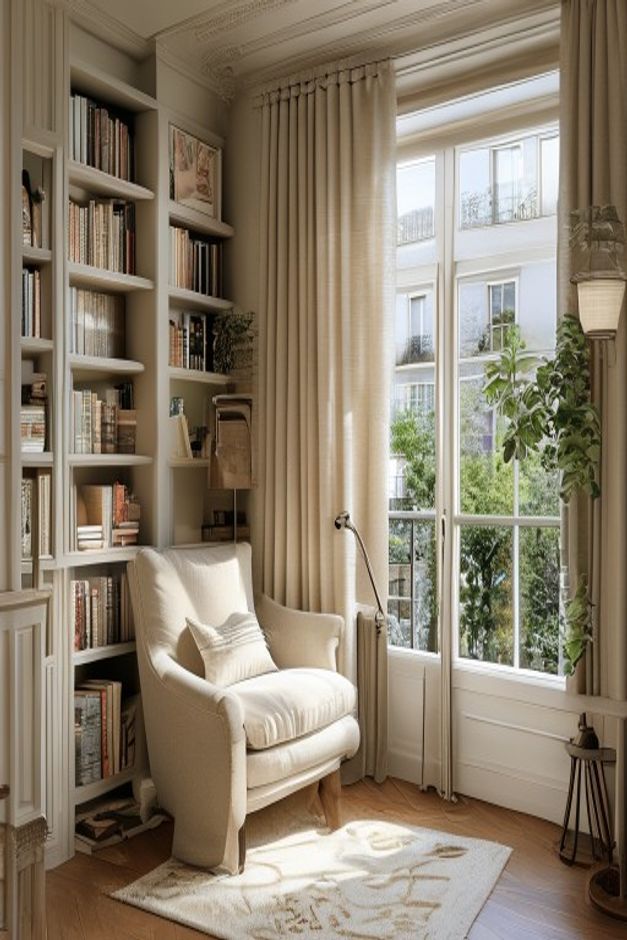

The allure of a Parisian reading nook lies in its ability to balance architectural rigor with an effortless, lived-in aesthetic. By integrating floor-to-ceiling bookshelves directly into the corner of a room, this design approach maximizes vertical space while framing the window as a secondary, light-filled focal point. Studying this specific layout reveals how the careful placement of built-in elements can transform an awkward corner into a primary destination for quiet reflection and literary immersion.
Achieving this look requires a disciplined approach to color and texture, utilizing a palette of cream, beige, and off-white to maintain a serene atmosphere. The integration of light wood tones and soft upholstery creates a cohesive environment that feels both curated and comfortable. By examining the interplay between these built-in structures and the soft, pleated window treatments, we can uncover the essential principles of Parisian-inspired residential design.
The Architecture of Integrated Floor-to-Ceiling Shelving
Verticality is the defining characteristic of this Parisian-inspired nook, where built-in bookshelves extend from the floor to the crown molding. This deliberate choice draws the eye upward, emphasizing the height of the room and creating a sense of grand scale within a compact footprint. The painted wood shelving serves as a structural backbone, providing a clean, consistent backdrop that allows the collection of books to become a primary decorative element.
Beyond aesthetics, these integrated shelves offer a practical solution for storage in smaller residential spaces. By utilizing every inch of the wall, the design eliminates the need for bulky, freestanding furniture that would otherwise interrupt the flow of the room. This seamless integration ensures that the storage system feels like an intentional part of the home’s architecture rather than an afterthought, a hallmark of refined interior design. For those interested in alternative wood applications, consider exploring Japandi Reading Nook Wood Shelving Ideas to see how different styles utilize similar verticality.
Curtain Layering and Natural Light Management
The use of floor-length pleated curtains in this space demonstrates a sophisticated understanding of light control and softness. These curtains are hung to graze the floor, which adds a sense of luxury and height while softening the hard edges of the window frame. By selecting a neutral fabric that complements the surrounding cream and beige walls, the curtains provide a subtle contrast that enhances the room’s overall sense of calm.
Managing natural light is critical in a reading nook, and these curtains allow for precise adjustments throughout the day. When drawn, they provide privacy and a sense of enclosure; when pulled back, they frame the window and allow light to wash over the reading area. This flexibility is essential for creating a space that remains functional regardless of the time of day or the intensity of the sun, ensuring the nook is always an inviting place to settle in with a book.
Selecting the Right Seating for Comfort
An upholstered armchair with a slipcover serves as the primary seating element, offering a tactile contrast to the structured, painted wood shelving. The choice of a slipcovered design brings a relaxed, casual elegance to the space, preventing the room from feeling overly formal or rigid. This softness is vital in a reading nook, where the primary objective is physical comfort during long periods of sedentary activity.
The placement of this chair is equally important, as it is positioned to take advantage of both the natural light from the window and the proximity to the bookshelves. By angling the chair slightly, the design creates a dedicated zone for reading that feels separate from the rest of the home. This thoughtful arrangement allows the occupant to feel embraced by the surrounding storage while remaining connected to the outdoor view, balancing intimacy with a sense of place.
The Role of Decorative Crown Molding
Decorative crown molding serves as the finishing touch that anchors the shelving to the ceiling, providing a seamless transition between the vertical storage and the architectural envelope of the room. This detail is quintessentially Parisian, adding a layer of historical character and visual interest that elevates the space beyond a standard built-in installation. It frames the room with precision, ensuring that the transition from wall to ceiling feels deliberate and well-crafted.
In a smaller room, crown molding can sometimes feel overwhelming, but here it works to unify the disparate elements of the corner. By matching the finish of the molding to the shelving, the design creates a cohesive visual language that ties the built-in units to the rest of the room’s architecture. This attention to detail is what separates a standard storage solution from a truly custom, high-end interior design feature that stands the test of time.
Small Pedestal Tables as Functional Accents
A small pedestal side table provides a necessary surface for a cup of tea or a lamp without occupying significant floor space. Its compact footprint makes it ideal for a corner nook, where every square inch must be used efficiently. The pedestal base allows for easy movement around the table, ensuring that the seating area remains accessible and uncluttered, which is crucial for maintaining the room’s serene, airy quality.
Choosing the right side table involves balancing form and function, and in this setting, the table acts as a bridge between the chair and the surrounding shelving. It provides a landing spot for items while maintaining the visual lightness of the overall composition. For those looking for different ways to organize smaller, more specialized spaces, it is worth looking at how The Art of Symmetry: Designing a Coastal Laundry Room with Integrated Storage handles similar spatial constraints.
Incorporating Texture Through Textiles
Textiles are the primary tool for adding warmth and depth to a room dominated by neutral tones like cream and off-white. The inclusion of a throw blanket draped over the armchair and the use of decorative pillows introduce varied tactile experiences, making the nook feel cozy and inviting. These soft elements break up the hard lines of the bookshelves and the wood floor, creating a balanced environment that feels both sophisticated and comfortable.
A woven area rug further grounds the space, providing a layer of softness underfoot that enhances the overall feeling of sanctuary. The texture of the rug contrasts with the smooth, painted surfaces of the shelving, adding a subtle complexity to the room’s material palette. By layering these different textures, the design ensures that the space remains visually interesting despite the lack of bold colors, proving that a monochrome palette can be incredibly rich and dynamic.
Lighting Strategies for Evening Reading
While natural light is a key feature during the day, the addition of an adjustable floor lamp and a wall-mounted lantern ensures the nook remains functional after sunset. The floor lamp provides task lighting that can be directed toward the pages of a book, reducing eye strain and increasing comfort. Its slim profile ensures it does not compete with the architectural features of the room, maintaining the minimalist aesthetic that defines this Parisian style.
The wall-mounted lantern adds a layer of ambient light, casting a soft, warm glow that enhances the cozy atmosphere of the corner. This dual approach to lighting—combining focused task light with soft, ambient illumination—is essential for any well-designed reading space. It allows the occupant to customize the lighting environment based on their needs, whether they are reading, relaxing, or simply enjoying the quietude of the room.
Bringing Life into the Nook with Greenery
A potted trailing plant serves as a natural, organic element that softens the geometric precision of the bookshelves. The cascading leaves add movement and vitality to the space, contrasting with the static nature of the books and the furniture. This touch of green is a common feature in Parisian homes, where the integration of nature is seen as a way to breathe life into interior spaces and connect the home to the outside world.
Positioning the plant near the window ensures it receives the necessary light to thrive, while its placement atop or near the shelving allows the foliage to drape naturally. This simple addition demonstrates how even the smallest decorative choices can have a significant impact on the room’s atmosphere. It reinforces the idea that a reading nook should be a living, breathing space, one that evolves with the seasons and the personal preferences of the homeowner.
How do I choose the right color palette for a small reading nook?
Stick to a monochromatic palette of creams, beiges, and off-whites to maximize the sense of space and light, using texture rather than color to create depth.
What is the best way to integrate bookshelves in a small corner?
Build custom floor-to-ceiling shelving that matches your wall color, which helps the storage blend into the architecture rather than protruding into the room.
How can I make a reading nook feel more luxurious?
Incorporate high-quality textiles like linen or cotton, add decorative crown molding to frame the space, and use layered lighting to create a warm, inviting glow.