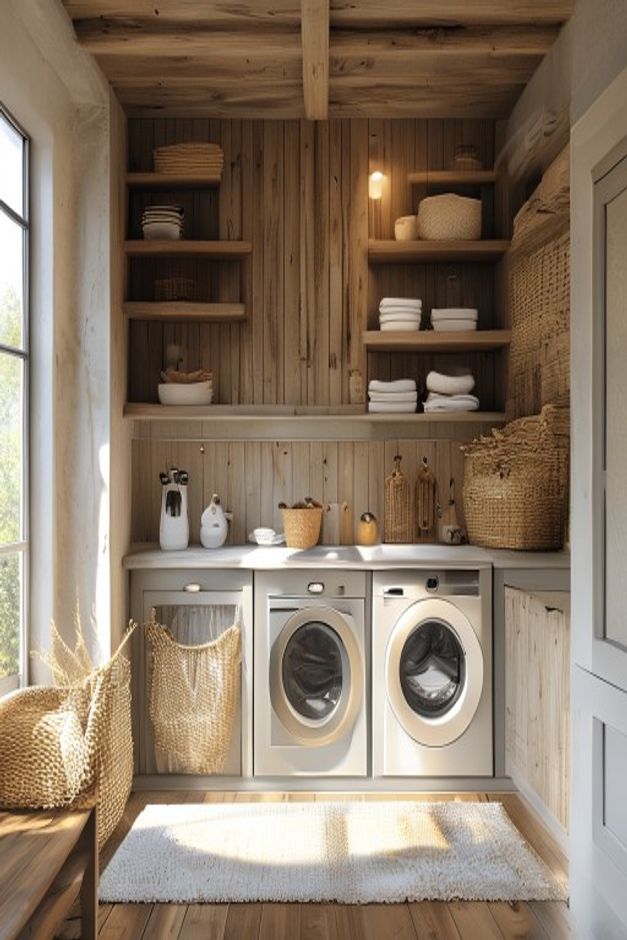

The laundry room often occupies the lowest rung on the residential design ladder, yet this space demands a sophisticated approach to reconcile heavy-duty utility with aesthetic grace. By treating the laundry area as a primary living zone, we shift the narrative from hidden chore-space to a curated environment that honors daily rituals through thoughtful architectural choices. This particular laundry room serves as a masterclass in balancing organic warmth with precise, linear organization, proving that domestic efficiency does not require the sacrifice of interior elegance.
Studying this room reveals how vertical wood-paneled walls provide a rhythmic backdrop that anchors the entire composition. Unlike flat, painted surfaces, the depth offered by these planks introduces a tactile quality that softens the harsh, clinical atmosphere typically associated with washing machines and dryers. The design succeeds because it acknowledges the inherent coldness of appliances and counters it with natural, earthy materials that invite a sense of calm into a high-traffic zone.
Vertical Wood Paneling Draws the Eye Upward
Vertical wood paneling acts as the defining structural element, drawing the eye upward and creating an illusion of increased ceiling height. This choice is particularly effective in linear layouts, where the repetition of lines mimics the flow of movement required for sorting, washing, and folding. By cladding the walls in this manner, the architect establishes a cohesive perimeter that unifies disparate appliances into a singular, intentional wall assembly.
Beyond its visual appeal, the paneling serves a practical purpose in managing the acoustic environment of the laundry room. The texture of the wood helps to dampen the operational noise of machinery, creating a more serene experience for the homeowner. When paired with modern organic laundry room principles, this wall treatment transforms the space into a sanctuary rather than a utility closet, setting a high standard for contemporary residential utility design.
Maximizing Utility Through Linear Storage Walls
The linear storage wall represents the most efficient use of floor space, concentrating all necessary functions along a single, accessible axis. By integrating the washer and dryer directly into the cabinetry, the design eliminates visual clutter and maintains a clean, architectural silhouette. This approach allows the homeowner to maintain a streamlined workflow, keeping detergents, linens, and cleaning supplies within arm’s reach without creating a chaotic, fragmented visual field.
Integrated cabinetry provides the necessary structure to hide bulky items while maintaining a refined facade that complements the surrounding wood paneling. The decision to keep appliances flush with the cabinetry face ensures that the room remains focused on its clean lines rather than the mechanical nature of the equipment. This level of precision is essential for those looking to replicate the art of symmetry in their own home utility zones, where every inch of space must serve a distinct purpose.
Open Shelves Keep Everyday Supplies Within Reach
Open shelving serves as the necessary counterpoint to enclosed cabinetry, providing a space for frequently used items while preventing the room from feeling too heavy or closed-in. These shelves, crafted from the same warm wood tones as the wall paneling, create a sense of continuity that draws the eye across the entire length of the laundry wall. By displaying essential items like woven baskets or neatly stacked linens, the design celebrates the beauty of everyday objects, elevating them to the status of decor.
This configuration also encourages a more organized lifestyle, as the visibility of these items necessitates a higher standard of maintenance. When storage is open, it becomes part of the room’s aesthetic identity, forcing a deliberate arrangement of goods that prevents the accumulation of unnecessary items. The strategic placement of these shelves above the appliances maximizes vertical storage potential, leaving the countertop surface clear for the physical act of folding and sorting laundry.
Balancing Warmth with Matte Appliance Finishes
The selection of matte-finish appliances is a critical design decision that bridges the gap between industrial utility and residential comfort. Glossy, high-shine surfaces often clash with the organic warmth of wood, whereas matte finishes absorb light and blend seamlessly into the background. This subtle shift in texture allows the appliances to coexist with the natural wood tones without dominating the visual landscape, maintaining the room’s serene character.
By opting for neutral, matte-finish machines, the design allows the architecture of the room—the paneling, the shelving, and the lighting—to take center stage. This restraint is a hallmark of sophisticated interior design, where the goal is to create a cohesive environment that feels intentional rather than accidental. For those interested in elevating utility through light wood cabinetry, the integration of matte appliances is a non-negotiable step toward achieving a truly harmonious and modern laundry space.
Lighting Strategies for Enhanced Depth and Texture
Natural light entering from a side window plays a vital role in highlighting the depth and grain of the wood-paneled walls throughout the day. As the sun moves, the shadows cast by the vertical slats change, adding a dynamic quality to the room that keeps the space feeling vibrant and alive. This interplay of light and shadow is essential for preventing the wood from feeling flat or one-dimensional, ensuring that the room retains its warmth regardless of the time of day.
Integrated warm accent lighting complements the natural light, providing focused illumination for the workspace during evening hours or overcast days. By tucking lighting beneath the open shelves, the design ensures that the countertop remains well-lit, facilitating easier sorting and stain treatment. This layered approach to lighting not only enhances the functionality of the laundry room but also accentuates the beautiful textures of the woven hampers and wood surfaces, creating a welcoming atmosphere.
Incorporating Natural Textures for a Softened Aesthetic
Woven wicker baskets and hampers introduce a necessary layer of organic texture that softens the rigid lines of the cabinetry and appliances. These natural elements serve as a bridge between the architectural wood paneling and the more utilitarian aspects of the room, adding a layer of warmth that feels grounded and authentic. The tactile nature of wicker provides a sensory experience that is often missing from modern, high-gloss laundry designs, making the space feel more approachable and lived-in.
Beyond their aesthetic value, these woven items are highly functional, offering breathable storage for linens and clothing. The use of natural materials in a laundry environment also speaks to a broader trend in interior design that favors sustainable, timeless choices over fleeting trends. When combined with the clean lines of the wood paneling, these textured accents create a balanced space that feels both modern and deeply rooted in natural comfort.
A Continuous Countertop Makes Folding Easier
The countertop serves as the primary work surface in any laundry room, and its material selection must balance durability with visual appeal. In this design, the surface provides a continuous, clean span that connects the various sections of the storage wall, offering ample room for folding clothes or preparing items for the wash. By choosing a material that complements the warm wood tones, the architect ensures that the counter feels like an extension of the cabinetry rather than a separate, jarring addition.
Durability is paramount in a room where water, detergents, and heavy baskets are common, yet the choice of finish should not compromise the room’s aesthetic goals. A smooth, easy-to-clean surface is essential for maintaining the hygiene of the space, while its color should remain neutral enough to allow the surrounding wood and woven textures to stand out. This careful balance ensures that the laundry room remains a functional workhorse that never loses its refined, architectural appeal.
Creating Cohesion Through Consistent Materiality
Cohesion is achieved in this laundry room through the strict repetition of materials and colors across all surfaces. From the vertical wood planks to the open shelving and the woven accents, every element shares a common language of warmth and natural texture. This consistency prevents the room from feeling cluttered, even when it is filled with the various items required for daily laundry tasks, as the eye is not distracted by competing patterns or clashing finishes.
For homeowners looking to replicate this look, the key is to choose a limited palette and stick to it throughout the design process. By focusing on a few high-quality materials—wood, matte metal, and natural fibers—you can create a space that feels curated and intentional. This disciplined approach to design is what elevates a laundry room from a mere utility space to a beautifully integrated part of the home, proving that even the most mundane tasks can be performed in a space of genuine beauty.
How can I incorporate vertical wood paneling into a small laundry room?
Vertical wood paneling can be installed on a single feature wall to draw the eye upward, which helps to make a small room feel taller and more spacious without overwhelming the area.
What are the best materials for laundry room countertops?
Durable, non-porous surfaces like quartz or high-quality laminates are ideal, as they resist moisture and chemical spills while maintaining a clean, cohesive look with your cabinetry.
How do I keep a laundry room organized with open shelving?
Use uniform storage containers, such as woven baskets or matching bins, to house smaller items, ensuring that the visual clutter is minimized while keeping your essentials easily accessible.