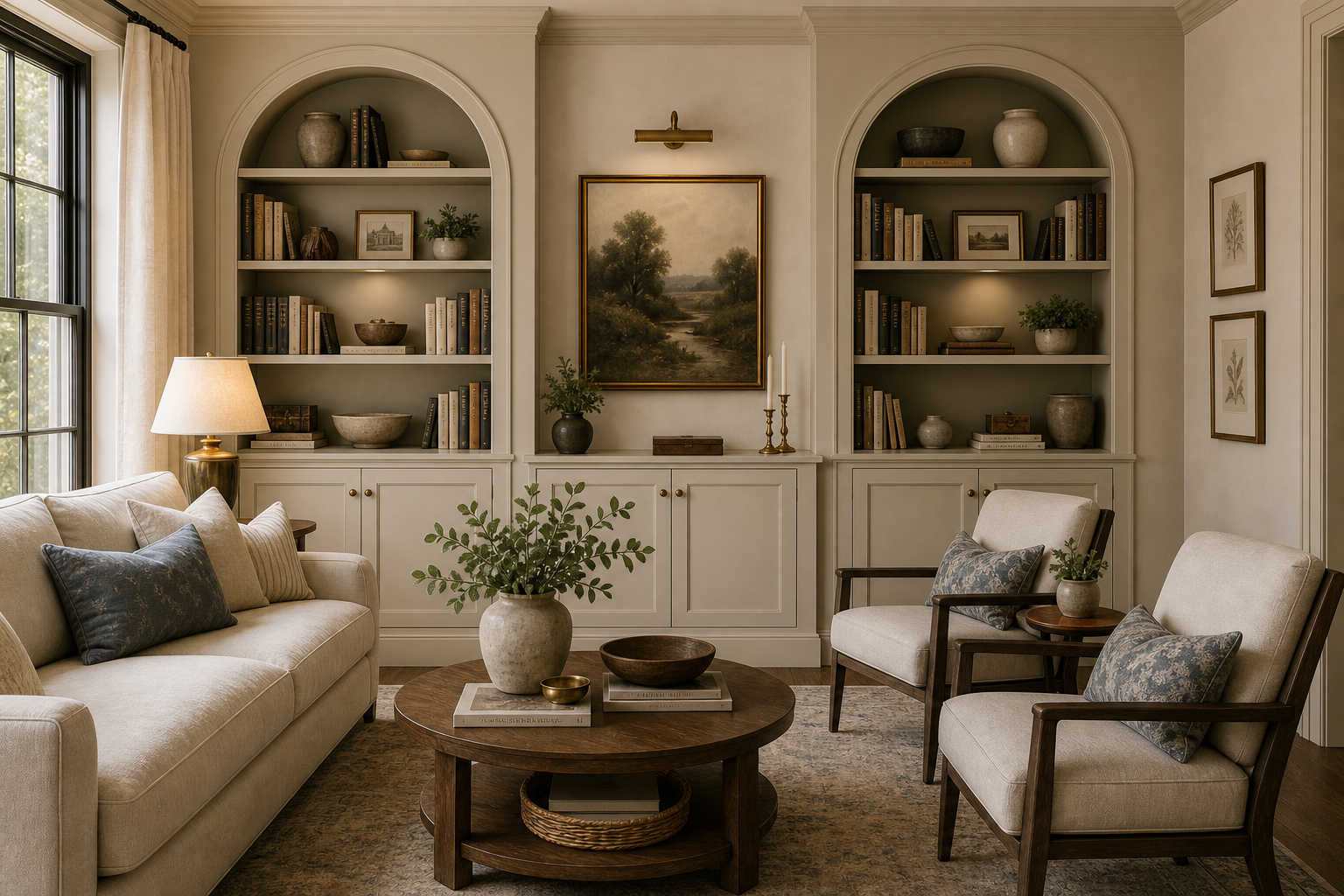

Twin arched bookcases turn the far wall into a symmetrical architectural composition. Each recess rises from closed lower cabinets and curves above edited shelves of books and pottery. A central landscape occupies the wall between them, giving the arrangement a focal panel without connecting the two arches into one continuous storage unit.
The seating group repeats that balance more loosely. A pale sofa sits at the left, two wood-framed lounge chairs face inward, and a round timber table anchors the center. Daylight from the tall side window reveals the shelf depth and pale joinery while keeping the built-ins from reading as a heavy backdrop.
Twin Arches Establish the Wall Rhythm
The two arched openings immediately define the main wall. Their curved tops soften the tall storage and give the living room a more architectural presence. Because the arches are paired, the wall feels balanced without becoming flat. The curve adds character while the lower cabinets keep the base practical.
The arches share spring height, width, and shelf spacing, making them read as a pair even though their displayed objects differ. Their curved heads also soften the tall rectangular wall panels nearby.
The framed landscape between the shelves gives the wall a center point. It prevents the two bookcases from feeling like separate towers. The picture light above the art adds a refined note and draws the eye back to the middle after it moves through the shelves.
Closed Cabinets Ground Open Display
Closed cabinets below the shelves give the room useful storage without exposing every object. That makes the open shelves feel more intentional. The cabinet doors also create a calm horizontal base under the arches. Without that base, the tall shelves could feel visually top-heavy.
The lower cabinet doors align with shelf divisions above and form a continuous pale base across each arched bay. Their solid fronts absorb visual weight from books, bowls, and frames without exposing more small objects at floor level. The central low cabinet continues between arches, supporting the artwork and joining the three wall zones. Internal storage is not visible; the architectural value lies in this closed, stable lower band.
Shelf Contents Preserve Negative Space
Books are mixed with ceramic bowls, vessels, small art and plants. The objects vary in height, but they stay within a quiet color range. Empty space is just as important as the objects. It lets the arched openings remain readable and keeps the wall from looking crowded.
Books alternate between vertical rows and short horizontal stacks, while bowls and vessels occupy separate bays. Empty backing remains visible around every group, preventing the recesses from becoming dark collections of small edges.
The cream sofa and upholstered chairs sit lower than the shelves, so the built-ins remain the architectural focal point. The seating supports the wall rather than competing with it. Blue-gray pillows echo some of the book and art tones, helping the seating feel connected to the shelf styling.
The sofa and two chairs face one another across the round table but do not mirror the arches exactly. One shaded lamp occupies the left corner, and a branch vessel rises at the center foreground. This looser furniture symmetry keeps the living area comfortable rather than museum-like. The built-ins organize the wall; the seating responds to conversation, window access, and the open route beside the chairs.
A Round Table Softens the Joinery Grid
The round wood coffee table softens the rectangular cabinet doors and the straight edges of the seating. It also brings a darker wood tone into the center of the room. Its lower shelf holds a basket and books, repeating the built-in storage idea at a smaller scale.
Side Daylight Reveals the Recess Depth
Daylight from the side window washes across the sofa and shelves, making the painted built-ins feel warmer. Linen curtains keep that light soft. The table lamp adds a second, lower glow near the seating area. That prevents the book wall from feeling like the only lit surface.
This built-in strategy expands on the modern organic living room shelving guide, but uses formal paired arches and a central picture to create a more transitional elevation.
The arched recesses also stop below the ceiling with a shared pale crown line, preventing the curves from appearing cut into an otherwise unresolved wall.