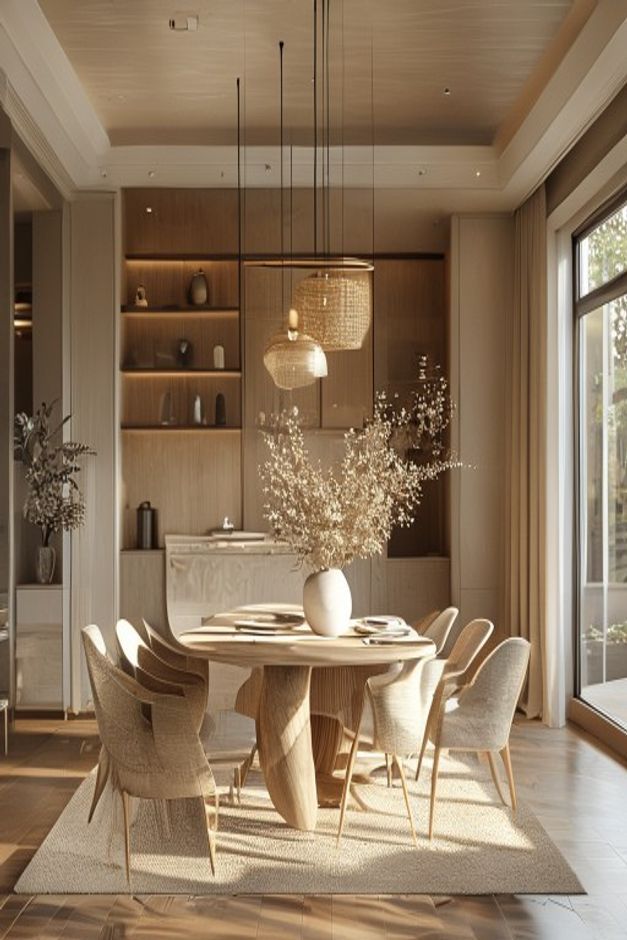

The composition demonstrates how a monochrome palette can achieve profound depth through the careful selection of silhouettes and textures. By prioritizing organic shapes and a consistent tonal range, the space transcends the typical dining configuration, offering a tranquil atmosphere that feels both curated and inherently livable. It is a study in how architectural interest can be generated through geometry rather than color, making it an essential reference for those looking to elevate their interiors.
The room captures a sophisticated balance between the permanence of built-in cabinetry and the fluidity of a central dining arrangement. Every element, from the woven lighting fixtures to the light-toned flooring, works in tandem to create a cohesive environment. The layout is useful because it demonstrates how to maintain visual interest in a room that avoids high-contrast color schemes, relying instead on the interplay of shadow, form, and material composition to define its character.
The Role of Sculptural Geometry in Dining Design
At the center of the room, the round dining table featuring a sculptural base stands as a deliberate intervention against the linear constraints of the surrounding walls. Its circular form softens the room’s perimeter, encouraging a more communal flow of movement and interaction. By choosing a table with an expressive base, the design introduces a sense of artistry that anchors the space without requiring bold colors or intricate patterns to command attention.
This approach to furniture selection highlights the importance of silhouette in modern residential architecture. When the color palette is kept within a tight range of beige, cream, and light oak, the shape of the furniture becomes the primary language of the room. The sculptural quality of the table base provides a necessary counterpoint to the more rigid lines of the built-in storage, ensuring the room feels dynamic rather than static or overly formal.
Mastering the Warm Neutral Color Palette
Achieving a warm neutral environment requires a nuanced understanding of undertones and light reflection. By layering shades of taupe, cream, and soft beige, the design avoids the sterile feeling often associated with lighter interiors. These colors are not merely background choices; they are active participants in creating a sense of enclosure and comfort, allowing the room to feel grounded despite its light and airy aesthetic.
The success of this palette relies on the subtle variation between the surfaces. The light oak tones of the cabinetry echo the warmth found in the textile choices, creating a rhythmic continuity that guides the eye throughout the room. This intentional repetition of tones prevents the space from feeling disjointed, fostering a sense of harmony that is essential for a dining area intended for both quiet daily meals and more involved social gatherings.
Integrating Built-in Cabinetry for Architectural Depth
The presence of floor-to-ceiling wooden cabinetry along the perimeter provides a structural backbone that defines the room’s boundaries. Rather than acting as a simple storage solution, these built-ins introduce a rhythmic pattern through their open shelving and solid panels. This integration of storage into the architecture of the room allows the dining area to remain uncluttered, emphasizing the sculptural nature of the table while providing space for curated decorative items.
By utilizing the same light wood finish as other elements in the room, the cabinetry recedes into the background, allowing the overall volume of the space to feel expansive. The open shelving sections offer an opportunity to introduce small-scale decor, which adds a layer of personal narrative to the room. This balance between solid storage and open display is a hallmark of sophisticated design, ensuring that the room remains functional without sacrificing its aesthetic purity.
The Impact of Woven Lighting on Ambient Atmosphere
The cluster of woven pendant lights suspended above the dining table serves as the primary source of visual texture within the room. Their organic construction and complex weave patterns provide a tactile quality that contrasts beautifully with the smoother surfaces of the table and chairs. These fixtures do more than provide illumination; they act as a sculptural canopy that defines the dining zone, pulling the eye upward and creating a sense of intimacy.
When selecting lighting for a neutral room, it is crucial to consider how the material will interact with the surrounding light. The woven texture of these pendants creates intricate shadow patterns, adding a layer of complexity that changes throughout the day. This dynamic interaction between light and material is what gives the room its lived-in, authentic feel, proving that lighting is as much about atmosphere as it is about utility.
Selecting Upholstered Chairs for Comfort and Style
The choice of upholstered dining chairs in a light fabric is a strategic move to soften the overall composition of the room. By introducing soft, textile-heavy elements, the design ensures that the space remains comfortable for extended periods of use. The fabric choice complements the beige and cream tones of the walls, creating a seamless transition between the furniture and the architecture of the room.
Beyond comfort, these chairs play a critical role in the room’s visual balance. Their clean lines and understated design allow them to sit harmoniously with the more complex sculptural table base. This pairing of a bold table with simpler, elegant chairs is a classic design strategy that prevents the dining area from feeling overwhelmed. It maintains a sense of equilibrium, where every piece of furniture has a clear and defined purpose within the larger arrangement.
Using Textured Rugs to Define the Dining Zone
A textured area rug serves as the foundation for the dining arrangement, physically and visually separating the table from the surrounding floor space. Its subtle pattern and tactile quality add another dimension to the room, preventing the floor from feeling like an empty void. The rug’s neutral tones align with the rest of the palette, ensuring that it enhances the space without drawing undue attention away from the sculptural table.
The inclusion of a rug is particularly effective in an open-concept or large-scale dining room, as it creates a sense of containment. It signals where the dining function begins and ends, providing a soft landing for the chairs and adding warmth to the room’s lower half. By choosing a rug with a distinct texture, the designer adds depth that is felt underfoot, contributing to the overall sensory experience of the space.
Curating Minimalist Decor for a Serene Environment
Minimalism in this dining room is not about the absence of items, but the deliberate selection of objects that contribute to the room’s narrative. A large white ceramic vase filled with dried botanicals acts as a centerpiece, echoing the organic shapes found in the table base and the pendant lights. This approach to decor ensures that the room feels curated rather than cluttered, with every item serving a specific aesthetic purpose.
The minimalist shelf decor within the built-in cabinetry further reinforces this philosophy. By limiting the number of items on display, the design allows each piece to be appreciated individually. This restraint is what gives the room its sense of calm, providing a visual reprieve that is often missing in more maximalist spaces. It is a reminder that in design, sometimes the most powerful statement is the one made through careful subtraction.
The Synergy of Materiality and Form
The final layer of this design is the interplay between the various materials present: light wood, woven fibers, ceramic, and soft textiles. These materials are chosen not just for their appearance, but for the way they interact with light and shadow. The light-toned surfaces reflect natural light, making the room feel bright and inviting, while the varied textures provide the necessary visual weight to keep the room from feeling flat.
For those interested in extending this aesthetic to other areas of the home, exploring Quiet Luxury Bedroom Color Ideas can provide a broader context for using neutral palettes in private spaces. Similarly, understanding how to handle smaller rooms with similar design principles can be found in our guide on Warm Neutral Bathroom Double Vanity Ideas. These resources highlight that the principles of materiality and form are universal, applicable across different room types to create a cohesive and sophisticated home environment.
How can I incorporate sculptural elements without cluttering the room?
Focus on one or two key pieces, such as a dining table with a unique base or a statement lighting fixture, and keep the surrounding furniture and decor more understated to let those items shine.
What is the best way to maintain interest in a monochromatic room?
Use a variety of textures—such as woven lighting, soft upholstery, and natural wood grains—to create depth and visual interest without relying on high-contrast colors.
Why is it important to consider the scale of furniture in a dining room?
Proper scale ensures that the furniture fits the room’s proportions, allowing for comfortable movement while maintaining a balanced visual weight that keeps the space feeling both open and grounded.