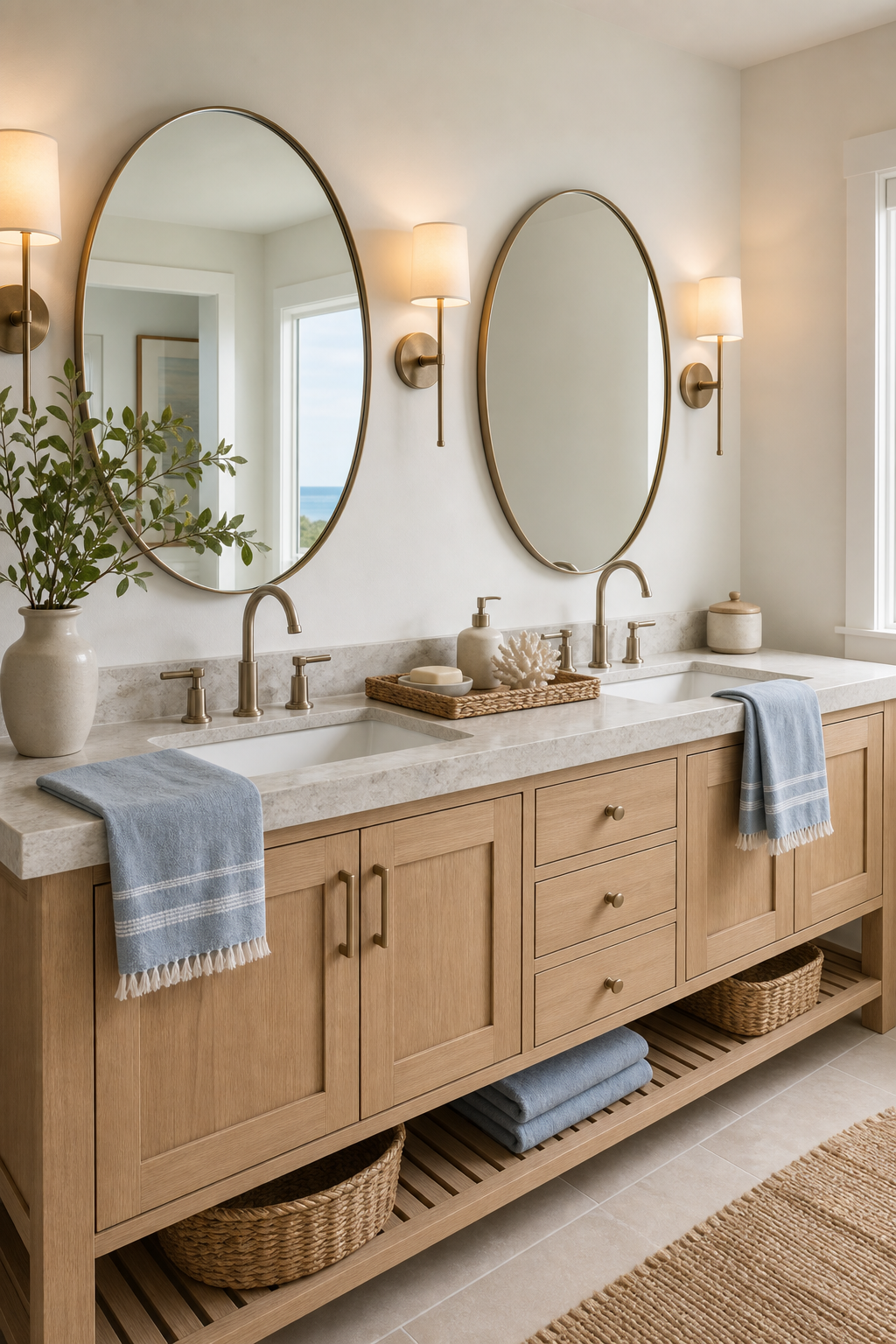

This double vanity feels coastal through light, air, and a few blue and woven accents rather than obvious nautical symbols. Two large oval mirrors establish the main rhythm above separate basins, while three shaded sconces divide the wall into evenly illuminated bays. Pale blue towels mark each sink and make the long cabinet easy to read as a paired arrangement.
The styling remains effective because it respects the vanity's architecture. A central woven tray bridges the two basins, greenery rises at the left, and baskets sit on the open lower shelf. These objects occupy clear zones instead of spreading across every available surface, so the broad counter still appears useful.
Paired Mirrors Establish the Double-Vanity Rhythm
Two tall oval mirrors are centered over the basins and framed by thin warm-toned edges. Their curves soften the long rectangular counter and paneled cabinet fronts. The mirrors are similar but not crowded together; a visible section of wall remains between them for the central sconce.
The left mirror reflects an open doorway and a distant blue view, adding depth without requiring another decorative image. Both mirror tops align, giving the wall a clear datum even though daylight and reflected content differ from one side to the other.
Three Sconces Divide the Wall into Useful Bays
A shaded vertical sconce sits at each outer edge, with a third between the mirrors. Their pale shades spread a warm glow across the wall while slim metal stems maintain an airy profile. This arrangement gives each basin side light and uses the center fixture as a shared source.
The photograph supports the layering of daylight and wall light, but not an exact lamp specification. What matters is the placement: fixtures sit beside reflections rather than above them, and their height relates to the long mirror bodies. The outer lights also visually contain the composition.
Blue Towels Mark Each Sink Without Adding Clutter
One pale blue towel hangs over the front edge at each basin. Their repeated color identifies the paired stations and introduces the only strong cool accent against warm wood tones, pale walls, and light counter surfaces. Fine white stripes and fringed ends add texture at a scale smaller than the cabinet panels.
Because the towels are placed symmetrically, the central tray can remain more informal. Folding additional textiles across the countertop would weaken this clear two-part reading. The visible pair is sufficient to signal use while leaving most of each basin surround open.
A Central Tray Connects the Two Basins
A shallow woven tray occupies the counter between the sinks and holds a soap dispenser, small dish, and coral-like decorative object. Its warm texture relates to the baskets below without blocking faucet access. Positioning it in the shared middle prevents duplicate accessory groups from crowding both sides.
Only objects visible in the tray should be credited to the design. No concealed organizer is implied. Its value lies in containment: several small shapes read as one low composition, and the woven edge introduces texture without competing with the mirror frames.
Open Lower Storage Balances Closed Cabinet Fronts
Paneled doors and central drawers create a substantial cabinet body, while a slatted shelf runs along the bottom. Woven baskets and folded blue towels occupy that open level. The combination gives the vanity a furniture-like base and keeps frequently visible textiles below the cleaner countertop plane.
The shelf is deliberately not filled from end to end. Gaps expose its slats and allow the baskets to remain separate forms. That breathing room is important under a long double vanity; a continuous row of containers would turn the lower zone into another dense cabinet front.
Greenery Adds Height at the Outer Edges
A tall leafy arrangement rises at the far left, while a smaller branch appears near the right window. Their asymmetry keeps the otherwise paired composition from becoming rigid. Both stay outside the central mirror-and-basin sequence, so foliage frames the vanity rather than interrupting it.
The practical lesson is to style according to the vanity's existing divisions. Use paired accents where two users need equal clarity, consolidate shared objects in the center, and reserve open shelf space for a few baskets or folded textiles. Coastal character then comes from lightness and color balance, not applied motifs.