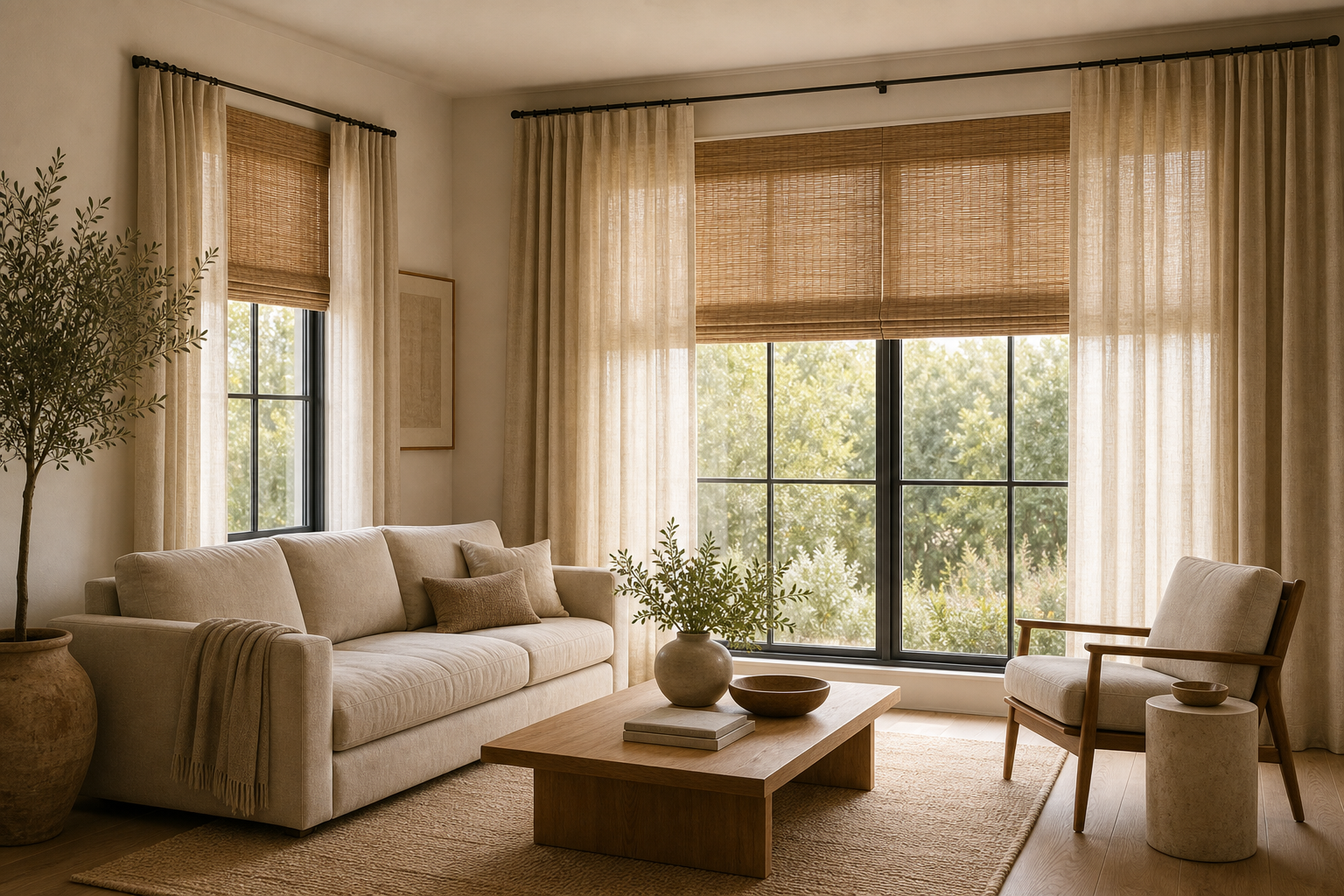

The window treatment is the room's largest material composition. Woven shades cover the upper portions of two black-framed windows, while full-height sheer curtains hang at their sides. One layer filters the glass directly; the other softens the wall edges and draws a continuous vertical line from ceiling to floor.
This pairing gives a pale, minimally furnished room enough texture to feel complete. A cream sofa, light timber coffee table, open-arm chair, low rug, and large plants remain quiet beneath the windows. Daylight is controlled without losing the garden view that gives the seating group its orientation.
Woven Shades Control the Brightest Upper Field
The shades are lowered to roughly the upper half of each opening, reducing glare while leaving the lower panes open to foliage. Their dense horizontal weave contrasts with the dark vertical mullions. Because the two windows differ in width, separate shades fit each opening without forcing one oversized treatment around the corner.
The warm tan color relates to the floor, table, and rug. Exact fiber and mechanism are not visible, so the reliable lesson is opacity and placement rather than a product specification.
Sheer Curtains Extend the Windows to Room Height
Pale panels hang from black rods close to the ceiling and fall to the floor. Their vertical folds make both openings appear taller and soften the hard contrast of black frames against warm white walls. The translucent fabric keeps window outlines visible through it.
Panels gather mainly at the sides, preserving the central view. Adequate fullness gives them depth without pushing into the sofa or chair. Short curtains would divide the elevation at sill height and weaken the room's long, calm verticals.
Black Hardware Connects Separate Openings
Slim rods run above each window and meet visually at the corner. Their dark line repeats mullions but stays lighter than a boxed pelmet. Rings create regular pleats and allow the curtains to remain visibly operable.
The hardware is not hidden, yet it remains subordinate because the rods are thin and mounted against the pale upper wall. This graphic outline brings precision to otherwise soft materials.
Furniture Stays Below the Daylight Zone
The sofa sits under the smaller window without rising into the open panes, while the chair occupies the right edge of the larger opening. Both use pale upholstery that reflects filtered light. A low rectangular table preserves a broad view across the room.
The rug gathers seating without extending beneath every perimeter plant. Its coarse neutral texture echoes the shades at floor level, giving the layered window material a quiet counterpart below.
Plants Frame Rather Than Screen the View
A tall tree-like plant fills the far-left corner and a smaller leafy arrangement sits on the coffee table. Their irregular silhouettes mediate between interior lines and exterior foliage. Neither occupies the central glazing, so visual access to the garden remains strong.
To reproduce the balance, assign direct privacy and glare control to the shade, then use full-height curtains for softness and proportion. Mount both from actual window geometry, keep furniture below the open glass, and repeat woven texture sparingly elsewhere. Layering succeeds here because each treatment has a distinct spatial job.
Layered Fabric Changes the Room's Perceived Height
Curtain panels begin close to the ceiling and fall to the floor, visually extending openings beyond their actual frames. The woven shades remain fitted inside the dark window outlines, so each treatment communicates a different dimension: shades mark width, while curtains mark height. Their overlap gives the corner depth without adding a bulky valance.
Pale sheer fabric transmits light and preserves soft shadow folds, avoiding an opaque wall at the glazing. The woven shades introduce a warmer, denser texture at the top. These two levels let the room remain bright while giving the black frames enough contrast to hold their geometry against pale walls and upholstery.
The seating group respects the vertical treatment by staying well below the window heads. A low sofa, rounded chair, coffee table, and floor-level rug leave the upper half dominated by daylight and fabric. That proportional separation makes the room feel calm; furniture supplies a grounded base, while the layered windows provide most of the elevation's movement.
The round coffee table leaves curved floor area visible between sofa and chair, reinforcing the room's low, open foreground beneath the tall treatments.