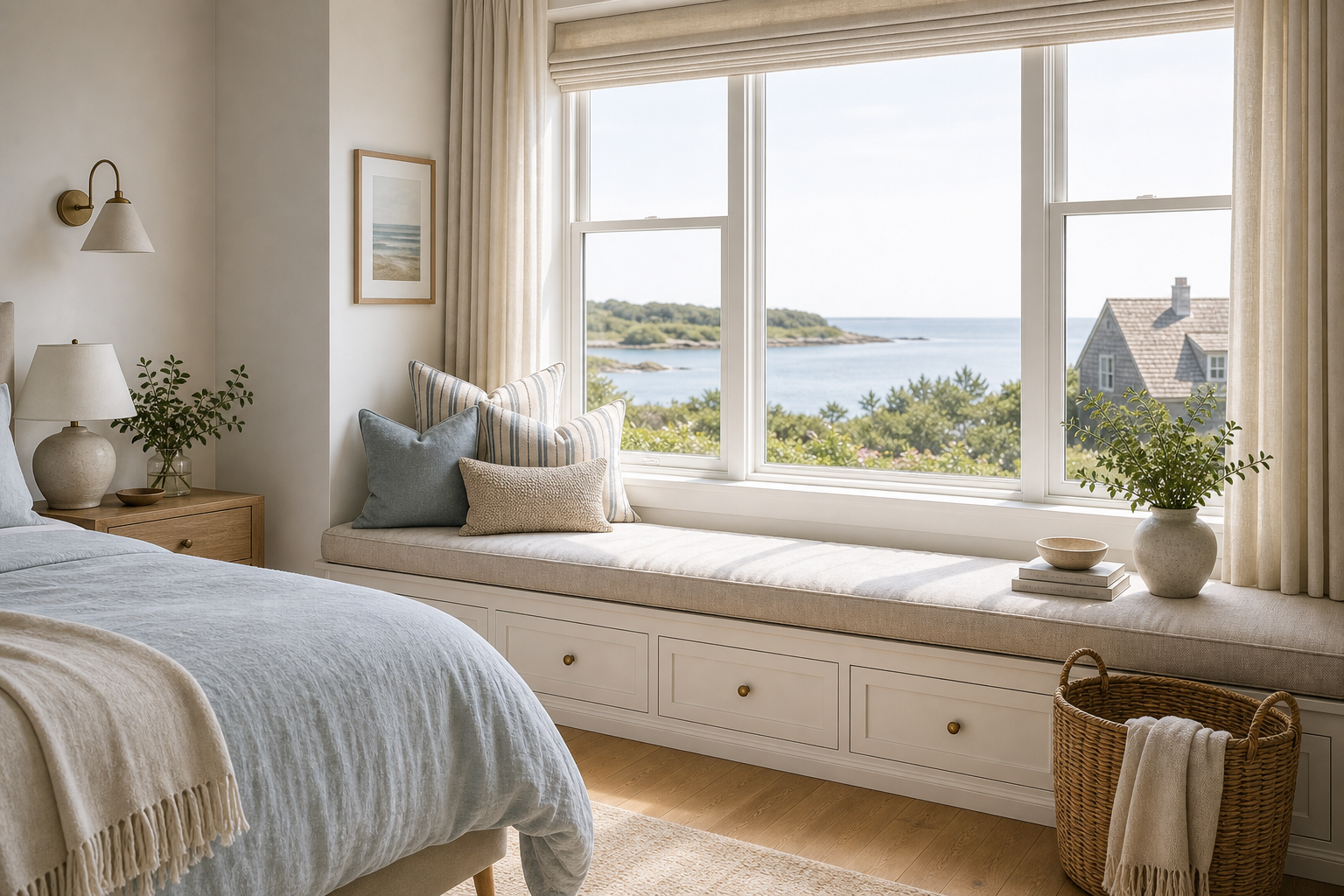

The window seat turns the bedroom's best view into usable architecture. It runs beneath a broad multi-pane window and fills the recess from curtain to curtain, creating a continuous place to sit without introducing another freestanding chair. A low bank of drawers gives the base enough visual weight to feel built in, while the pale cushion keeps the top aligned with the room's relaxed coastal palette.
The bed enters the photograph from the left, close enough to share the window light but far enough away that the seat retains its own purpose. This is the key planning decision: sleeping and sitting occupy neighboring zones rather than overlapping. The basket at the right sits beyond the cushion edge, leaving the central approach unobstructed and the drawer fronts fully accessible.
The Window Bay Becomes a Second Place to Pause
Three window sections frame water, low vegetation, and a distant roofline. The bench is centered beneath them, so the seated position faces the view rather than the bed. Its depth is visible at the right return and appears generous enough for the back cushions to stand upright without consuming the entire seat. The result feels intentional because glazing, cushion, and base share one clear width.
Drawer Fronts Give the Base Architectural Weight
Four broad drawers are arranged in a regular line below the cushion, each marked by a small round pull. Their shallow horizontal proportions reinforce the long sill and prevent the base from resembling a tall chest. The photograph does not reveal the interiors, so no storage system should be inferred; what is certain is that the closed fronts keep the elevation calm and lift loose belongings away from the bedroom floor.
Cushion Layers Stay Below the Horizon
The fitted seat pad forms one pale plane, while several white, blue-gray, and softly patterned pillows gather at the left and center. None rises high enough to block the middle panes. That restraint preserves the landscape as part of the composition and leaves an open stretch for sitting. A window bench becomes less useful when decorative pillows occupy its full length, particularly in a bedroom where the seat should offer an alternative to the bed.
Curtains Frame Rather Than Conceal
Full-height neutral curtains hang just outside the seat ends and stop near the timber floor. Their vertical folds counter the strong horizontal line of the drawers and cushion. A slim treatment sits close to the window head, but its exact type is not fully legible. Together these layers soften the opening without covering the coastal outlook that gives the bench its reason for being.
The Bed and Bench Share Light Without Competing
The bed's pale cover and timber frame occupy the near left foreground, leaving a visible strip of floor between sleeping area and window storage. That small gap matters for daily use: it keeps the drawers approachable and prevents bedding from spilling onto the seat. A related minimalist bedroom window layout handles a different object beneath the glazing, but both rooms show why furniture must respect the window wall's circulation.
Natural Texture Keeps the Pale Scheme from Feeling Flat
A woven basket, timber floor, small wood-toned bedside surface, and leafy plants distribute warm texture around the white joinery. Blue-gray cushions make a quiet reference to the outdoor water without turning the room into a literal nautical theme. The useful design move is moderation: the view supplies identity, while the interior relies on simple materials and a limited number of softly colored accents.
The Bench Is Most Convincing as Part of the Wall
The seat meets both side walls cleanly and aligns its top below the glazing, so there are no narrow gaps collecting visual clutter. It reads as a modification to the room envelope rather than movable furniture. For a similar bedroom, the critical sequence is to resolve curtain clearance, drawer access, and cushion depth before selecting pillows. Those practical relationships create the ease seen here; styling only completes an already coherent bay.
The top of the drawer base also meets the window casing at a consistent level, avoiding the awkward impression of a bench placed in front of an existing opening. That alignment is what lets the cushion read as part of the sill zone. Small brass-toned pulls add a measured rhythm below but remain subordinate to the outdoor view. From the doorway, the base appears calm enough to support the soft pillow arrangement without introducing a second decorative pattern beneath it.