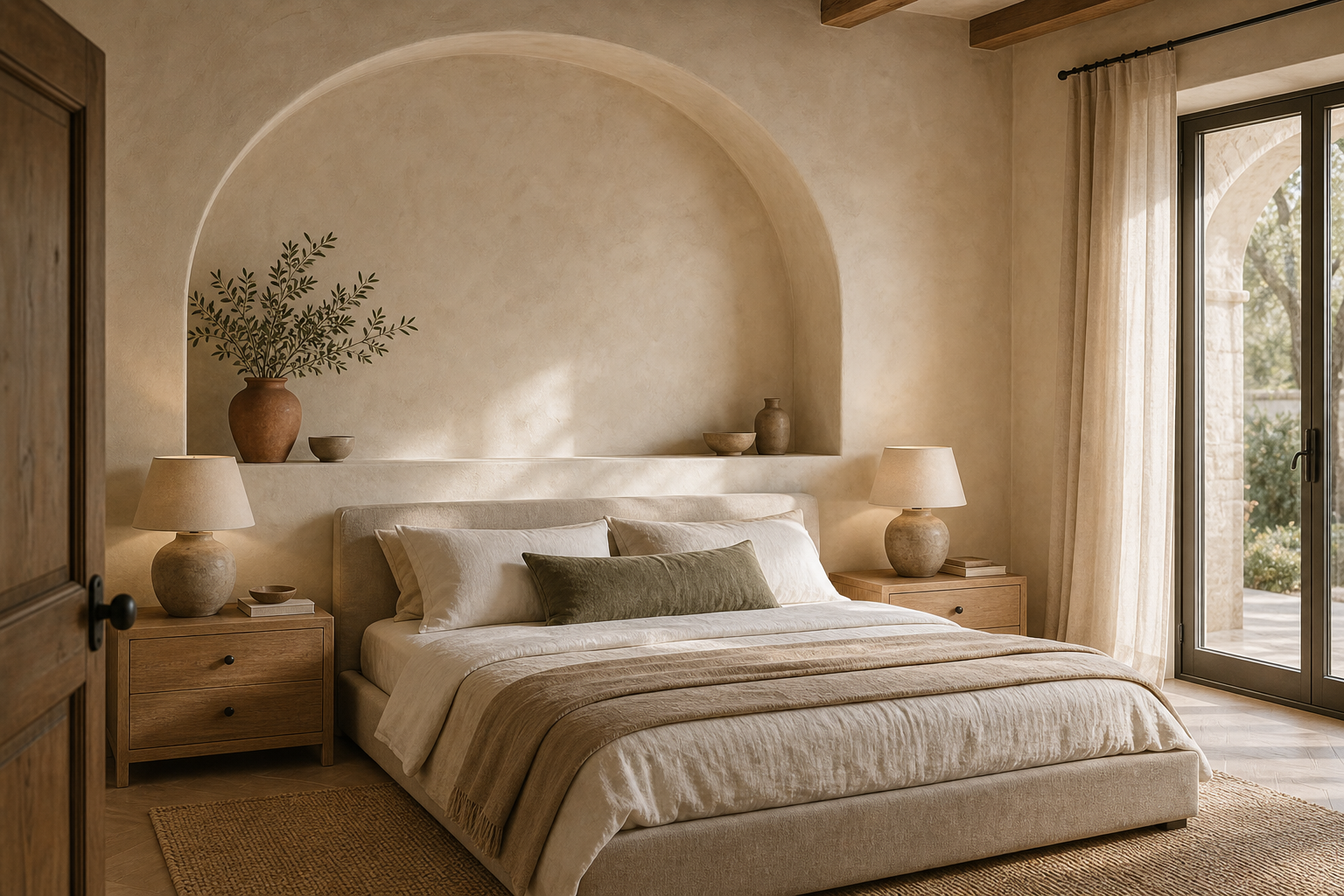

The broad plaster arch behind the bed is both wall and headboard architecture. It rises from a low integrated ledge, curves above the pillows, and encloses the sleeping zone within a softly shadowed field. Because the arch is rendered in nearly the same warm pale tone as the surrounding wall, its depth comes from form and changing daylight rather than an applied accent color.
A low upholstered bed sits centrally within the opening, flanked by timber-toned bedside cabinets and small lamps. The furniture remains below the spring line of the arch, preserving its full curve. Exposed ceiling beams add a second, straighter rhythm overhead, so the room balances one large rounded gesture with several measured horizontal lines.
The Arch Defines the Bed Before Furniture Does
The opening is substantially wider than the mattress and leaves pale wall margins at both sides of the headboard. That extra width makes the niche feel architectural instead of fitted tightly around one bed size. Its highest point aligns with the center of the sleeping arrangement, while the curved shoulders descend toward the nightstands and visually gather them into one composition.
An Integrated Ledge Gives the Curve a Base
A thick plaster-like ledge runs behind the headboard and continues beneath the curve. Small vessels and branches occupy its ends, but the central section remains largely concealed by pillows. The ledge establishes a stable horizontal datum for the arch and reduces the need for separate wall shelves. It is shallow enough that the bed can remain close to the wall without becoming visually detached.
Low Bedside Pieces Preserve the Niche
Timber-toned cabinets sit below the ledge and carry compact shaded lamps. Their simple fronts and rounded pottery do not compete with the plaster surface. The lamps create warm pools at the lower corners while daylight handles the larger wall. Exact bulb temperature and cabinet interiors are not visible; what can be judged is the careful height relationship between light, ledge, and arch.
Beams Counter the Soft Geometry
Several dark timber beams cross the pale ceiling from front to back. Their spacing adds depth and direction above the bed without repeating the wall curve. Because they remain darker than the floor and furniture, they give the room an upper boundary. The contrast keeps the pale plaster envelope from feeling weightless and makes the low bed read as intentionally grounded.
Garden Doors Pull Light Across the Texture
Tall glazed doors at the right introduce side light that travels across the arched reveal, making subtle variation in the plaster-like surface visible. Full-height curtains frame the glazing but do not cover the opening. A similar softness appears in this warm neutral bedroom with linen curtains, although here the light's most important task is revealing architectural relief.
Textiles Follow the Architecture's Quiet Palette
Layered ivory, sand, and muted olive bedding stays close to the wall tones. A low upholstered bench repeats the bed width in the foreground, while a pale rug extends beyond both pieces. No bold pattern breaks the niche outline. Texture comes from folds, woven-looking surfaces, and the irregular wall finish, allowing the room to feel warm without relying on decorative contrast.
The Bed Wall Is Complete Without Artwork
The arch, ledge, vessels, lamps, and headboard already provide distinct layers, so the central plaster field is left empty. Adding a large framed picture would divide the curve and introduce a competing rectangle at its most expressive point. The practical lesson is to decide whether architecture or artwork will lead the wall. Here the built form has enough scale and shadow to carry the entire elevation.
At the arch edges, the pale wall returns toward the bedside cabinets rather than ending in decorative columns. This continuous surface lets the curved niche feel carved from the room envelope. Small lamps and vessels sit in front of those returns, offering scale without hiding the change in depth. From the doorway, the recessed bed reads first as one calm shadow, then reveals textiles and furniture as the viewer approaches. That sequence gives the room more spatial richness than a flat painted feature wall could provide.
The low bench at the foot stays inside the rug field and below the mattress line, so it extends the sleeping zone without interrupting the arch.