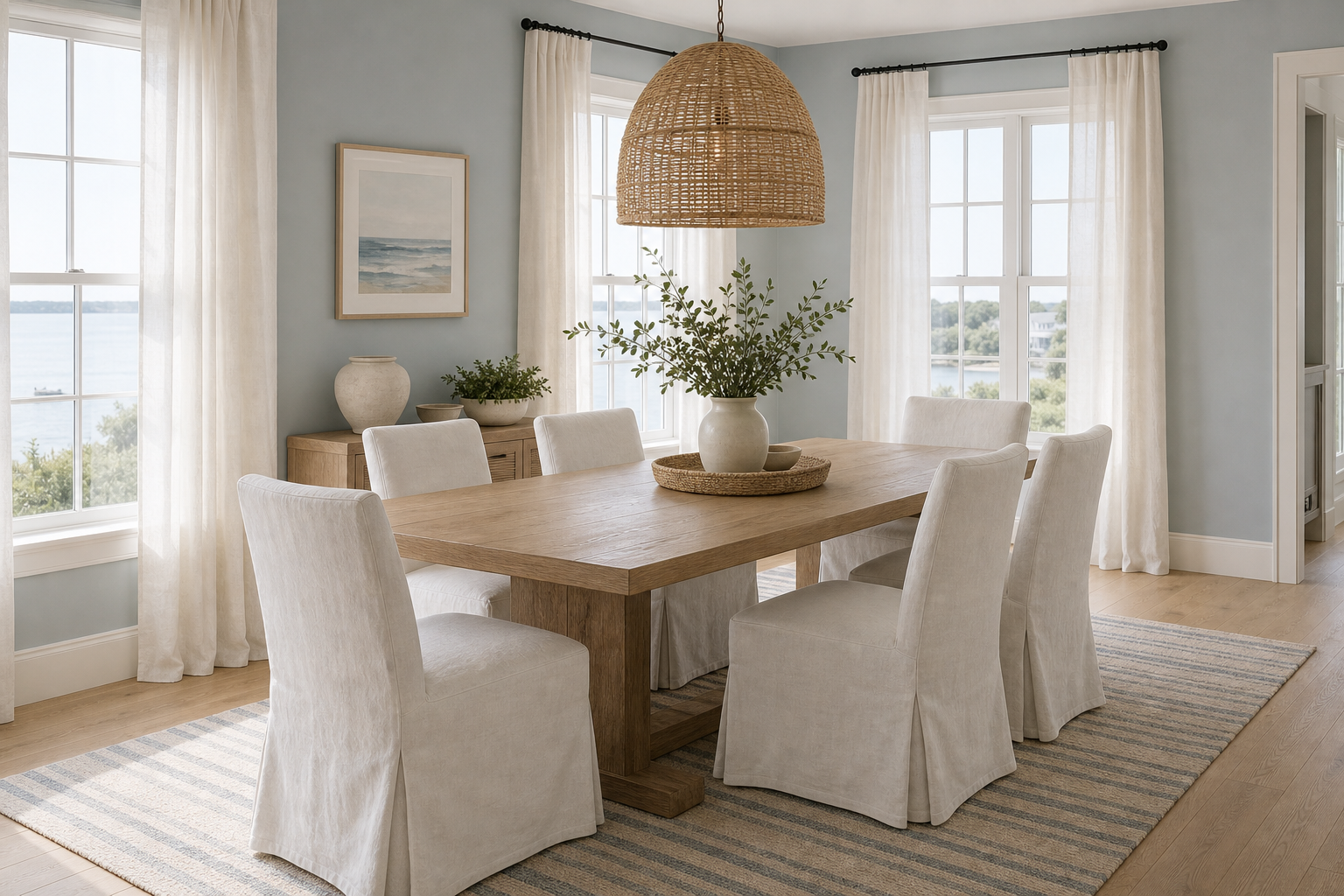

Six white slipcovered chairs create a soft repeated perimeter around the dining table. Their straight backs retain enough structure to read individually, while long skirts reduce the number of legs visible against the striped rug. A light timber-toned table and woven pendant bring warmth to the center. Muted blue-gray walls and corner windows establish a coastal atmosphere through color and daylight rather than themed decoration.
Slipcovers Create a Continuous Soft Perimeter
The white chair covers are the strongest repeated element around the table. Their fabric skirts soften the dining set and give the room its casual coastal character. Because all six chairs share the same cover, the table area feels cohesive rather than mismatched.
The skirts stop just above the rug and hang in relatively straight planes, so the covers look fitted rather than pooled. Repetition around all sides turns fabric into the room's dominant texture while maintaining a consistent seat rhythm.
The light timber tone table gives the soft chairs a stable center. Its rectangular form and thick legs add enough structure to balance the relaxed linen. The wood tone also connects to the floor and sideboard, which keeps the dining area warm.
The Table Supplies a Firm Central Plane
The woven pendant repeats the natural texture of the coastal setting without using a literal beach motif. Its large rounded shape makes the table feel centered. The open weave also keeps the fixture light, which suits the bright windows and pale palette.
The rectangular table is visibly heavier than the covered chairs, which is the correct hierarchy for a soft perimeter. Its broad top provides a stable center and the open space beneath keeps chair skirts from merging into one opaque block.
A Woven Pendant Repeats Natural Texture Overhead
The wall color gives the room a soft coastal reference while staying muted. It frames the white curtains and chair covers without becoming overly decorative. This is a useful alternative to pure white walls when a dining room needs atmosphere.
The rounded fixture hangs above the table center and remains visually porous. Its woven surface catches daylight differently from the smoother chair covers, expanding the natural texture story without repeating the same fabric at another height.
The striped rug adds pattern below the table, but its colors remain close to sand and pale blue. That allows it to work with the slipcovers instead of competing with them. The rug also gives the dining area a clear boundary on the wood floor.
The Striped Rug Contains the Dining Group
The tall windows and sheer curtains bring in bright daylight, which makes the white fabric-covered chairs feel fresh rather than heavy. The view beyond the glass strengthens the coastal mood, but the room does not rely on nautical objects to make its point.
Choose slipcovered chairs with clean backs and simple skirts. The covers should look relaxed, but not so loose that they hide the chair shape completely. Pair them with a light timber tone table, a woven pendant and a rug in muted stripes or natural texture.
Using Slipcovers Without Losing Furniture Definition
I would not replace the slipcovers with hard wood chairs in this exact room. The fabric is what makes the dining area feel easy and coastal. I would also avoid strong navy accents. The softer blue-gray wall is more refined and better suited to the pale linen.
The curved seating in this Parisian dining room chair analysis depends on exposed silhouettes. Here, tailored covers deliberately soften those outlines while table, pendant, and windows keep the composition defined.
Chair spacing is even along both long sides, and the end position remains aligned with the table rather than drifting into the window bay. The striped rug extends beyond the skirted feet, making pull-back space visually apparent. Softness is abundant, but the dining layout retains enough geometry for circulation and use.
The windows meet at the back corner and spread daylight across the chair covers from two directions. Subtle folds and seams therefore remain visible in white fabric instead of flattening into one bright silhouette. The curtains hang outside the seating group, leaving enough wall color between openings to define the corner. This light distribution is a functional part of the coastal effect: it keeps six substantial covered chairs feeling airy without relying on transparent furniture or a sparse table setting.