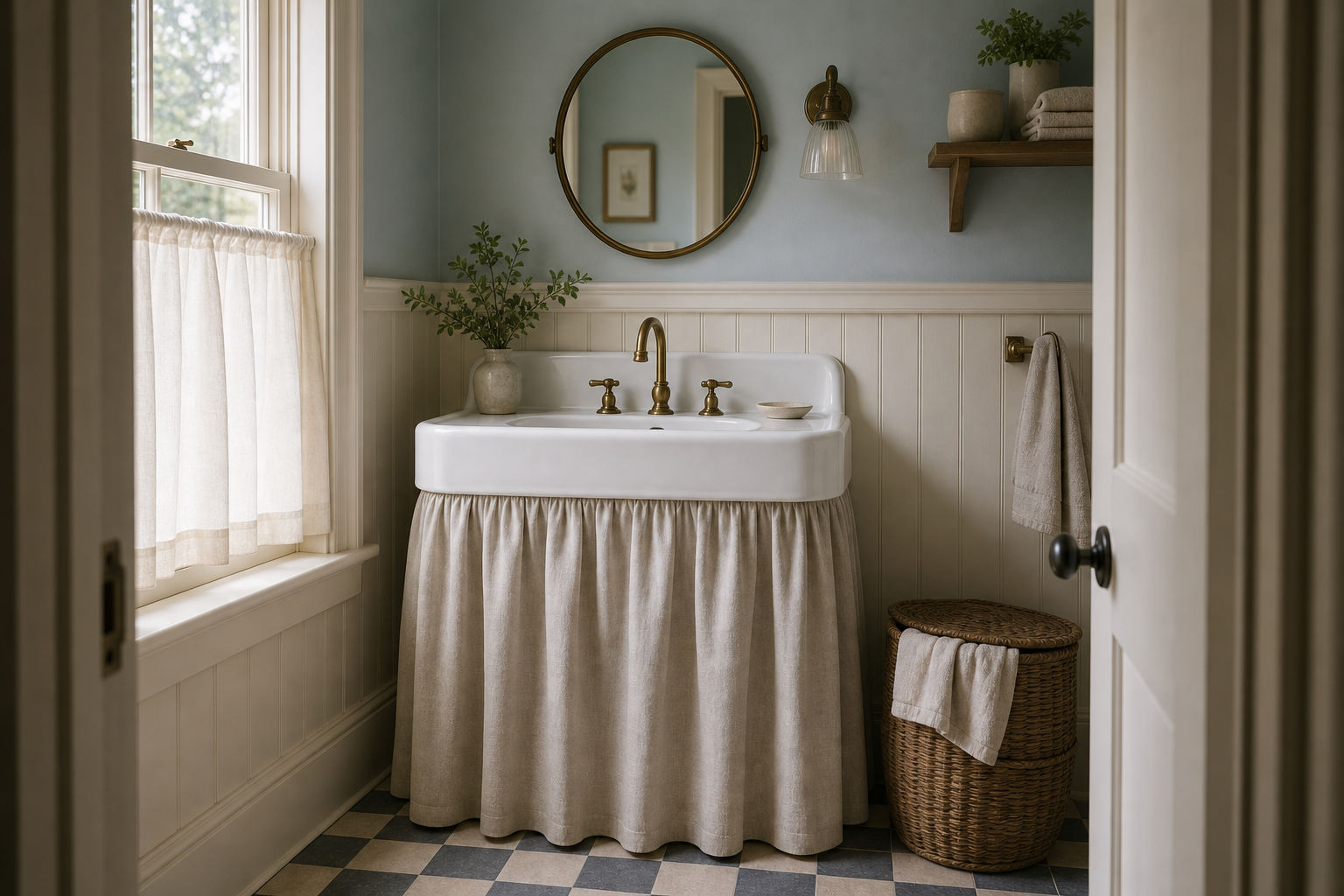

A gathered fabric skirt turns the compact wall-mounted sink into the bathroom's softest and most memorable element. It falls in controlled vertical folds beneath a white basin, concealing the open underside without projecting beyond the fixture. Pale beadboard, a round mirror, warm-metal fittings, and a small side shelf provide a structured background. Daylight from the window keeps the fabric light and lets the black-and-white floor remain a clear lower counterpoint.
The Gathered Skirt Gives the Sink a Soft Lower Volume
The gathered linen under the porcelain sink draws the eye first because it changes the sink from a utility fixture into a soft architectural moment. The folds add movement without needing pattern or strong color. A skirt also gives the sink visual volume. Instead of a thin wall-mounted basin floating above the floor, the fabric creates a fuller base that suits the cottage character.
The folds begin directly below the basin lip and end above the floor, producing a fitted silhouette rather than pooled fabric. This clean hem is essential in a working bathroom because it keeps the skirt visually separate from both floor pattern and nearby basket.
The beadboard wainscoting behind the sink is doing important work. Its vertical grooves give order to the wall, which keeps the gathered skirt from looking too loose. Because the beadboard stops below the painted upper wall, the sink zone gains a clear lower and upper rhythm: durable paneling below, softer pale blue paint above.
Fabric stays inside the outer sink edges and does not interfere with the towel ring at the right. Its moderate fullness provides opacity while retaining distinct vertical folds, allowing the basin to remain the wider, brighter top plane.
Beadboard Supplies a Structured Backdrop
The warm-metal faucet, mirror frame, towel ring and sconce bring warmth to the white porcelain and painted paneling. Their aged tone feels appropriate beside linen and wicker. The metal is used in small, repeated points rather than one oversized statement. That repetition makes the bathroom look collected instead of overly styled.
Narrow wall grooves continue behind mirror and basin, giving the gathered textile a firmer architectural context. The two vertical rhythms are different in depth and spacing, which creates texture without requiring another wall color or printed pattern.
A Round Mirror Relieves the Vertical Lines
The round mirror offsets the square geometry of the beadboard, shelf and checkerboard floor. It gives the sink wall a softer center above the porcelain basin. Its warm-metal frame also connects the mirror to the faucet and sconce, so the upper wall does not feel separate from the sink below.
The checkerboard tile gives the small bathroom a grounded base. Its alternating dark and light squares create visual rhythm without competing with the pale fabric skirt. That contrast matters because most of the wall palette is pale and gentle. The floor adds enough definition to keep the room from becoming too delicate.
The Side Shelf Holds Only Immediate Essentials
The short linen curtain at the window repeats the fabric language of the sink skirt. This makes the textile choice feel intentional rather than like a one-off solution. Soft daylight from the left also reveals the folds in the skirt, which is why the fabric reads as texture rather than just a storage cover.
The wood shelf on the right holds folded towels and a small plant, keeping everyday items visible but controlled. Its dark wood tone adds a modest counterpoint to the pale walls. The woven basket below brings another practical layer. It belongs in the room because its texture relates to the pale fabric skirt and keeps the cottage mood grounded.
Using a Sink Skirt Without Obstructing the Floor
Choose a simple white porcelain sink first, then use a gathered linen or cotton skirt in a natural tone. The fabric should hang cleanly to the floor so it feels like part of the design, not an afterthought. Pair it with beadboard, warm-metal fixtures and a simple mirror. Those structured details are what keep a skirted sink from looking too informal.
The same feature appears in this scheduled cottage bathroom sink-skirt study, where its proportion is examined within a different wall composition. Here, window light and beadboard make the gathered folds especially legible.
The window curtain and sink skirt use different fold scales: the upper fabric is loose and translucent, while the lower gathering is denser. Sharing a pale tone connects them without creating a matching set. The woven basket adds one rounded dry-storage object at the edge, not an invented concealed system behind the skirt.