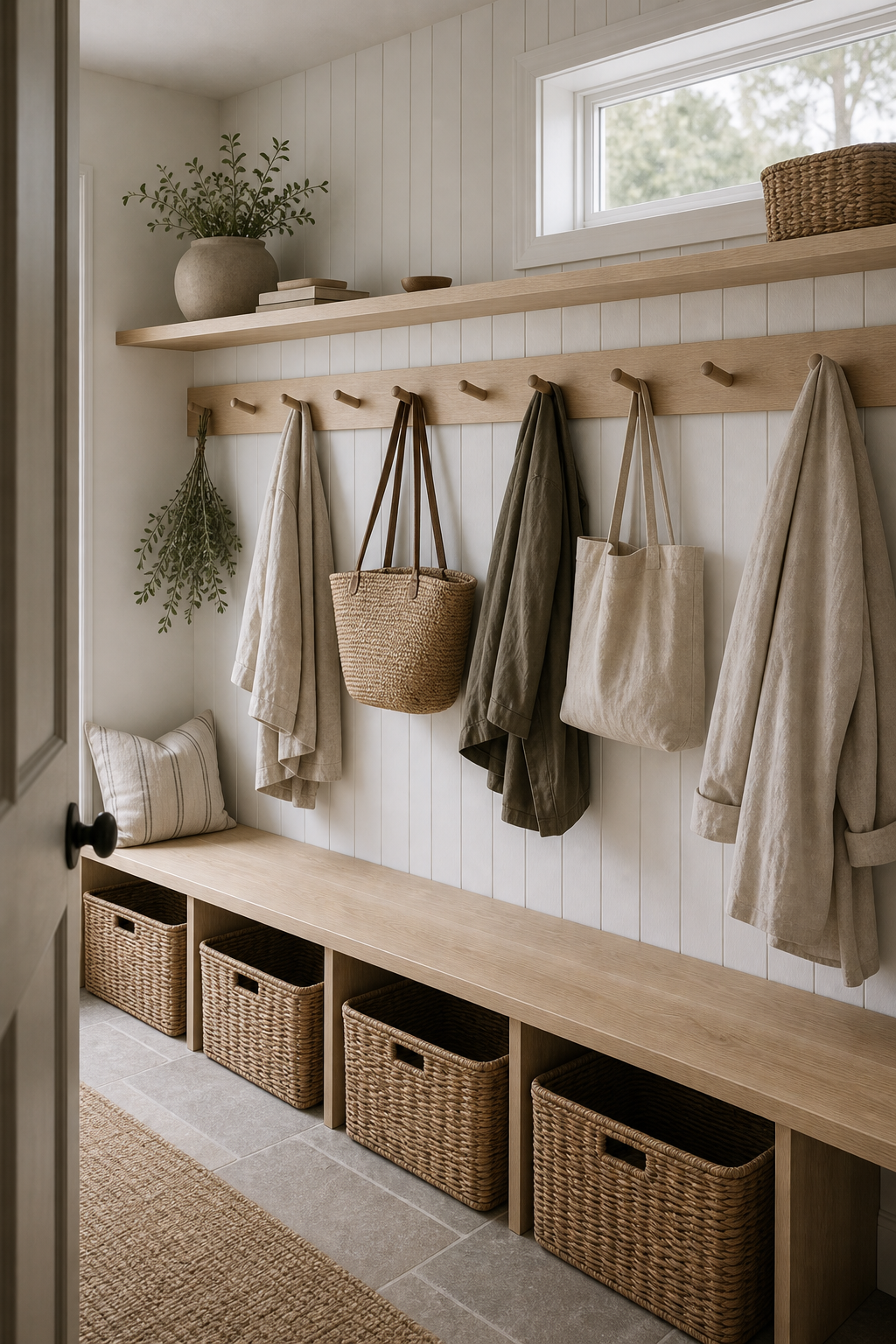

One continuous horizontal rail turns this compact mudroom wall into a complete arrival system. Light timber-toned pegs hold bags and pale garments above a matching bench, while three woven baskets occupy the open bays below. Vertical wall grooves and a high window keep the composition from feeling compressed. The photograph is useful because hanging, sitting, and low storage are stacked without taking over the central floor.
One Rail Gives the Wall a Working Datum
The long light timber-toned peg rail creates a single horizontal working line across the mudroom. Its evenly spaced pegs make coats, totes and greenery look ordered rather than scattered. That continuity is important in a compact space. A few separate hooks would break the wall into fragments, while the rail gives the whole mudroom one clear rhythm.
The rail extends across nearly the full visible wall and keeps every hanging point at one height. Empty pegs remain between several objects, which is important: the installation still reads as architecture when it is in use instead of disappearing behind one dense row of belongings.
The white vertical paneling gives the peg rail a clean architectural backdrop. Its narrow grooves contrast with the long horizontal wood rail without adding visual clutter. Because the paneling stays pale, the light timber-toned pegs remain readable against the wall.
The Bench Connects Hanging and Footwear Tasks
The continuous bench gives the hanging zone a practical base. It provides a place to sit, set a bag down or handle shoes without interrupting the wall storage. Its pale wood tone repeats the peg rail, so the upper and lower parts of the mudroom feel like one built-in system.
Bench depth appears shallow enough for the aisle to remain clear, and the smooth seat provides an immediate landing place beneath the hooks. The related woven basket entryway storage analysis uses the same vertical sequence, although this room is quieter and more linear.
Three Baskets Keep the Lowest Bays Visually Consistent
The baskets under the bench make the open cubbies useful while keeping the lower area visually warm. Their texture prevents the storage wall from feeling too hard or clinical. Because the baskets are identical in scale and material, the open storage stays calm even though it remains visible.
An Upper Shelf Uses Space Beyond Daily Reach
The narrow shelf above the rail uses the upper wall without competing with daily hanging storage. A vase, books and a basket add softness at the top of the composition. The shelf also visually caps the peg rail, making the wall feel complete rather than unfinished.
Only a few pale vessels and a shallow basket occupy the upper ledge. That restraint keeps seldom-reached display separate from the active hanging zone below and leaves the high window free to wash light across the paneling.
The High Window Protects the Storage Elevation
The high window brings daylight directly across the paneling, shelf and peg rail. That light reveals the wood grain and keeps the compact mudroom from feeling closed in. The window placement also leaves the lower wall free for storage, which is a smart tradeoff in a utility space.
Spacing Pegs Around Real Bags and Garments
Install one long rail rather than isolated hooks if the wall is wide enough. The rail should align above the bench so hanging items have a clear landing zone below. Use matching baskets under the bench, keep the shelf lightly styled and leave some pegs empty so the system can handle real daily use.
Garment Length Preserves the Bench
The pale garments are short enough to finish above the seat, so the bench remains available even when several pegs are occupied. Bags hang closer to the ends, where their wider profiles do not cover the middle of the rail. This is a small but useful distinction between a styled hook wall and a credible mudroom: object lengths, bench access, and basket pull-out zones are allowed to coexist. The high window also stays completely above the shelf line, preserving daylight without sacrificing any reachable wall area.
What to Preserve in a Narrow Mudroom
I would not add deep upper cabinets here. They would make the narrow mudroom feel heavier and block the simplicity of the peg rail. I would also avoid using mismatched baskets in every cubby. The open storage works because the lower row is visually consistent.
A deep cabinet would erase the wall's strongest advantage: every task is visible and directly accessible without projecting far into the route. Preserve the rail, bench, and basket alignment first; decoration should remain secondary to the clear central passage.