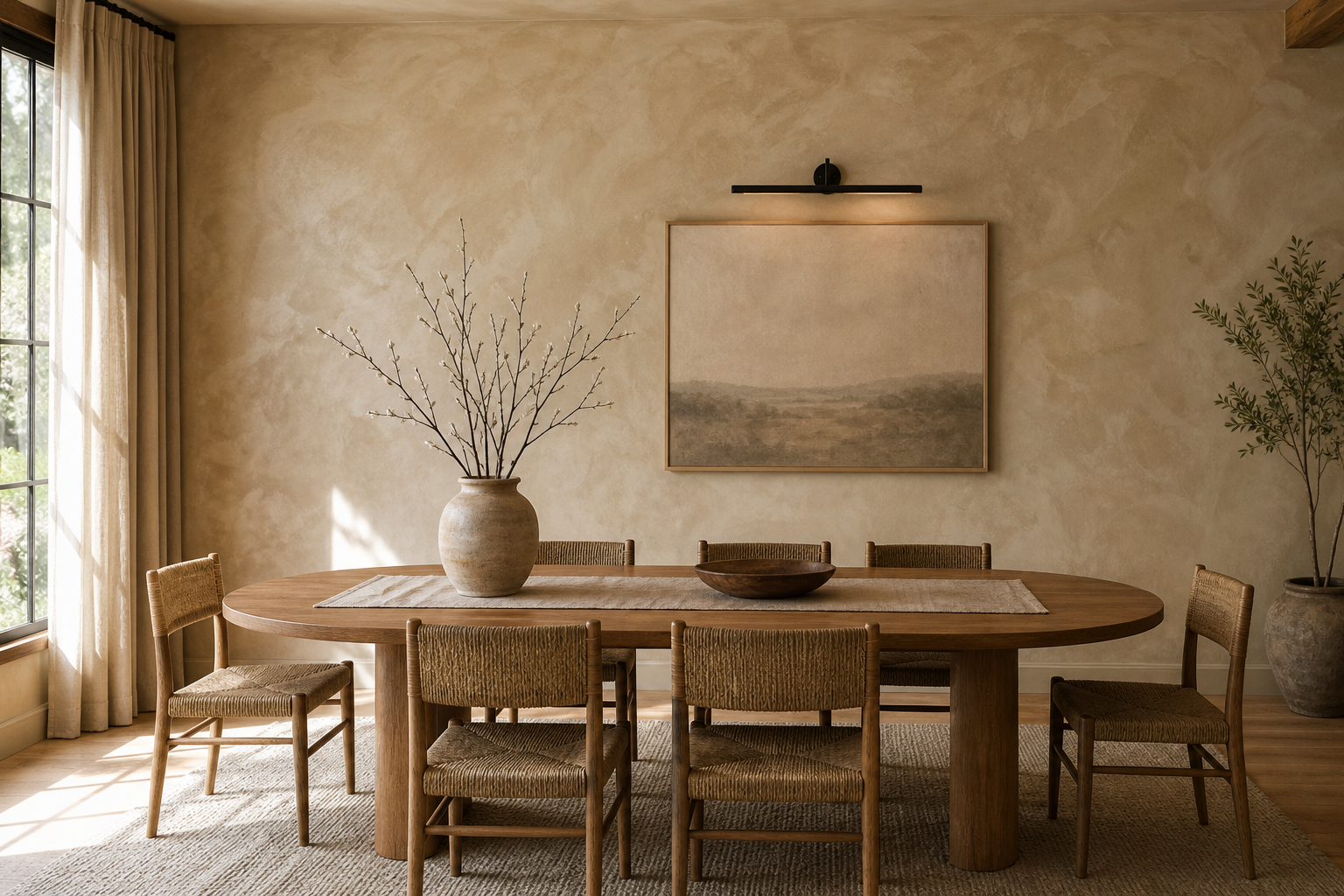

The wall finish carries this dining room's atmosphere through subtle clouding rather than a graphic pattern. Warm pale variations spread across the full rear elevation and become more pronounced near the window, where side light catches the uneven tone. An oval timber-toned table, mixed curved chairs, one centered artwork, a slim picture light, pale rug, and branch vessel occupy that surface sparingly. Texture succeeds because the wall is allowed to remain largely uncovered.
The Mottled Finish Gives a Large Wall Quiet Movement
The wall takes up the largest visual surface, and its cloudy variation gives the dining room movement without a pattern. That is the main reason the space feels warm rather than plain. Because the color is restrained, the texture becomes the point. It gives the room a hand-finished quality that flat paint would not provide.
The finish shifts between warmer and paler patches without visible repeating edges. Calling the exact coating formula would exceed the evidence, but the room clearly demonstrates how controlled tonal variation can replace applied ornament.
The slim black picture light creates one precise line above the artwork. It gives the soft mottled wall finish wall a sharper detail without overwhelming it. That contrast matters: the wall is atmospheric, while the light is exact. Together they keep the dining wall from feeling vague.
Light enters from the left and gradually falls across the elevation, making some areas appear smoother and others deeper. The quiet-luxury dining wall-sconce study adds repeated fixtures; this wall uses one central light so the surface remains continuous.
One Artwork Preserves More Wall Than a Gallery Would
The oval timber-toned table softens the broad rectangular wall behind it. Its rounded ends make the dining area feel more relaxed and less formal. The warm wood also belongs to the same tonal family as the mottled wall finish, so the table supports the wall rather than competing with it.
Artwork is modest relative to the full wall and sits near the table center, leaving broad textured fields on both sides. This restraint prevents the finish from becoming merely a background around a large decorative object.
The woven chair backs and seats introduce texture at a human scale. They echo the wall's handmade feeling but in a more tactile way. Their slim frames keep the dining area visually open, which allows the wall to remain the broadest and calmest feature.
The Oval Table Echoes the Finish's Softer Edges
Side daylight from the window makes the mottled wall finish variation more visible. The light catches subtle shifts in tone across the textured wall surface. This kind of wall finish needs natural light to feel alive. Without it, the surface would read flatter and less intentional.
The tabletop's rounded ends and varied chair backs introduce gentle curves below the rectangular art. Their timber tones remain close to the wall, allowing silhouette and shadow to carry more contrast than color.
Mixed Chairs Add Variation at Furniture Scale
The room uses warm beige, pale oak, oatmeal fabric and soft greige. Those related tones make the dining room feel quiet without becoming empty. The small black picture light adds definition, but it is limited enough to avoid breaking the neutral mood.
Start with the wall that receives the best side light. Mottled Wall Finish performs best where daylight can reveal its tonal variation. Choose furniture in related warm materials, then use one or two darker accents for definition. The goal is depth, not contrast for its own sake.
Protecting Negative Space Around a Textured Wall
I would avoid glossy art, bright color or heavy pattern on this wall. The mottled wall finish already gives the room a complete surface story. I would also avoid overly polished chairs, because the woven texture is what keeps the dining room relaxed and natural.
Test the finish across a broad sample in actual daylight, then plan art coverage conservatively. Tall storage, multiple frames, or high-contrast curtains would hide the gradual tonal shifts that give this room depth.
The branch vessel rises into an otherwise empty section of wall but stops below the picture light. Its fine silhouette adds scale while allowing the mottled finish to remain visible through and around it.
Chair silhouettes differ slightly but remain within the same warm timber range. That variation feels collected while the wall finish and oval table continue to unify the room.