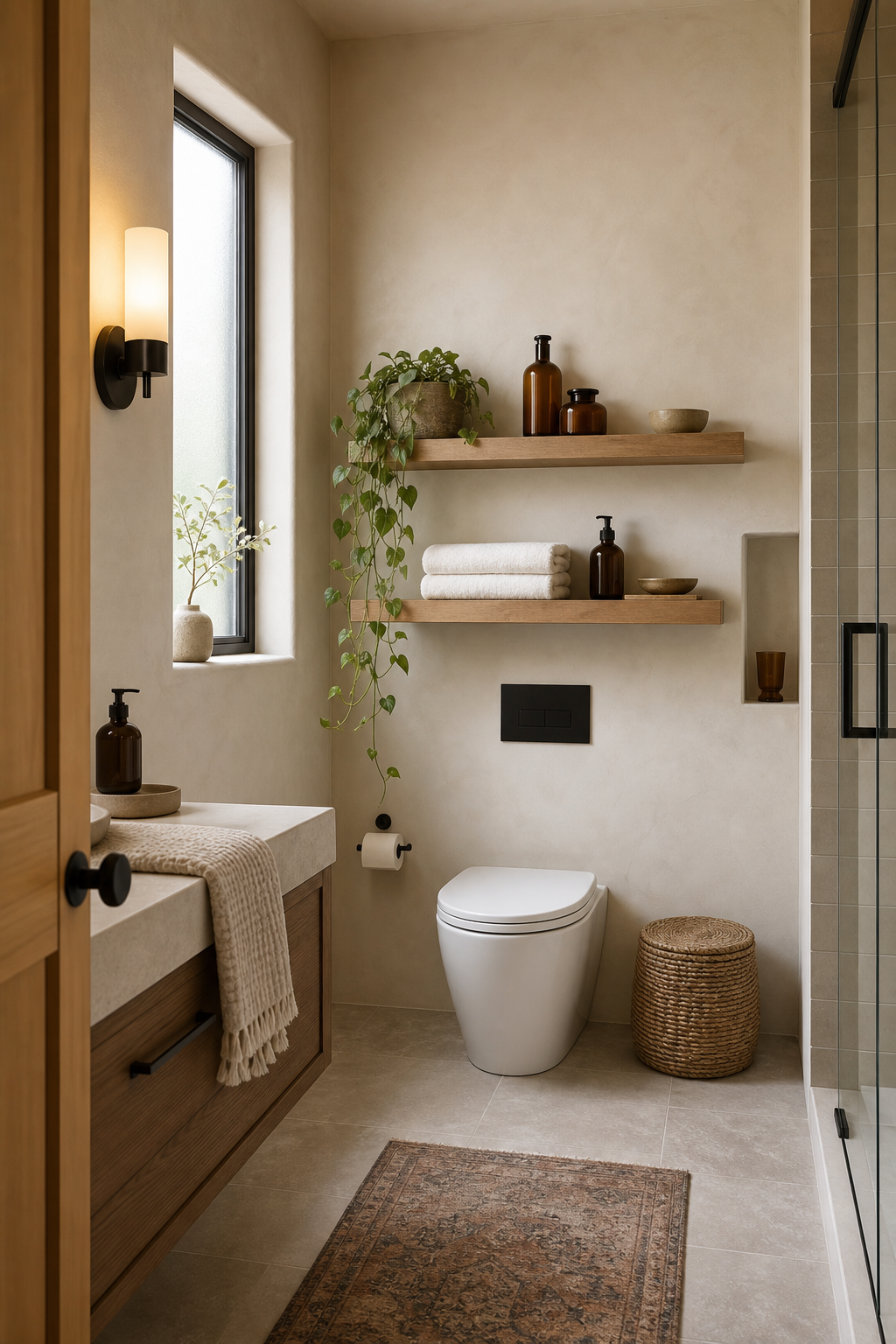

Two shallow timber-toned shelves use the wall above the toilet without turning a narrow bathroom into a storage tower. The lower ledge holds folded towels and a few bottles; the upper shelf carries pale vessels, greenery, and one small framed work with ample wall between objects. A side vanity, compact toilet, dark sconce, window, and pale surfaces complete the scene. Restraint is measured in open wall, not empty function.
Two Shelves Use the Vertical Zone Without Filling It
The shelves work because they occupy the useful vertical space above the toilet without filling the entire wall. Their shallow depth keeps the passage in front of the toilet clear, which matters in a narrow bathroom. A third shelf would likely feel heavy here. The open pale wall above the top ledge gives the eye a place to rest, so the storage looks intentional instead of improvised.
The pair occupies less than half the wall height and leaves a generous band above. A third shelf would compress the composition and bring objects too close to the ceiling.
The light wood shelves bring warmth to the smooth ivory pale wall. That contrast is subtle, but it prevents the bathroom from becoming too flat or clinical. Because the shelves are simple rectangular slabs, the detail comes from the wood tone rather than from brackets or decorative profiles. That is what keeps the minimalist language intact.
The long floating-vanity bathroom study uses a continuous horizontal at counter height. Here, two shorter ledges activate an otherwise unused upper zone.
The Lower Ledge Holds the More Practical Group
The folded towels sit at the most accessible height, which makes the shelf feel useful rather than staged. Their white color also connects back to the toilet and the pale counter. Keeping the towels in a tight stack protects the composition. Loose piles would interrupt the clean horizontal line that makes the shelving feel architectural.
Folded towels sit within the lower shelf depth and remain separated from bottles. The image confirms visible storage but not concealed brackets or shelf load capacity.
The Upper Shelf Carries Lighter Visual Weight
The amber bottles are small, but they matter because they repeat the bathroom's warm undertone. They add contrast against the pale wall without introducing a loud color. Their placement also leaves space around them. That negative space is the difference between open shelving that feels edited and open shelving that feels like exposed clutter.
Object Gaps Keep the Pale Wall Active
The trailing plant breaks the strict horizontal geometry of the two shelves. Its vertical drop softens the toilet alcove and makes the wall feel less rigid. The greenery works because it is limited to one strong gesture. Several small plants would compete with the towels and bottles, but this single trailing form gives the shelves a natural focal accent.
Pale wall remains between every group, allowing curved vessels and trailing leaves to retain distinct silhouettes. This is the main defense against visual clutter.
Daylight from the window washes across the pale wall and makes the shelves feel lighter. The wall sconce near the vanity adds a second warm glow without placing another fixture directly over the toilet. That lighting arrangement keeps the shelf area readable while avoiding glare on the glass shower panel. The room feels calm because illumination is distributed rather than concentrated in one harsh spot.
Window Light Separates Similar Neutral Tones
Start with shelf placement, not accessories. Mount two slim wood shelves where towels can be reached easily, leaving enough open wall above and below for the installation to breathe. Choose a short list of objects: one towel stack, two or three bottles, one ceramic piece and one plant. If every item has a clear role, the shelves will feel designed rather than decorated.
Editing Bathroom Shelves Around Real Capacity
The most common mistake with bathroom shelves is treating them like a cabinet without doors. Too many products, baskets or jars would make this wall feel visually noisy. This example succeeds because storage is visible but controlled. The shelves hold enough to be useful, yet the pale wall, tile and glass still remain the larger surfaces in the room.
Start with the items that genuinely need open access, then choose shelf length. Matching containers across the full span would feel more staged and less useful than the edited arrangement shown.
The toilet remains centered below the shelf pair, creating one compact vertical service zone and keeping the opposite vanity edge open.
A trailing plant descends from the upper ledge but stops before the lower objects, adding movement without connecting both shelves into one dense mass.
The lower shelf aligns above the toilet tank with enough clearance for objects to remain distinct from the fixture below. This spacing makes the ledges practical while avoiding the stacked, compressed appearance common on narrow bathroom walls.
A small dark wall light sits outside the shelf axis near the doorway and gives the storage wall one contrasting point. Because it does not overlap the ledges, lighting and display retain separate visual roles.