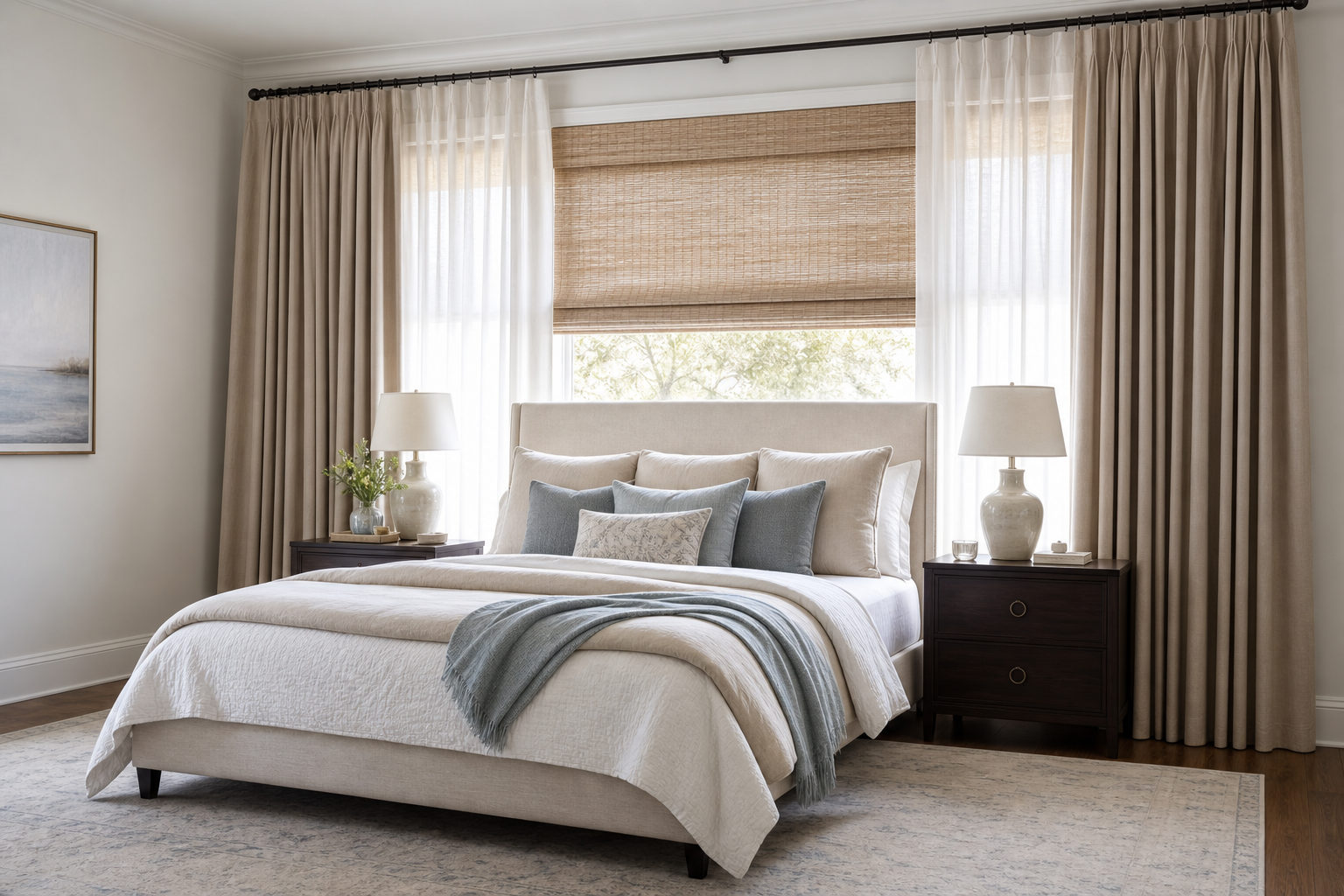

The window treatment is the architecture of this bedroom wall. A textured Roman shade occupies the center, pale sheers filter the glazing, and taupe-toned outer curtains run nearly from ceiling to floor. The bed sits directly in front of that layered opening, so fabric is not peripheral decoration; it establishes width, height, and a quiet backdrop for the low upholstered headboard, paired dark nightstands, lamps, and restrained blue-gray bedding.
Three Textile Layers Give the Wall Its Depth
The eye moves first to the wide textile composition behind the bed. The layered treatments span the wall and create a softer architectural frame than the window alone would provide. Because the bed sits directly in front of the window, the treatments become part of the headboard composition rather than a separate background detail.
Each layer occupies a different plane, which is why the wide wall reads as depth rather than one flat curtain. The shade remains closest to the glass, the sheers soften the opening, and the opaque curtains form the outer frame.
The Roman Shade Controls the Bright Center
The woven roman shade brings a natural texture to the center of the wall. It breaks up the large pale window area without making the room dark. Its tan tone also relates to the taupe-toned drapery, creating warmth behind the cream bedding.
A related small bedroom curtain and lighting study uses a narrower window. Here, three layers are broad enough to behave as the complete bed backdrop.
Sheers Preserve Light Behind the Bed
The sheer curtains soften the daylight before it reaches the bed. They also create a translucent layer between the roman shade and the heavier side panels. That middle layer is what makes the window wall feel refined. Without it, the contrast between woven shade and drapery would feel more abrupt.
The pale inner curtains remain translucent in daylight, keeping the window evident behind the bed. Their soft vertical folds also interrupt the shade's stronger horizontal bands.
Outer Curtains Extend the Room Vertically
The taupe panels run from near the ceiling to the floor, visually stretching the wall. Their vertical folds counterbalance the horizontal bed and roman shade. The darker taupe tone also frames the pale bedding, giving the bed wall more depth without using a dark paint color.
The Bed Fits Inside the Window Composition
Placing the bed in front of the window can feel awkward if the treatments are thin or unfinished. Here, the layered fabric makes that placement intentional. The upholstered headboard sits low enough that the roman shade remains visible, so the window still reads as part of the design.
The headboard stops below the shade and leaves its lower edge visible. That overlap makes the bed feel integrated without allowing upholstery to conceal the mechanism or central texture.
Dark Nightstands Mark the Treatment Edges
The ceramic table lamps repeat the softness of the fabric layers. Their pale shades add evening light without competing with the curtain wall. The muted blue-gray pillows and throw bring a cooler accent into the warm neutral room, giving the bed enough contrast against the taupe-toned drapery.
Blue-Gray Bedding Bridges Fabric Tones
Start with the functional layer inside the window frame, such as a woven roman shade. Then add sheers for diffusion and side panels for height. Hang the drapery rod wider than the window when possible so the panels frame the view rather than covering too much glass.
Planning Layers Without Crowding the Glass
Avoid using three layers that all have strong pattern or heavy color. The success here comes from texture and tone, not from competing fabrics. The window wall feels calm because the treatments vary in transparency and weight while staying close in color.
Set the bed axis first, then resolve shade width and curtain stack-back. If the opaque panels cover too much glass, the balanced composition would come at the expense of usable daylight.
Both opaque curtains stack beyond the dark nightstands, protecting the bedside surfaces and keeping fabric away from the lamp bases.
The outer curtain hems reach the floor and form two stable vertical boundaries, while the shorter shade remains entirely within the window opening.
The three textile tones move from pale at the glass to deeper taupe at the edges, giving the wall a readable foreground and background without a strong color contrast.
Paired lamps sit in front of the outer curtains but below the window sill, creating bedside light without hiding the layered folds.
The bed remains centered on the shade rather than the entire curtain span, giving the functional window layer priority over the decorative outer frame.