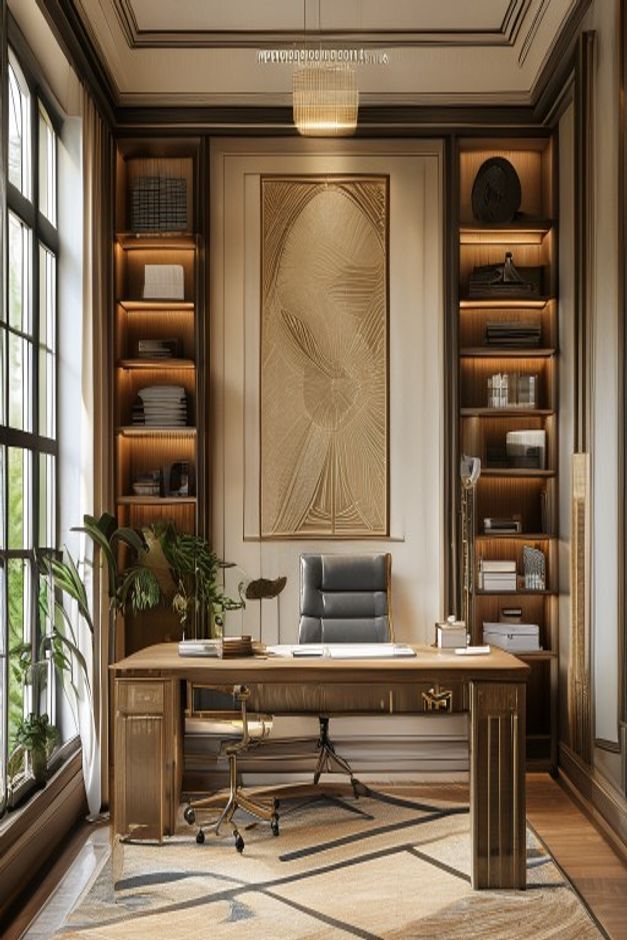

This home office shows how the bold geometry of the Art Deco movement can be adapted for contemporary productivity. By prioritizing a symmetrical layout that anchors the desk against a highly textured feature wall, the space achieves a sense of order that is both visually arresting and conducive to focused work. The careful balance between warm wood tones and sharp, metallic accents provides a blueprint for anyone looking to move beyond sterile corporate aesthetics toward a more curated, architectural environment.
Studying this room reveals the importance of intentionality in every selection, from the fluted detailing on the desk to the integrated lighting systems. Unlike many modern offices that feel disjointed, this space utilizes a cohesive material palette that bridges the gap between traditional luxury and modern functionality. It is an essential reference point for designers who want to understand how to manipulate scale and texture to create a workspace that feels established, permanent, and inherently sophisticated.
Why Symmetry Defines the Art Deco Workspace
Symmetry acts as the backbone of this office, dictating the placement of the executive desk and the surrounding storage units. By centering the desk against the wall, the room establishes a clear axis that draws the eye directly toward the geometric art, creating a sense of balance that feels inherently stable. This arrangement is not merely a stylistic choice but a functional one, as it defines the primary work zone while allowing the perimeter of the room to serve as a quiet, organized backdrop.
When you align furniture with architectural features, you reduce visual clutter and create a more professional atmosphere. The desk, acting as the central anchor, benefits from the flanking floor-to-ceiling shelving units, which enclose the workspace in a cocoon of rich, dark wood. This approach to spatial planning is a hallmark of high-end interior architecture, where the placement of every object is calculated to reinforce the room’s overall geometry and provide a sense of groundedness for the user.
The Role of Geometric Wall Art in Defining Space
The central geometric wall art serves as the primary visual anchor, providing a complex pattern that contrasts beautifully with the linear nature of the surrounding cabinetry. In an Art Deco context, geometry is rarely just decorative; it is a structural element that dictates the rhythm of the wall. By utilizing a piece that echoes the sharp, angular lines often found in 1920s design, the room gains a layer of historical authenticity while maintaining a clean, modern edge.
Integrating art directly into the wall design rather than treating it as an afterthought allows it to command the space without overwhelming the desk area. This technique is particularly effective in rooms with high ceilings, as it draws the eye upward and emphasizes the verticality of the built-in storage. For those looking to master this look, consider how maximizing verticality with floor-to-ceiling wooden shelving can provide the necessary frame to let your chosen piece of art shine as a true centerpiece.
Balancing Warmth and Luxury Through Materiality
The material palette of this office relies on a sophisticated mix of warm browns, cream tones, and gold accents to create an environment that feels both inviting and expensive. The use of dark wood for the cabinetry provides a deep, moody base that grounds the room, while the lighter cream tones in the rug and wall textures prevent the space from feeling too heavy. This interplay of light and shadow is critical in maintaining a balance between a high-energy workspace and a comfortable, private study.
Leather upholstery on the chair adds a tactile dimension that is essential for a truly luxurious office experience. Unlike synthetic materials, leather ages gracefully and introduces a subtle sheen that complements the gold hardware and lighting fixtures. When you combine these rich, natural materials with the precision of the geometric rug, you create a layered environment where every surface contributes to a cohesive, high-end narrative that feels curated rather than assembled.
Optimizing Lighting for Function and Atmosphere
Lighting in this space is treated as an architectural feature rather than a simple utility, with recessed warm LED strips embedded within the shelving units. These lights serve to highlight the books and decorative objects displayed on the shelves, creating a soft, ambient glow that illuminates the room without harsh glare. This layered lighting approach is essential for any office, as it allows for task-specific illumination at the desk while maintaining a relaxing atmosphere throughout the rest of the room.
The central modern pendant fixture provides a necessary contrast to the linear, built-in lighting, adding a sculptural element that hangs gracefully above the desk area. By mixing these two types of light—the directional, hidden LED strips and the decorative, central pendant—the room achieves a level of flexibility that is perfect for both deep work and evening reflection. If you are struggling with your own lighting plan, exploring concepts like mastering illuminated shelving and desk integration can offer practical solutions for blending form and function.
The Importance of Fluted Detailing in Cabinetry and Desks
Fluted detailing on the executive desk and cabinetry introduces a rhythmic texture that breaks up the flat surfaces of the dark wood. This specific detail is a quintessential Art Deco element that adds depth and sophistication to the furniture, making it feel custom-made and highly considered. The vertical lines of the fluting align with the vertical nature of the shelving, creating a sense of visual harmony that extends from the floor all the way up to the ceiling.
Beyond aesthetics, fluted textures are incredibly effective at hiding wear and tear, making them a practical choice for high-traffic office furniture. They also catch the light in interesting ways, creating subtle shadows that change throughout the day as the sun moves across the room. This dynamic quality makes the furniture feel alive and responsive, preventing the room from feeling static or overly rigid, even when the overall layout is perfectly symmetrical.
Curating Shelving for Both Display and Utility
The floor-to-ceiling shelving units in this office are designed to serve a dual purpose: storing necessary professional resources while showcasing curated decorative objects. By mixing books with curated items, the shelving becomes a reflection of the occupant’s personality rather than just a storage facility. This approach turns the walls into a gallery of sorts, where the organization of the items follows the same symmetrical logic as the rest of the room.
Effective shelving design requires a balance between open and closed storage, though in this case, the open shelves create a sense of lightness that contrasts with the substantial nature of the desk. To ensure your office remains organized, you might consider how traditional home office shelf storage ideas can be updated to fit a more modern, Art Deco aesthetic. Keeping the shelves tidy and focused on a specific color palette will ensure that your storage remains a design asset rather than a source of visual distraction.
Selecting the Right Area Rug for Geometric Impact
The geometric patterned area rug serves as the foundation for the entire desk arrangement, tying the different elements of the room together through a shared language of shapes. In an Art Deco office, the rug is not just a floor covering; it is a graphic statement that anchors the furniture and defines the work zone. The pattern on the rug echoes the geometric art on the wall, creating a sense of continuity that makes the room feel intentional and well-planned.
When selecting a rug for a space with such strong architectural lines, it is important to choose a pattern that complements rather than competes with the other features. The choice of a muted color palette for the rug ensures that it provides texture and interest without overwhelming the desk or the wall art. This level of restraint is what separates a professional, high-end design from one that feels chaotic or over-decorated.
Integrating Indoor Plants for Organic Softness
The inclusion of a potted indoor plant provides a necessary organic element that softens the sharp, geometric lines of the Art Deco style. Without this touch of nature, the room might feel too cold or clinical, especially with the heavy use of dark wood and metallic accents. The plant acts as a breath of fresh air, adding a vibrant green note that contrasts beautifully with the warm brown and cream tones of the furniture and walls.
Placement of the plant is key; by positioning it near the desk or within the shelving area, it becomes integrated into the room’s overall composition rather than sitting as a random accessory. This inclusion reminds us that even the most structured and formal offices benefit from the presence of living elements. It is a simple yet powerful design move that brings a sense of life to the workspace, making it a more pleasant environment for long hours of productivity.
FAQ: Art Deco Office Design
How can I achieve symmetry in a small home office?
Focus on centering your desk against a single wall and using matching shelving or storage units on either side to create a balanced, mirror-image effect.
What materials are essential for an Art Deco office look?
Prioritize rich, dark woods, leather upholstery, gold-toned metal accents, and textured wall panels to capture the movement’s hallmark luxury and geometric precision.
How do I choose the right geometric art for my wall?
Select a piece that features angular, repeating patterns that echo the lines of your furniture, ensuring the scale is large enough to serve as a singular, commanding focal point.
Final Reflections for the Homeowner
This home office demonstrates that the success of a design lies in the commitment to a singular vision. By embracing the symmetry and geometric rigor of the Art Deco movement, the homeowner has created a space that feels both historic and highly functional. The lesson here is to stop treating the office as a collection of disparate items and start viewing it as an architectural composition where every piece, from the desk to the lighting, works in concert.