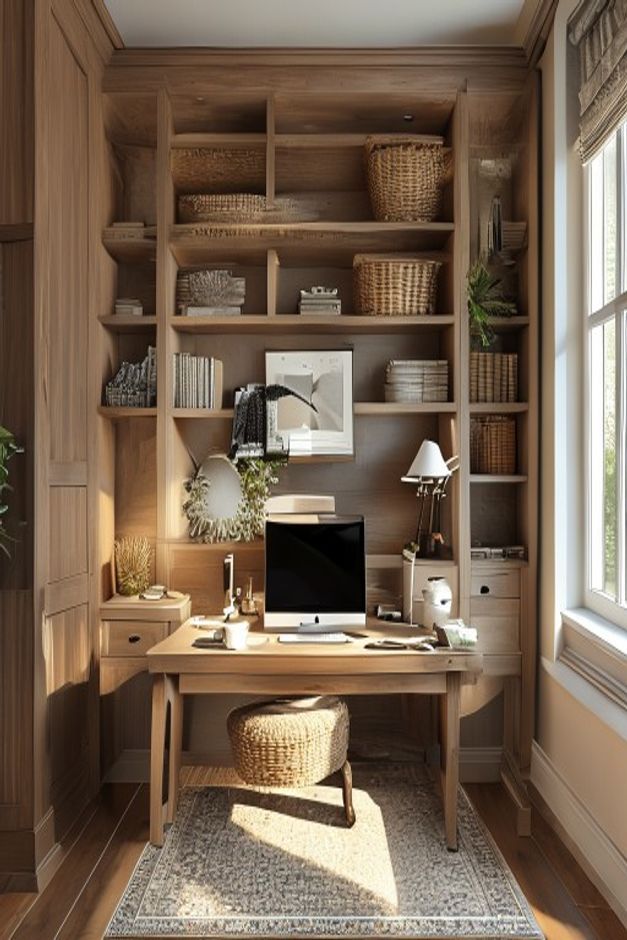

The modern home office often struggles to reconcile the cold necessity of technology with the warmth of a residential environment, yet this specific nook-style workspace achieves a rare equilibrium. By utilizing an integrated approach to cabinetry, the design transforms a standard corner into a sophisticated, cohesive architecture that prioritizes both aesthetic harmony and practical utility. This room serves as a definitive case study for those looking to move beyond modular furniture toward a more permanent, custom-tailored solution that feels inherently connected to the home’s structure.
Understanding why this configuration succeeds requires looking closely at how the verticality of the shelving interacts with the horizontal plane of the desk. Rather than treating storage as an afterthought, the design treats the wall as a canvas for organization, allowing the natural grain of the oak to anchor the space. This study explores the nuances of such an installation, providing a roadmap for homeowners who seek to marry traditional craftsmanship with the demands of a contemporary professional life.
The Architectural Power of Integrated Oak Cabinetry
The primary success of this office lies in the seamless transition between the built-in wooden shelving unit and the desk surface. By extending the cabinetry to the ceiling, the designer creates a sense of height that makes the room feel more expansive than its footprint might suggest. This vertical orientation draws the eye upward, effectively utilizing the entire wall surface rather than leaving dead space above standard-height bookshelves, which is a common oversight in smaller home office layouts.
Furthermore, the choice of warm oak provides a tactile quality that elevates the room from a mere utility space to a refined sanctuary. The wood’s natural grain adds a layer of organic complexity that synthetic materials simply cannot replicate, grounding the office in a traditional aesthetic that feels both stable and inviting. When considering similar integrated desk and shelving design, it is essential to prioritize wood tones that complement the existing architectural trim of your home to ensure the piece feels like an original fixture.
Mastering the Nook-Style Workspace Layout
Nook-style layouts are often dismissed as restrictive, yet they offer an unparalleled opportunity to create a focused, distraction-free environment. By tucking the desk into a dedicated alcove formed by the cabinetry, the design defines a clear boundary between the workspace and the rest of the room. This spatial definition is crucial for psychological separation, allowing the inhabitant to enter a work-oriented mindset the moment they sit down at the desk.
The layout also benefits from the proximity of storage to the primary work surface, ensuring that essential documents and reference materials are within arm’s reach. This efficiency is the hallmark of a well-planned home office, where every movement is optimized for comfort and productivity. For those interested in how such systems function in different architectural contexts, comparing this to floor-to-ceiling wooden shelving can highlight how different scales of storage impact the overall flow of a room.
The Role of Texture in Traditional Office Design
While the oak cabinetry provides the structural foundation of the room, the inclusion of woven rattan and wicker elements introduces a necessary textural contrast. The woven ottoman placed beneath the desk acts as a soft, organic counterpoint to the rigid, linear nature of the wooden shelves. This interplay between hard and soft surfaces prevents the room from feeling overly clinical, softening the edges of the built-ins and adding a layer of approachable comfort.
Textile rugs further ground the space, providing both acoustic dampening and visual warmth. In a traditional office, the goal is to create a space that feels lived-in rather than staged, and the layering of natural materials achieves this with ease. By incorporating items like wicker storage baskets, one can hide the clutter of modern office life—cables, chargers, and miscellaneous supplies—while maintaining a clean, curated appearance that honors the room’s traditional roots.
Strategic Lighting for Enhanced Productivity
Lighting within this office is handled with a dual-layered approach that addresses both ambient and task-specific needs. The recessed shelf lighting illuminates the contents of the built-in unit, turning books and framed artwork into decorative elements that contribute to the room’s atmosphere. This subtle illumination highlights the depth of the shelves, preventing the cabinetry from appearing as a dark, monolithic wall.
On the desk, a table lamp with a crisp white shade provides the focused light necessary for reading and writing, creating a warm pool of illumination that centers the user. This combination of general shelf lighting and localized task lighting is essential for preventing eye strain during long hours of work. It is a sophisticated lighting strategy that mirrors the principles found in illuminated shelving and desk integration, where light is used to define the utility of each zone.
Curating Personal Decor in a Built-in Environment
The shelves serve as more than just storage; they are a stage for personal expression. By interspersing books with framed artwork and small pieces of potted greenery, the design avoids the sterile look of a library or a corporate archive. The greenery, in particular, introduces a vibrant splash of life, breaking up the monochromatic palette of the wood and beige walls while improving the overall air quality of the workspace.
When styling your own built-in units, it is important to leave enough negative space to prevent the shelves from looking overcrowded. The balance between open space and curated decor is what gives the room its sense of calm. By selecting items that have personal significance or visual interest, you transform the shelving into a reflection of your own professional identity, making the office feel uniquely your own rather than a generic design catalog.
Balancing Utility and Aesthetics in Cabinetry
A common mistake in office design is prioritizing aesthetics to the detriment of functional storage. In this traditional office, the cabinetry is designed to accommodate a variety of needs, from housing large volumes to providing open display areas for smaller decor. The depth of the shelves is consistent with standard ergonomic requirements, ensuring that the desk remains the primary focus while the storage acts as a supportive, unobtrusive frame.
The choice of hardware and shelf spacing also plays a critical role in the functionality of the unit. By opting for adjustable shelving, the design allows for future flexibility, accommodating changes in the types of items stored over time. This foresight is what separates a truly high-quality built-in from a temporary furniture solution. If you are exploring integrated built-in shelving, consider how the adjustability of the internal components will serve your evolving professional needs.
The Importance of Color Palette Consistency
The color palette of warm oak, beige, and cream is intentionally understated to promote focus and tranquility. By sticking to a neutral, earth-toned scheme, the designer ensures that the room remains timeless, avoiding the pitfalls of trendy color choices that may date quickly. This palette allows the natural materials—the wood grain, the rattan, the woven rug—to take center stage, creating a cohesive visual narrative.
Consistency in color also helps to unify the various elements within the room, making the desk, shelving, and ottoman feel like parts of a single, well-conceived system. When the eye moves around the space, it encounters no jarring transitions, which contributes to the overall sense of order. For those looking to replicate this, maintaining a tight, harmonious palette is the most effective way to achieve a professional, polished look in any home office environment.
Lessons for the Modern Homeowner
Homeowners should take away the importance of vertical integration and the power of tactile materials. Do not be afraid to customize your space to fit your specific needs, as the most successful home offices are those that feel deeply personal. By prioritizing these design pillars, you can build a workspace that not only meets your professional requirements but also enhances the overall character of your home for years to come.
Frequently Asked Questions
How do I choose the right wood tone for built-in office shelves?
Select a wood tone that complements the existing flooring or architectural trim in your home to ensure visual continuity. Warm oak is a versatile choice that adds natural texture without overwhelming the space.
What is the benefit of floor-to-ceiling shelving in a home office?
Floor-to-ceiling shelving maximizes vertical storage capacity, draws the eye upward to make the room feel taller, and provides a clean, architectural finish that feels integrated into the home.
How can I incorporate soft textures into a wooden office space?
Introduce soft elements through woven rattan ottomans, textile rugs, or fabric-covered desk accessories. These materials provide a necessary contrast to the rigidity of wooden cabinetry, adding warmth and comfort.