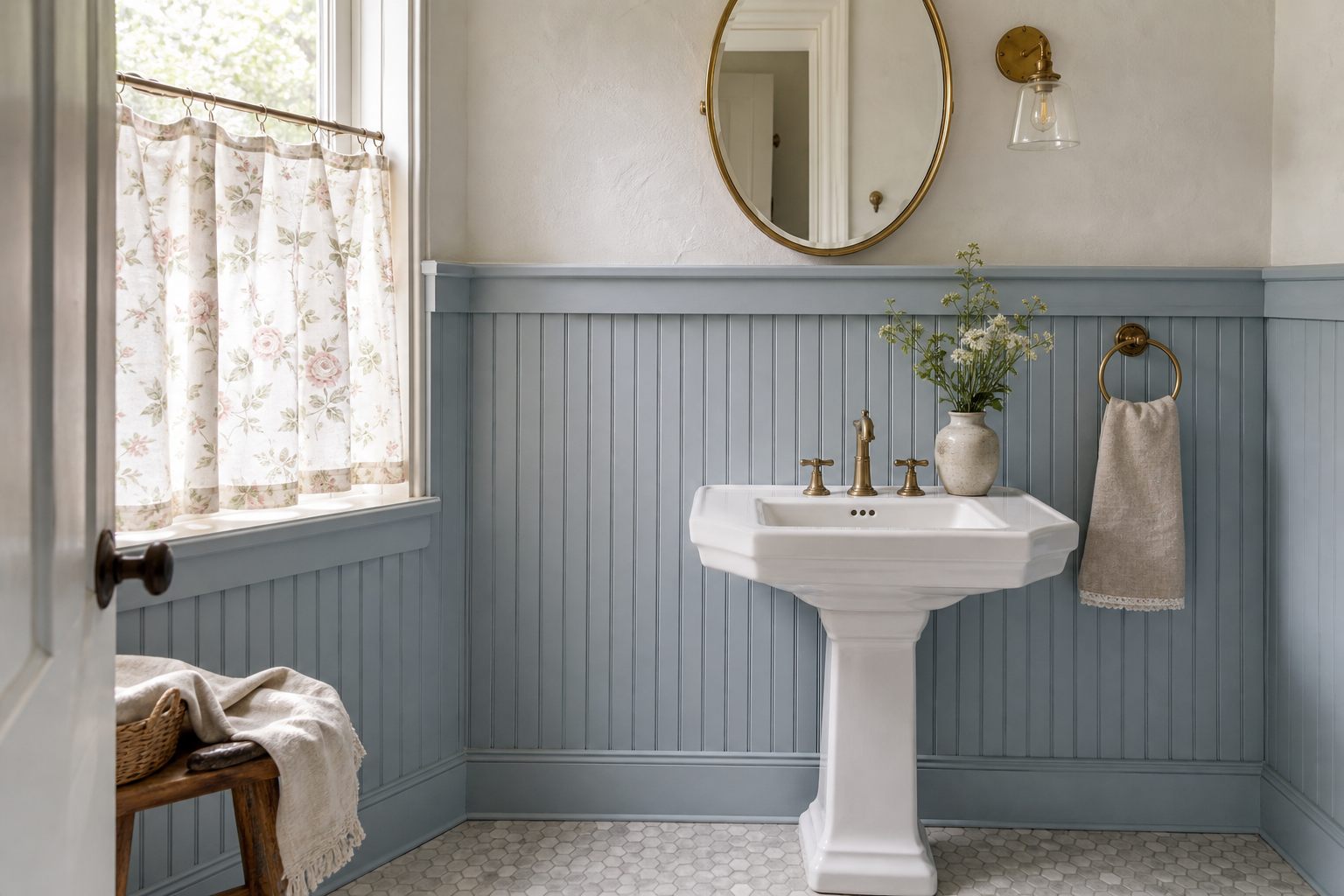

Blue-gray beadboard wraps the lower half of this bathroom and gives a compact collection of fixtures one continuous architectural base. Vertical grooves rise behind the pedestal sink and towel ring, then stop at a simple cap below the pale upper wall. An oval mirror, small warm-metal sconce, floral cafe curtain, divided window, compact floor tile, and a few vessels add cottage character without hiding the panel rhythm.
Half-Wall Beadboard Gives the Bathroom a Continuous Base
The vertical wall paneling covers the lower half of the wall and continues around the room, so it becomes the main architectural surface. Its vertical grooves give the bathroom rhythm and scale. The blue-gray paint is important because it makes the paneling visible without turning the room dark.
The paneling continues around the sink wall and window return at one consistent height, making the room feel assembled rather than decorated one wall at a time.
The top rail sits below the mirror and sconce, leaving a warm white plaster zone above. That division keeps the bathroom from feeling visually cramped. It also gives the pedestal sink a clear backdrop, with texture below and softness above.
The traditional half-wall wainscoting article uses a more formal treatment. Here, narrow grooves, blue-gray color, and a floral lower curtain create a lighter cottage reading.
The Cap Rail Creates a Clean Change of Surface
The white pedestal sink keeps the vertical wall paneling exposed. A bulky vanity would hide too much of the wall treatment. Its traditional shape also suits the cottage style without adding another strong color or material.
A simple top edge separates textured lower wall from smooth pale upper wall. That quiet boundary gives mirror and sconce a clean field above.
A Pedestal Sink Leaves More Paneling Visible
The warm-metal mirror and sconce introduce warmth above the cool vertical wall paneling. Their rounded and glass details soften the vertical panel lines. Because the metal finish is repeated in small amounts, it feels charming rather than ornate.
The Oval Mirror Softens Repeated Straight Lines
The floral cafe curtain adds pattern at the window while allowing daylight to enter. Its soft print relates to the cottage feeling without covering the whole wall. The curtain also balances the painted vertical wall paneling by bringing fabric into a room of tile, porcelain and wood.
The mirror remains narrower than the sink zone and introduces one elongated curve. Its frame is warm-toned, but exact alloy is not inferred.
The light small pale floor tile floor adds a smaller geometric rhythm below the vertical wall paneling. It keeps the room traditional but clean. Because the floor color is pale, it does not compete with the blue-gray wall paneling.
Small Floor Tile Introduces a Finer Ground Rhythm
Choose the vertical wall paneling color before selecting towels or curtains. The wall color will control the room's cottage character. Pair it with a simple sink and light upper wall so the paneling remains crisp and visible.
Using Painted Paneling Without Overfilling the Walls
I would avoid a heavy vanity in this exact layout. The vertical wall paneling needs to remain visible around the sink. I would also avoid high-contrast floor tile because the bathroom already has enough rhythm from the paneling.
Choose panel height from sink, towel, and window relationships rather than a generic proportion. Additional shelves or large art would cover the continuous blue-gray field.
The floral curtain gathers below the upper window panes and introduces the only concentrated pattern. Its blue and warm notes relate to paneling and frame without matching either exactly.
The pedestal base keeps the blue-gray wall visible behind and leaves floor tile open around the sink.
The window casing begins above the beadboard cap, leaving the floral lower curtain within the pale upper field. This separation prevents the blue-gray grooves and floral pattern from merging into one busy half-wall treatment.
A small towel hangs beside the sink at the same general height as the panel cap. Its soft fold breaks the repeated grooves locally while preserving the wider continuous band around the remaining walls.
The blue-gray paneling turns the corner instead of ending behind the pedestal sink. Carrying that datum across adjacent walls gives the small bathroom continuity and makes the freestanding fixtures feel placed within a complete composition.