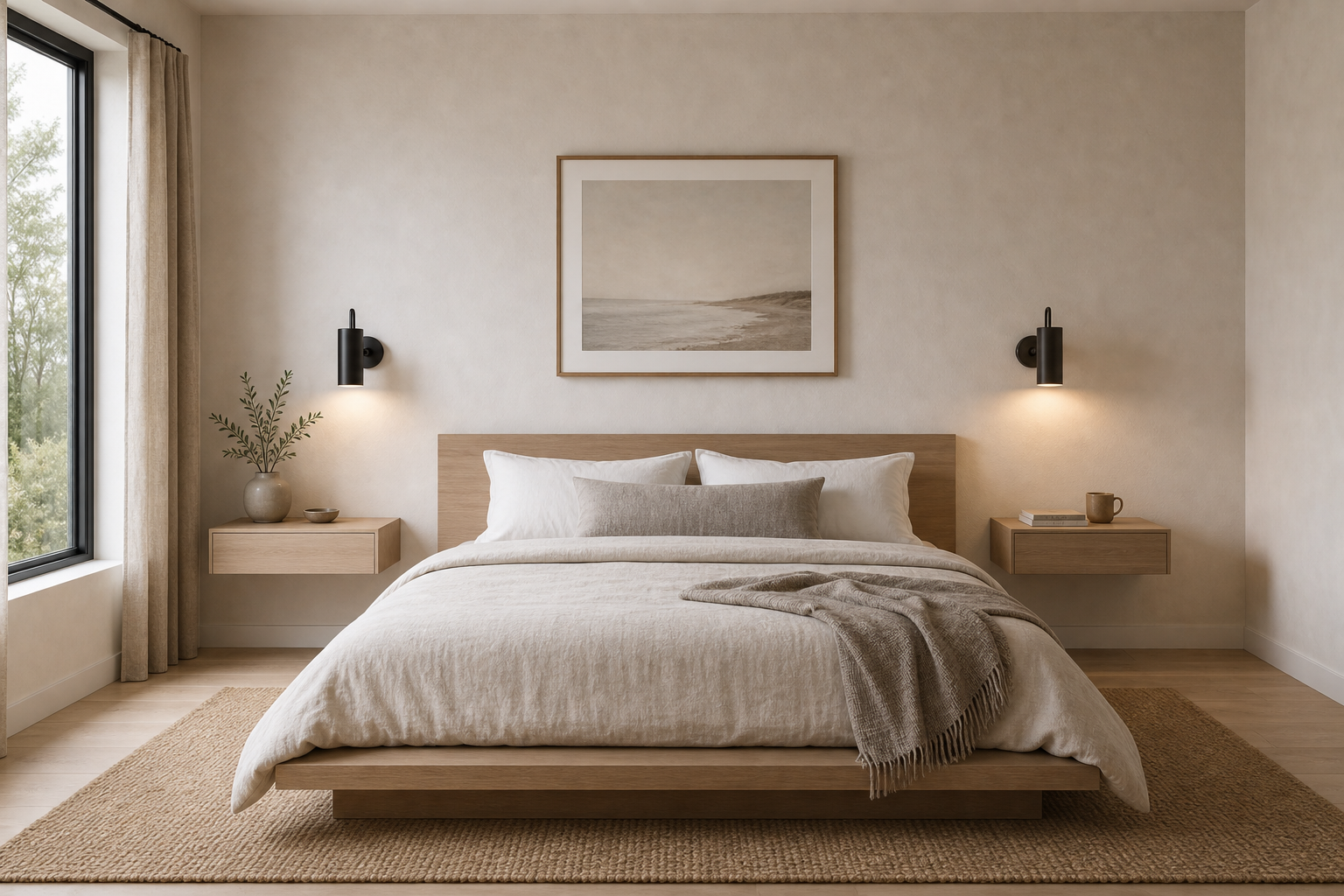

The decisive detail in this bedroom is the gap beneath each bedside surface. Two compact timber-toned nightstands are mounted at mattress height and leave the pale floor uninterrupted, reinforcing the low platform bed rather than flanking it with bulky furniture. Black wall lights remove the need for lamp bases, and the centered artwork holds the bed wall together. Every element is present, but each occupies a tightly defined band.
Floating Nightstands Preserve the Floor Plane
The two wall-mounted nightstands are the clearest design decision in the room because they sit exactly where a traditional bedside table would be, but without touching the floor. That small shift changes the reading of the entire wall. The bed still has symmetry and function, yet the lower portion of the room stays open, which is why the bedroom looks more spacious than its simple footprint suggests.
Each nightstand reads as a shallow box with one visible drawer and a clear shadow below. Their widths correspond to the outer pillows rather than the full bed frame, giving both sides enough function without extending into the circulation area beside the bed.
Bedside Height Follows the Mattress Line
Open floor below each nightstand gives the platform bed a quieter base. The eye can move under the bedside units and across the pale flooring instead of stopping at two bulky pieces. For a minimalist bedroom, that negative space is not empty decoration. It is the design tool that lets the bed, rug and wall units sit together without creating a crowded bedside zone.
The tops sit close to mattress level, allowing a book or cup to be reached without a tall vertical movement. More importantly, matching this height connects the separate boxes to the bed. Mounted too high, they would float as unrelated wall cabinets.
Wall Lights Release the Small Surfaces
The black sconces do practical work because they free the nightstands from table lamps. That keeps the wood surfaces available for only a vase, bowl, books or a mug. Their dark finish also gives the soft beige wall a sharper point of contrast. Without those black vertical fixtures, the wall could become too quiet and the floating tables would not have the same crisp outline.
Small black sconces occupy the wall directly above the two surfaces and repeat at equal height. Their shades turn down toward the bedside zones, while cords and table lamps remain absent. Exact illumination levels cannot be read from the photograph, so the observation stays with placement and visual role.
The Platform Bed Extends the Low Datum
The wood platform bed has a low horizontal profile, so the mounted nightstands do not look artificially high or detached from the mattress. This is the detail homeowners often miss. A floating bedside table works best when its height relates to the sleeping surface, not to a standard furniture measurement pulled from another room.
Warm Wall Texture Prevents Flatness
The warm plaster wall gives the room surface depth without adding pattern. It catches daylight from the window and a soft glow from the sconces, so the plain wall never reads flat. That texture is important because the furniture is deliberately simple. The wall carries subtle movement while the bed frame and nightstands stay clean-lined.
Centered Artwork Stabilizes the Pair
The framed landscape above the headboard centers the bed wall, but its soft muted image keeps the arrangement from becoming rigid. It also gives the eye a pause between the two sconces. The artwork fills the broad plaster wall without needing extra shelving, wall panels or decorative clutter.
Fabric and Woven Layers Temper the Joinery
The bedding, curtain, throw and woven rug add softness around the wood bed and wall-mounted tables. Because the palette stays within warm beige, soft white, greige and tan, the texture does the work that color would normally do. The result is calm, but not sterile.
A woven rug extends well beyond the bed frame and gives the low timber platform a softer ground. Bedding remains within white, warm beige, and muted taupe, with subtle wrinkles providing texture. These layers prevent the precise wall-mounted joinery from making the room feel clinical.
Mounting Bedside Storage as Part of the Elevation
Start with the bed and headboard height, then mount each bedside table so its top aligns close to the mattress surface. In this room, that alignment is what makes the two wood boxes look intentional rather than randomly attached to the wall. Use wall sconces if you want the same clean surface. Keep bedside objects limited to a small vessel, a book stack or one functional item so the floating design continues to look light.
The published analysis of floating nightstands in a minimalist bedroom explores a similar bedside release of floor area. This image makes the relationship especially clear by aligning both boxes, sconces, and platform edge across one quiet wall.