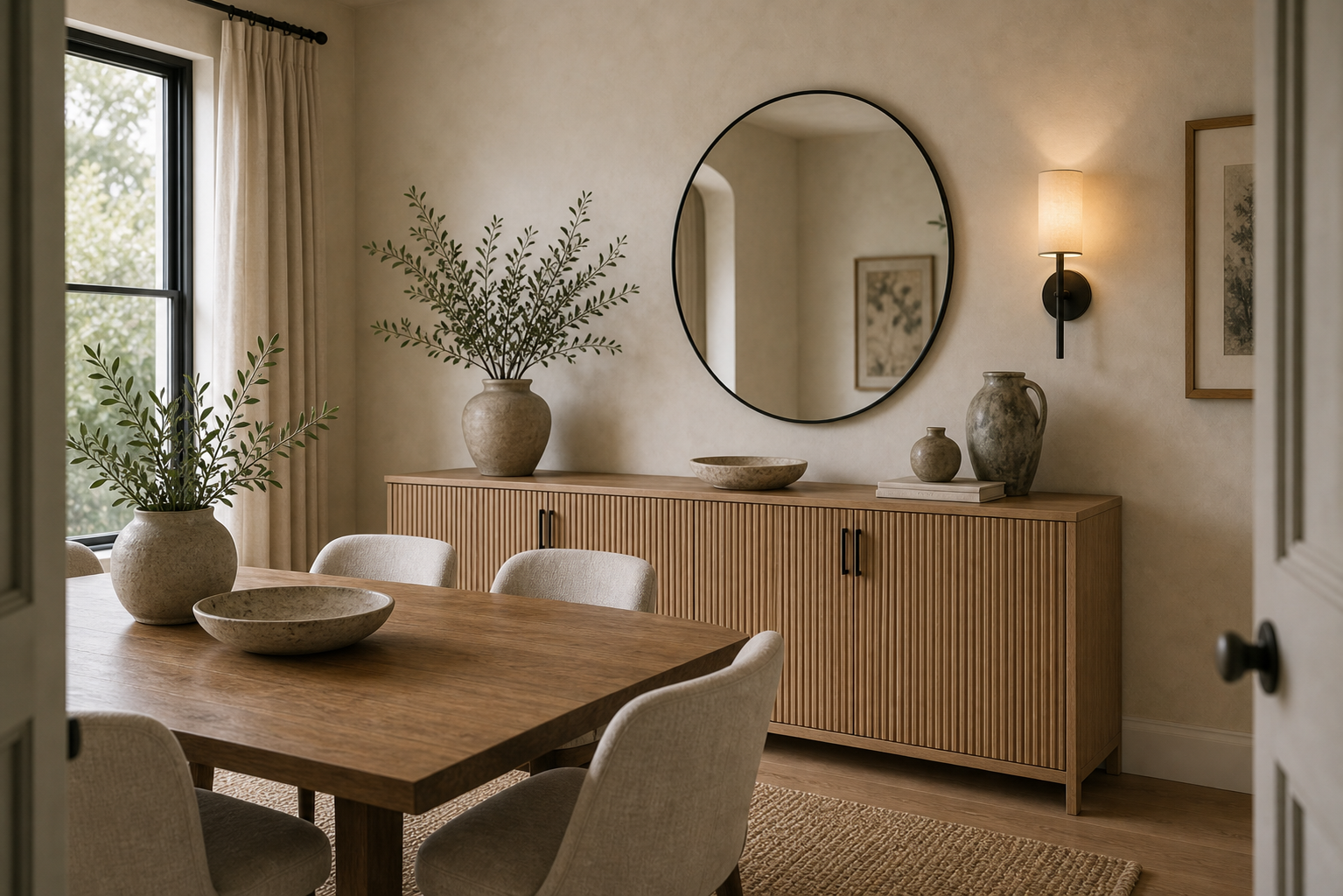

The fluted sideboard stretches across the dining-room wall as a low, textured architectural band. Fine vertical ribs run along its warm timber-toned fronts, while the uninterrupted top provides a calm base for a large round mirror and a small collection of ceramics. Its length gives the wall presence without requiring full-height cabinetry.
The dining table sits in the foreground on a parallel axis, but its plain broad surface and pale upholstered chairs remain secondary. A tall window brings side light across both pieces, revealing the sideboard relief and table grain. Branches and round vessels connect the rigid furniture lines to softer organic forms without filling the room with decoration.
The Sideboard Creates a Low Architectural Band
The sideboard is the longest uninterrupted element on the wall, and its vertical fluting makes that length feel intentional rather than plain. Because the texture is built into the doors, the storage wall does not need heavy styling. The furniture itself provides the design interest.
The sideboard stands on short recessed feet, leaving a slim shadow underneath and preventing the long cabinet from becoming a wall-to-floor block. Its top aligns below the dining-chair backs in the foreground view, preserving a large pale field for the mirror. This low proportion is what allows the fluted texture to remain elegant across such a wide front; a taller cabinet would turn the same vertical ribs into an imposing screen.
The narrow grooves create shadow and movement across the wood face. That subtle rhythm is more refined than a flat cabinet front in this calm dining room. The texture also balances the smoother plaster wall above it. One surface stays quiet while the other carries tactile detail.
The rib spacing is fine enough to read as texture from across the table rather than as separate door panels. Dark pulls are limited to the outer sections and do not interrupt the central rhythm.
A Round Mirror Relieves the Linear Cabinet
The round mirror interrupts the sideboard's strong horizontal line and the vertical grooves below. That contrast keeps the wall from becoming too linear. Its thin black frame adds definition without making the composition feel graphic or hard. The mirror is large enough to anchor the wall, but it still lets the wood remain the main feature.
One Sconce Adds an Asymmetrical Light Point
The sconce creates a warm pool of light on the plaster wall and gives the right side of the sideboard a vertical accent. It also keeps the wall useful in the evening. The glow makes the ceramics and fluted wood feel warmer rather than simply decorative.
The single sconce sits to the mirror's right rather than forming a matched pair. Its small dark mount and pale glow answer the framed artwork at the far edge, giving the wall an asymmetrical secondary rhythm. The mirror reflects light from the window, so one electric source is enough to mark the darker side. This choice supports the organic informality of the room without making the cabinet top appear randomly styled.
The vases, bowl and branch arrangement bring rounded, irregular forms to the top of the sideboard. Those shapes soften the strict repetition of the fluting. The styling works because it is sparse. A crowded top would hide the clean line of the sideboard and weaken the storage wall.
A large branch vessel occupies the left of the top, while smaller pale and dark pots settle toward the right. Clear intervals let the fluting remain visible beneath the display.
The Dining Table Keeps a Quieter Profile
The wood table in the foreground supports the same natural material language, but it does not steal The primary feature from the sideboard wall. Its broad surface and upholstered chairs make the room feel usable, while the sideboard remains the visual anchor.
Window Light Brings the Relief Forward
Daylight from the left window moves across the table, chairs and sideboard, revealing the wood tone without making it shiny. The linen curtains soften that light and help the plaster wall feel warm. The room reads as organic because the materials respond gently to daylight.
The restrained surface composition relates to this modern organic dining table study, though the room's primary texture is concentrated in storage rather than the table.