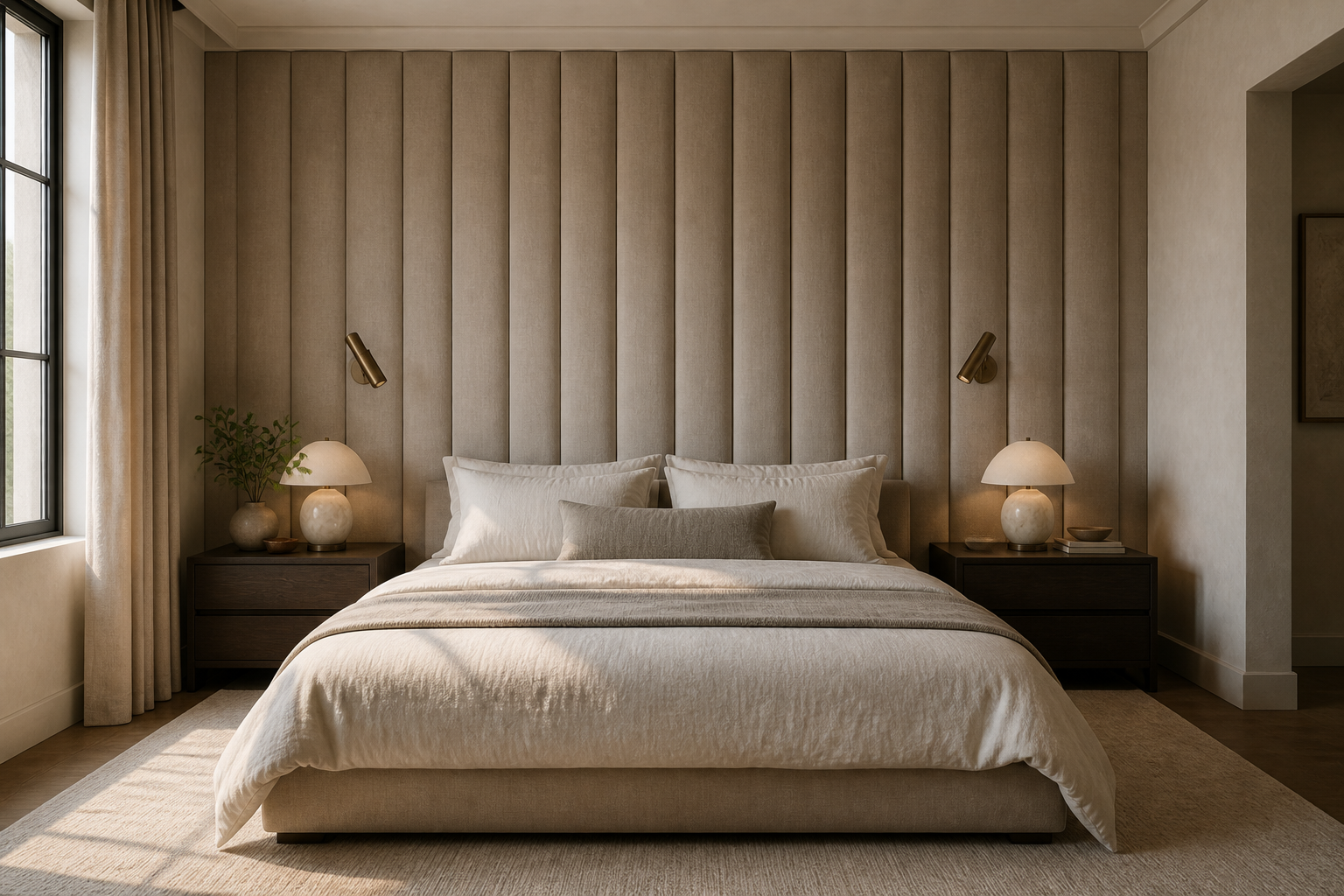

The bed wall is built from narrow upholstered channels that rise from the bedside line to the ceiling, creating a soft architectural backdrop with more depth than a conventional headboard. A low bed sits inside this broad frame, flanked by dark bedside tables and small wall lights. Pale layered bedding, full curtains, and a textured rug keep the composition quiet. The strongest luxury signal is not ornament but the precision with which vertical rhythm, symmetry, and softness are coordinated.
Channel Tufting Gives the Bed Wall Vertical Depth
The full-height upholstered panels create a strong vertical backdrop behind the bed. Their scale makes the wall feel custom, which is the difference between a quiet luxury bedroom and a simple neutral bedroom. The panel seams are narrow and regular, so the texture feels tailored rather than decorative. That restraint is what lets the headboard cover the wall without making the room feel busy.
Each channel casts a fine shadow and remains consistent in width, making the wall read as one tailored surface rather than separate panels. The repeated relief adds interest at close range while preserving a calm field behind pillows and lamps.
The bed sits low against the tall panel wall, leaving the height of the headboard visible. This is important because a bulky bed frame would interrupt the long vertical lines. Ivory bedding keeps the center of the composition light. The contrast between soft bedding and darker bedside furniture gives the bed area shape without using strong color.
The treatment spans beyond both bedside tables and reaches the room edges, giving it architectural scale. This extra width prevents the upholstered wall from looking like an oversized furniture attachment and allows the entire sleeping zone to sit within one continuous frame.
A Low Bed Protects the Wall's Full Height
Matching dark nightstands anchor both sides of the bed and give the upholstered wall a clear center. The symmetry is formal, but the soft bedding keeps it from becoming stiff. Small table lamps repeat on both sides, while the plant and books add enough variation to stop the room from feeling staged.
Dark Bedside Tables Mark the Lower Corners
The angled wall sconces are mounted directly on the upholstered panels, turning the headboard wall into a functional reading zone. Their slim shape suits the vertical panel rhythm. Because the sconces are darker and more directional than the table lamps, they add precision without disturbing the quiet mood of the room.
Paired Wall Lights Sit Within the Channel Rhythm
Daylight enters from the left and washes across the bedding and rug, showing why the room does not need a brighter palette. The light gives the greige headboard enough variation. Full-length fabric curtains soften the window edge and echo the fabric quality of the panels. That connection helps the room feel layered rather than simply beige.
Small dark fixtures are mounted over the tables and stay inside the outer bed width. Their compact arms interrupt only a few channels, leaving most of the vertical pattern visible and freeing the tabletop surfaces for low objects.
The pale wool rug extends beyond the bed, making the sleeping area feel settled within the room. It also softens the transition between the dark floor and the upholstered bed base. Its quiet texture works because it does not compete with the vertical wall panels. In a room like this, the floor should support the bed rather than introduce another pattern.
Curtains Continue the Soft Edge Treatment
Begin with the headboard wall as the first design decision. Use vertical upholstered panels in a warm greige or taupe fabric, and let them run high enough to change the scale of the room. Then choose a low upholstered bed, simple dark nightstands, warm bedside lamps and slim sconces. The goal is not to add more luxury signals; it is to make every supporting piece quieter than the wall.
Designing a Full Bed Wall Without Adding Visual Noise
I would not hang artwork above this bed. The headboard already acts as the wall treatment, and art would break the clean vertical rhythm. I would also avoid patterned bedding. The strength of the room comes from fabric texture, balanced light and proportion, not from decorative contrast.
The broader panel treatment in this scheduled vertical fabric-panel wall study uses fewer, wider divisions. This room achieves a finer cadence through narrow channels while maintaining the same full-elevation commitment.
The bed frame projects slightly beyond the mattress but remains well inside the upholstered wall width. A pale rug extends into the foreground and creates a softer floor zone beneath the low profile. These nested dimensions make the substantial feature wall feel proportionate rather than oversized.