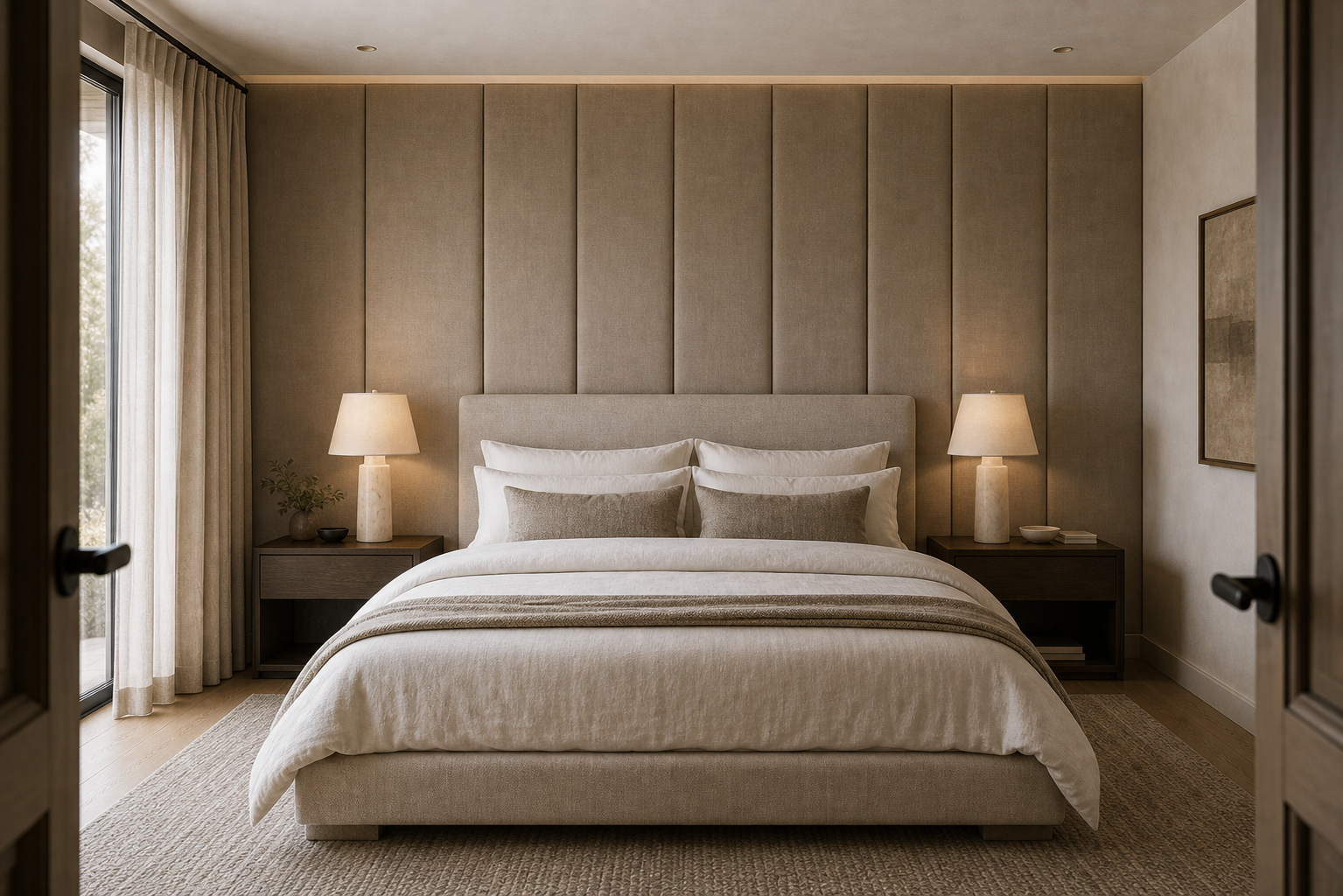

The bed wall is not treated as a background here; it has been designed as a vertical fabric-panel elevation. Broad taupe panels run from skirting to ceiling behind a separate low headboard, placing both elements inside a larger vertical composition. Paired lamps, low bedside tables, pale bedding, and curtains at both edges establish symmetry without making the bedroom rigid. The photograph is worth studying for the way one soft surface supplies architecture, comfort, and visual quiet at once.
Vertical Fabric Panels Give the Bed Architectural Scale
The vertical fabric panels are the first design decision the eye reads because they cover the entire wall behind the bed. That scale gives the room a hotel-like presence. The bed is no longer sitting against a plain wall; it is integrated into a soft architectural backdrop.
The panels continue well beyond the mattress and bedside tables, so the composition belongs to the room rather than to the bed alone. That extra width makes the wall feel fitted and prevents the sleeping zone from becoming a narrow upholstered island in the middle of a broad elevation.
Vertical Seams Measure the Wide Elevation
The narrow vertical seams give the paneled wall order without creating a busy pattern. They also make the room feel taller, which is especially useful when the palette is intentionally quiet.
A Separate Headboard Occupies a Lower Register
The separate lower upholstered headboard sits within the same fabric language as the vertical wall panels. That makes the bed wall feel custom rather than assembled from separate pieces. The headboard supports the panels instead of competing with them.
Because the headboard remains below the lampshades, its horizontal top is easy to distinguish inside the taller panel grid. Pillows overlap the headboard without covering its full width, preserving a clear transition from layered bedding to the more disciplined wall surface.
Paired Lamps Mark the Sleeping Axis
The two table lamps frame the bed and add warm light at the same height on both sides. Their glow makes the taupe fabric feel deeper and helps the paneled wall read as soft rather than flat.
Pale Bedding Separates Foreground From Wall
The white layered bedding gives the darker taupe wall a clean foreground. That contrast is quiet but important. It keeps the bed from blending into the panels and gives the room a fresh center.
The white duvet and pillows create the brightest plane in the image. Warm beige layers at the foot reduce the contrast gradually, which is more controlled than jumping directly from white bedding to the deeper taupe wall.
Curtains Complete the Soft Perimeter
The floor-length pale curtains repeat the vertical softness of the upholstered panels. They also filter daylight from the left, which keeps the bedroom calm and prevents the fabric wall from feeling too heavy.
A Low-Contrast Rug Grounds the Bed
The low-contrast rug grounds the bed and adds texture below the upholstered wall. Its low-contrast color keeps the focus on the panels while making the room feel warmer underfoot.
Planning Vertical Fabric Panels Around Real Bedside Use
Start with the full bed wall rather than a narrow headboard strip. Use consistent panel widths, a calm fabric color and simple bedside lighting. The luxury comes from proportion and finish, not from adding more objects.
A related warm neutral upholstered headboard study uses layered softness at furniture scale. This photograph goes further by extending the treatment to the ceiling and integrating every bedside element inside it.
The bedside tables are narrower than their corresponding panel bays and leave a small floor margin at each curtain edge. This spacing prevents the fitted wall from making the furniture appear trapped. The wall can therefore be visually continuous while lamps, tables, and bed retain enough separation for ordinary use and cleaning.
At both sides, the lamps sit in front of the panel field rather than being recessed into it. Their shades overlap vertical seams at slightly different points, which keeps the wall grid from looking like a rigid diagram. The curtains begin immediately beyond the upholstered width and introduce deeper folds with a similar vertical direction. This transition is especially successful: firm seams organize the central sleeping zone, while loose fabric folds soften its edges near the glazing. Nothing projects into the approach beside either nightstand.