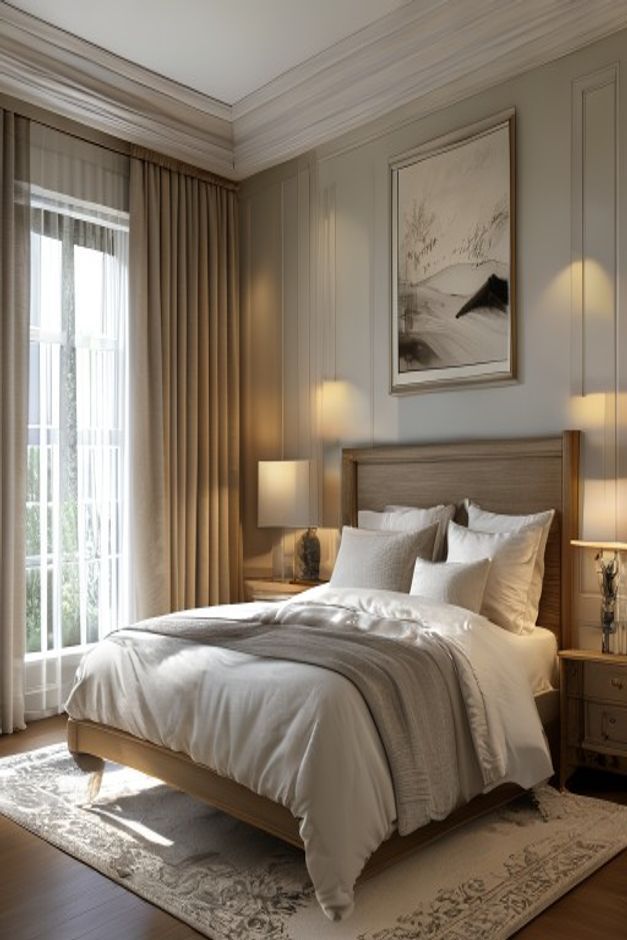

This bedroom shows how traditional design relies on the deliberate alignment of structural elements and furniture. By anchoring the space with a central wooden bed frame against a backdrop of precise wall paneling, the room achieves a sense of equilibrium that feels both grounded and intentional. Studying this composition reveals how classic proportions can transform a standard sleeping area into a cohesive, tranquil environment that prioritizes visual order above all else.
The deliberate use of a neutral palette, ranging from soft beige to deep taupe, allows the architectural details to take center stage without overwhelming the senses. This approach to residential design emphasizes the importance of a unified color story, where wood tones and textile textures work in concert to create a sophisticated atmosphere. Understanding these principles provides homeowners with a blueprint for crafting spaces that feel curated rather than merely furnished, highlighting the necessity of careful planning in interior architecture.
A Centered Bed Gives the Room a Clear Axis
Symmetry acts as the primary organizing force in this traditional bedroom, dictating the layout of every surrounding piece. By centering the wooden bed frame against the paneled wall, the design creates a natural axis that draws the eye inward, establishing a calm and predictable flow of movement. This arrangement not only provides a sense of stability but also ensures that the sleeping area remains the undisputed heart of the room, regardless of other decorative additions.
When furniture is positioned with such geometric precision, the room gains a formal quality that is often lacking in more eclectic designs. The matching wooden nightstands flank the bed, reinforcing this mirrored layout and providing a functional balance that simplifies daily routines. This commitment to symmetry is not merely an aesthetic choice; it is an architectural decision that simplifies the visual complexity of the room, allowing occupants to feel more relaxed within the structured space.
Architectural Significance of Molded Wall Paneling
Molded wall paneling provides a layer of architectural depth that elevates the bedroom beyond simple drywall construction. These panels introduce subtle shadows and textures, creating a rhythmic pattern that spans the wall behind the headboard. Such detailing is a hallmark of traditional interiors, offering a tactile quality that plain surfaces cannot replicate, effectively framing the bed as a sculptural object within the larger room volume.
Beyond its decorative function, paneling serves to unify the wall plane, preventing the space from feeling fragmented or disjointed. By maintaining a consistent color across the panels, the design creates a seamless backdrop that allows the wood tones of the furniture to stand out. This technique demonstrates how subtle structural additions can significantly alter the perception of a room’s scale and character, providing a sophisticated framework for the rest of the interior elements.
Warm Wood Bedside Pieces Ground the Palette
The choice of warm wood for the bed frame and nightstands introduces an organic element that counters the coolness of the white and taupe wall surfaces. These wooden pieces bring a natural richness to the interior, grounding the lighter textiles and preventing the room from feeling sterile. The grain and finish of the wood are essential components in maintaining the traditional aesthetic, as they suggest durability and timeless craftsmanship.
Coordinating the wood tones throughout the room ensures that the furniture feels like a cohesive set rather than a collection of disparate items. This strategy of material consistency is vital for achieving a high-end look, as it creates a visual dialogue between the bed and the nightstands. For those interested in exploring how furniture finishes impact the overall mood, consider how these Quiet Luxury Bedroom Color Ideas can be integrated into your own space to enhance the sense of refinement.
Textile Layering and Bedding Comfort
Cotton bedding and layered throw pillows introduce a necessary softness to the otherwise structured environment of this traditional bedroom. The use of multiple fabric weights and textures creates a tactile experience that invites rest, while the neutral color palette maintains the room’s serene quality. Layering is not just about comfort; it is a design tool that adds depth to the bed’s silhouette, making it feel plush and welcoming.
The bedding acts as a bridge between the rigid lines of the furniture and the softer elements of the room, such as the window treatments. By choosing fabrics that complement the beige and taupe undertones of the walls, the bedding integrates perfectly into the overall color scheme. This careful curation of textiles is a fundamental aspect of successful interior design, proving that even in a highly structured room, softness remains a priority for residential comfort.
The Influence of Linen-Textured Curtains
Linen-textured curtains play a pivotal role in softening the window edges and filtering natural light. Their subtle weave adds a layer of visual interest that contrasts with the smooth finish of the wall paneling, providing a delicate balance between different surface types. These window treatments are essential for maintaining privacy while allowing the room to remain bright and airy, a key requirement for any bedroom design.
When selecting curtains, the goal is to choose a weight that feels substantial yet fluid. In this traditional setting, the curtains hang with a clean, vertical drape that mirrors the lines of the wall panels, reinforcing the room’s overall sense of order. Integrating such elements requires attention to both function and form, as the window treatment must serve the needs of the occupant while contributing to the aesthetic harmony of the space.
Lighting Strategies for Ambient Glow
Table lamps positioned on the nightstands provide a warm ambient glow that defines the nighttime character of the bedroom. By placing lighting at a lower level, the design creates a cozy, intimate atmosphere that is perfect for winding down. The light from these fixtures highlights the textures of the wall panels and the bedding, adding a layer of depth that is missing during the daylight hours.
The choice of lamp style should harmonize with the traditional furniture, often featuring classic shapes that complement the wooden nightstands. Proper lighting is not just about visibility; it is about setting a mood and enhancing the architectural features that might otherwise go unnoticed. For those looking to optimize their space further, you might find inspiration in Elevating Modern Minimalist Bedrooms with Floating Nightstands, which offers a different perspective on bedside utility.
The Impact of Patterned Area Rugs
A patterned area rug anchors the lower portion of the room, providing a soft landing for the feet and adding a layer of visual complexity. The pattern, while traditional, does not compete with the wall paneling; instead, it works to tie the various colors of the room together into one cohesive design. This choice of floor covering is critical in large rooms, as it helps to define the sleeping zone within the larger floor plan.
The rug also introduces a tactile element that balances the wood flooring, making the room feel warmer and more inviting. When selecting a rug, it is important to consider how the pattern scale relates to the other elements in the room, such as the bedding and the wall art. A well-chosen rug can be the final piece of the puzzle, bringing together all the disparate parts of the design into a unified, professional-looking space.
Curating Art for Traditional Spaces
Framed landscape wall art above the headboard serves as a focal point that adds a touch of personality to the room. This placement is classic in traditional design, as it fills the space above the bed and creates a balanced composition that feels complete. The artwork should be chosen for its color palette, ensuring that it echoes the beige, taupe, and white tones present in the rest of the room.
By keeping the art framed in a style that matches the room’s overall aesthetic, the design maintains a sense of historical continuity. This is an excellent way to introduce color and narrative into a bedroom without relying on bold patterns or loud decor. For homeowners dealing with unique architectural layouts, exploring Minimalist Bedroom Window Radiator Layout Ideas can provide additional context on how to balance wall-mounted features with existing structural constraints.
How can I achieve a symmetrical look in a small bedroom?
Focus on using matching nightstands and a centered headboard, which naturally forces the eye to perceive balance even in limited square footage.
What is the best way to layer textiles in a traditional room?
Start with a neutral base layer of cotton bedding, then add depth using throw pillows in varying fabric weights and complementary neutral tones.
Why is wall paneling effective for traditional bedroom design?
Molded paneling adds architectural interest and depth to the wall plane, creating a sophisticated backdrop that elevates the room’s overall texture.