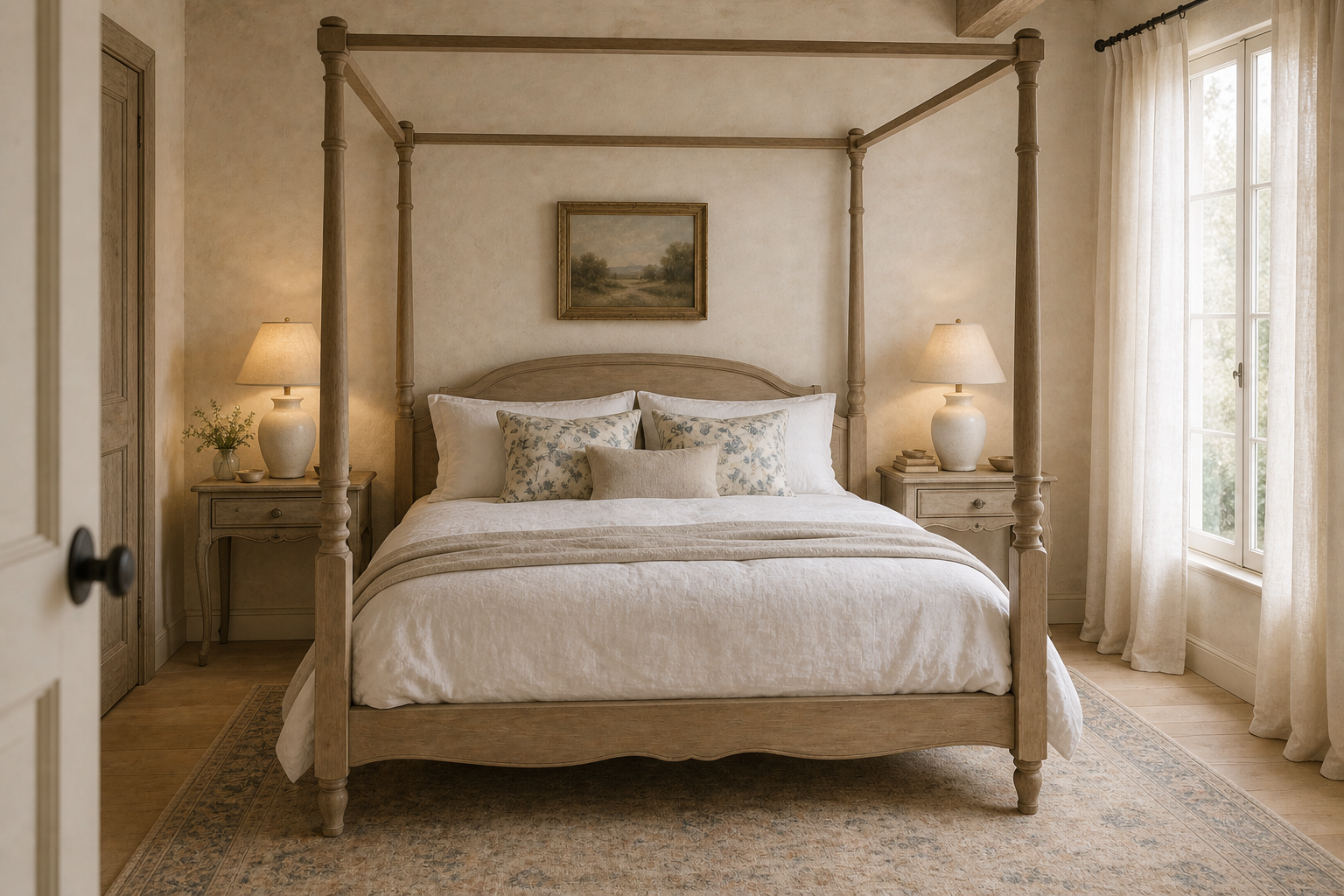

The canopy outlines a room around the mattress without enclosing it in fabric. Four pale posts rise to slim upper rails, giving the bed architectural presence while daylight and wall color remain visible through every side. A gently curved upholstered headboard softens the inner frame. Delicate nightstands and rounded lamps occupy the lower corners, preserving a clear hierarchy in which the bed is substantial, the supporting furniture is light, and the room remains bright.
An Open Canopy Draws the Sleeping Volume
The canopy posts rise from the floor and connect overhead, giving the bed a full architectural outline. That frame makes the sleeping area feel complete before any fabric canopy is added. Because the timber tone is light and softly finished, the bed feels romantic without becoming heavy.
The top rails complete a visible rectangle above the mattress, allowing the bed to read as a freestanding architectural object. No hanging fabric obscures that outline, so wall, artwork, and window remain part of the larger bedroom rather than disappearing behind a textile enclosure.
The curved headboard breaks the straight lines of the posts and top rails. It gives the bed a softer French country profile. That curve is subtle, which is why the frame still feels calm and adult.
Each post is narrow relative to bed width and set close to a mattress corner. This placement creates a clear perimeter without taking visual space from the bedside tables, and the pale finish prevents the tall uprights from dividing the room into dark vertical strips.
A Curved Headboard Softens the Inner Rectangle
The nightstands are smaller and more delicate than the bed, which is the right hierarchy. They provide function without competing with the canopy posts. Their curved legs and pale finish repeat the bedroom's traditional character in a quieter scale.
Delicate Nightstands Respect the Bed's Scale
The ceramic lamps create warm pools of light on both sides of the bed. Their rounded bases contrast with the vertical posts. The shades sit below the canopy rails, so the lighting supports the bed frame instead of fighting it.
The bedside pieces sit well below the headboard shoulders and leave open wall between their outer edges and the canopy posts. Curved fronts and slender legs provide a traditional note at a scale that cannot challenge the bed frame.
The white layered bedding prevents the canopy from feeling too formal. Its relaxed texture makes the large frame feel inviting. Muted floral pillows add a French country note without covering the entire bed in pattern.
Layered Bedding Keeps the Structure Relaxed
The sheer curtains filter daylight along the side of the bed, softening the plaster wall and wood frame. They echo the layered bedding without adding another strong pattern. This keeps the room bright and romantic rather than dark and theatrical.
Choose a canopy bed with visible posts and a clear top rail, but keep the finish pale or lightly weathered if the room is small. Pair it with relaxed linen, modest nightstands and simple lamps. The bed frame should provide the drama; the styling should provide comfort.
Using Canopy Scale Without Overfilling the Bedroom
I would not add heavy fabric panels to this canopy. The room works because the frame is open and the light can move through it. I would also avoid oversized nightstands. They would make the bed wall feel crowded.
The more compact wall composition in this traditional bedroom paneling study relies on symmetry behind the mattress. Here, the canopy projects that order into the room and must therefore remain visually open.
The rug extends beyond the bed and softens the floor inside and outside the post line. A small framed landscape is centered within the upper rectangle but leaves substantial wall visible. These lower and upper layers make the canopy feel connected to the room without requiring draped fabric, oversized art, or heavier bedside furniture.
The canopy is positioned with clear space between its outer posts and the side window, allowing the pale curtain to fall without wrapping around the frame. At the opposite side, the nightstand and lamp fit within the post line rather than projecting beyond it. These relationships make the large bed credible in the available width: tall structure remains contained, bedside functions stay reachable, and daylight can pass across the frame without being blocked by added canopy fabric.