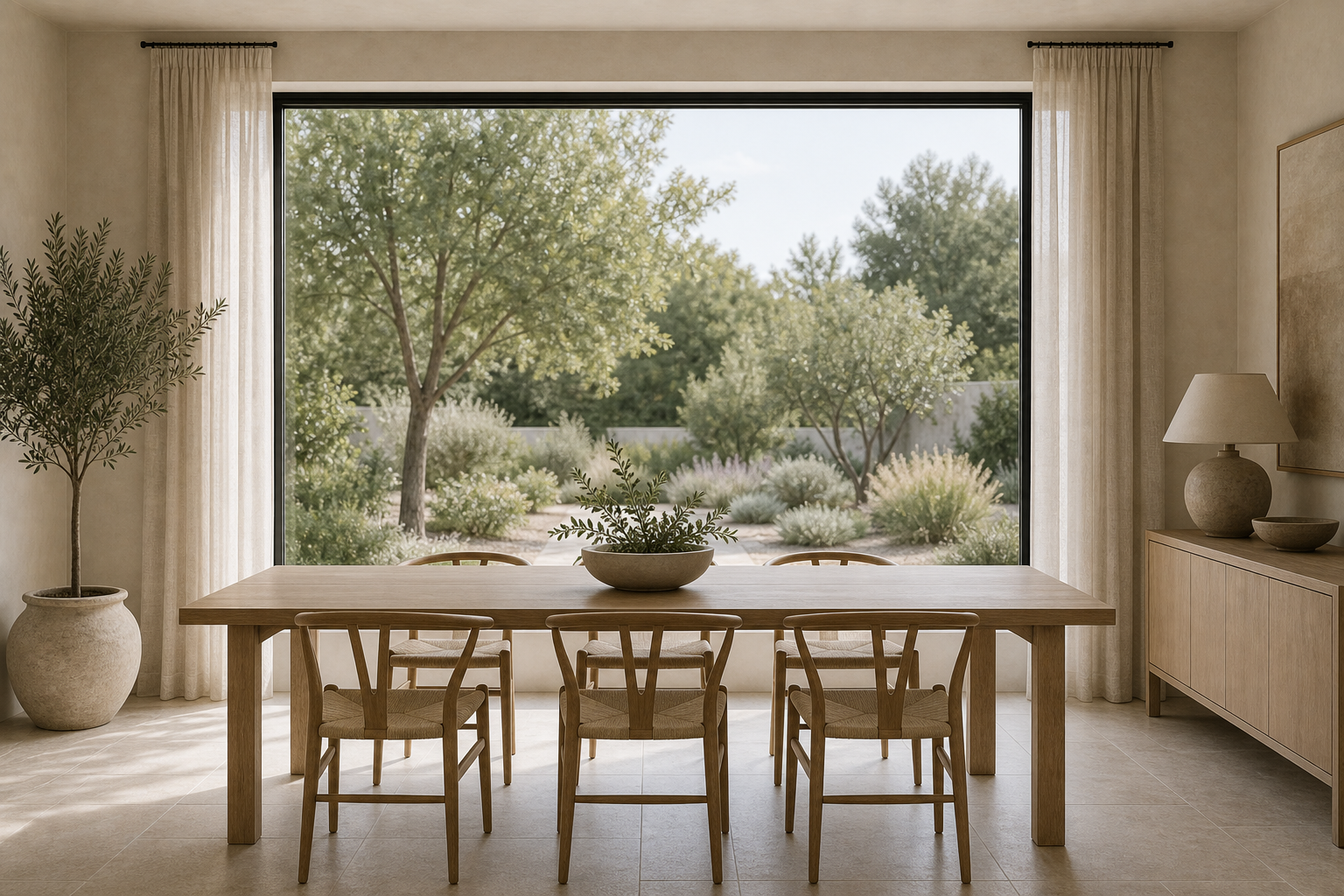

The garden view functions as the dining room's largest surface. A nearly wall-wide dark-framed window sits directly behind a light timber-toned table, turning trees and planting into the backdrop while keeping the interior palette spare. Open-back chairs, pale curtain panels, a low bowl, tiled floor, and shallow side storage remain below or beside the glazing. Every supporting decision protects the uninterrupted outlook.
The Window Replaces a Conventional Feature Wall
The oversized black-framed window is the strongest architectural feature. It fills the dining wall and turns the garden into the room's main visual surface. The frame is slim but dark, which gives the view definition without making the wall feel heavy.
The glass occupies most of the rear elevation and uses a fine dark perimeter rather than multiple internal divisions. That restraint allows the landscape to read as one broad composition from seated and standing positions.
The light timber-toned table is centered in front of the window, so the dining area feels intentionally placed rather than simply pushed against a wall. Its low, simple profile keeps the view open above the tabletop, which is crucial when the window is the main feature.
The table's long axis runs parallel to the glazing and its center aligns with the strongest open portion of the view. The quiet-luxury drapery study turns windows into a luminous fabric wall; this room keeps the glass itself completely legible.
Open Chair Backs Preserve the Lower View
The wood chairs have open backs and woven seats, allowing light and sightlines to pass through them. This keeps the dining set from blocking the window. Their pale wood tone also connects to the table and sideboard, creating one quiet material family.
The fabric side panels soften the edges of the large black frame without covering the glass. They make the window feel finished while preserving the view. Because the curtains are sheer and neutral, they filter daylight rather than turning into a decorative statement.
A Low Centerpiece Leaves the Horizon Clear
The light pale tiled floor gives the room a calm, durable base. Its large tiles support the minimalist mood because they do not add busy pattern under the dining table. The pale surface also reflects daylight back into the room, making the window feel even more generous.
A shallow bowl occupies the table center and stays below the garden horizon. This is a small but exact editorial decision: a tall arrangement would divide the view and make a naturally changing background compete with an indoor object.
The ceramic bowl on the table is low enough to avoid interrupting the view. That restraint is a small but important decision. In a window-led dining room, tall floral arrangements would fight the architecture; this bowl simply marks the table center.
Side Storage Stays Below the Window Datum
Start by treating the window as the room's primary feature. Align the dining table with it and choose chairs that do not visually block the glass. Use soft curtain panels, pale wood and low table styling so the view remains the reason the room feels special.
Designing the Dining Group Around an Outlook
I would not add shelves or heavy artwork around this window. The garden view already provides the visual depth the wall needs. I would also avoid high-back upholstered chairs because they would reduce the open relationship between table and window.
Furniture should be selected from the window inward. Keep chair backs visually permeable, avoid storage that rises across the sill line, and verify that the main route can pass behind the table without forcing the dining group against the glazing.
Chair seats and tabletop remain below the lower third of the glazing, so furniture occupies the foreground without masking the strongest tree forms outside. The open backs repeat fine verticals but never build a solid screen across the garden.
A lamp and small objects sit on the low unit at the right, creating a domestic edge beyond the dining group. Because that storage stays outside the window width, it does not narrow the view or create an artificial frame inside the existing dark perimeter. The window sill is visually absorbed into the dark frame, so no shelf or display ledge interrupts the broad landscape composition at seated eye level.