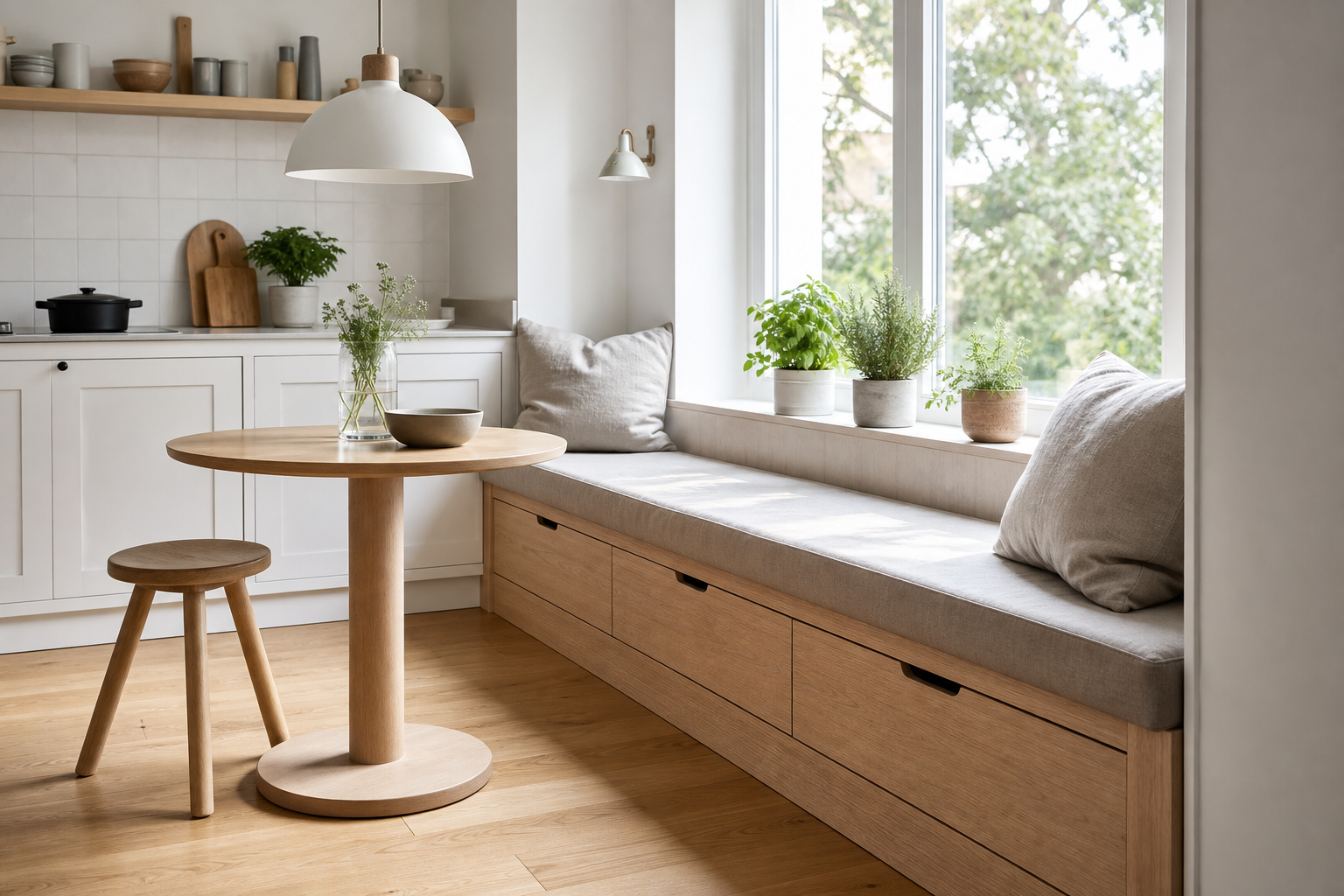

A low window seat turns the brightest edge of this kitchen into a small breakfast nook. The light timber-toned drawer base runs directly beneath broad glazing, topped by one tailored pale cushion and a few pillows. A round pedestal table and single stool complete the eating position without blocking access to the bench. Nearby white cabinetry, an open shelf, compact pendant, and potted greenery connect the nook to daily kitchen use.
The Window Seat Claims the Brightest Perimeter
The built-in bench runs directly below the window, so it captures the best light in the room. That placement makes the seat feel purposeful rather than squeezed into an unused corner. Its light timber-toned base also gives the nook enough warmth to stand apart from the white kitchen cabinetry.
The bench extends beneath most of the window and stops before the cabinet return, creating a clear boundary between sitting and kitchen storage. Its low back keeps every pane and garden view visible.
The drawer fronts below the cushion are visible and cleanly integrated into the bench. That makes the window seat useful without turning it into a bulky storage block. Because the drawers face the open kitchen area, they appear accessible. This matters more than adding hidden storage that would be awkward to reach.
Broad drawer fronts are externally visible below the cushion and open toward the room. The modern-organic banquette kitchen analysis wraps two walls around a larger table; this nook uses a straight window base and one compact pedestal.
A Thin Cushion Preserves the Joinery Line
The pale gray cushion is thin and tailored, which keeps the bench line crisp. It adds comfort without hiding the wood base. The pale pillows soften the corners, but their quiet color keeps the window seat from feeling overly styled.
The Round Table Keeps the Approach Open
The round pedestal table sits close enough to the window seat for casual meals. Its circular shape softens the straight bench and cabinet lines. A larger rectangular table would crowd this space. The round table leaves more open floor around the bench.
The circular top overlaps the bench edge enough for seated use but leaves its outer corners free. A central support avoids legs at the tightest approach and allows the stool to move independently.
One Stool Makes the Nook Flexible
The white cabinets in the background confirm that this is still a working kitchen. They stay secondary, allowing the window seat to become the more memorable feature. The tile backsplash and open shelf add quiet texture without pulling attention away from the seating nook.
The small potted greenery use the same daylight that makes the bench appealing. They connect the window seat to kitchen life rather than treating it like a separate lounge area. Their green color is also the clearest accent in the room, and it feels natural because it is tied to the window.
White cabinets rise at the left but stop before the glazing, confirming that the seat is part of the kitchen without turning the window wall into another full storage elevation.
Greenery Uses the Deep Window Sill
Start with the window wall and decide the bench length before choosing the table. The seat should feel built into the architecture, not pushed in later. Use a low drawer base, one long cushion and a small round table. Keep the surrounding kitchen palette restrained so the nook feels calm.
Planning a Breakfast Nook Around the Glazing
I would avoid heavy curtains at this window. The value of the seat comes from daylight, so the glass should stay visually open. I would also avoid tall chairs blocking the bench. Low, simple seating keeps the nook flexible.
Determine the bench length from window and cabinet boundaries, then choose a table small enough to protect the route. Heavy curtains, tall chairs, or a rectangular four-leg table would reduce both daylight and approach space.
The pendant hangs beyond the table rather than directly over the seat, preserving the window view and bench headroom. Its pale shade relates to cabinetry while the timber-toned base remains the warmer anchor.
The Cabinet Return Defines the Nook's Left Boundary
The tall cabinet stops precisely where the bench begins, so the change from storage wall to seating edge is unambiguous. Keeping both elements pale prevents that junction from feeling abrupt, while their different heights make each function readable.
A Pendant Stays Outside the Window Axis
Rather than hanging over the seat, the compact pendant occupies the open kitchen side of the table. That offset protects headroom along the bench and leaves the broad garden glazing visually uninterrupted from sill to upper frame.