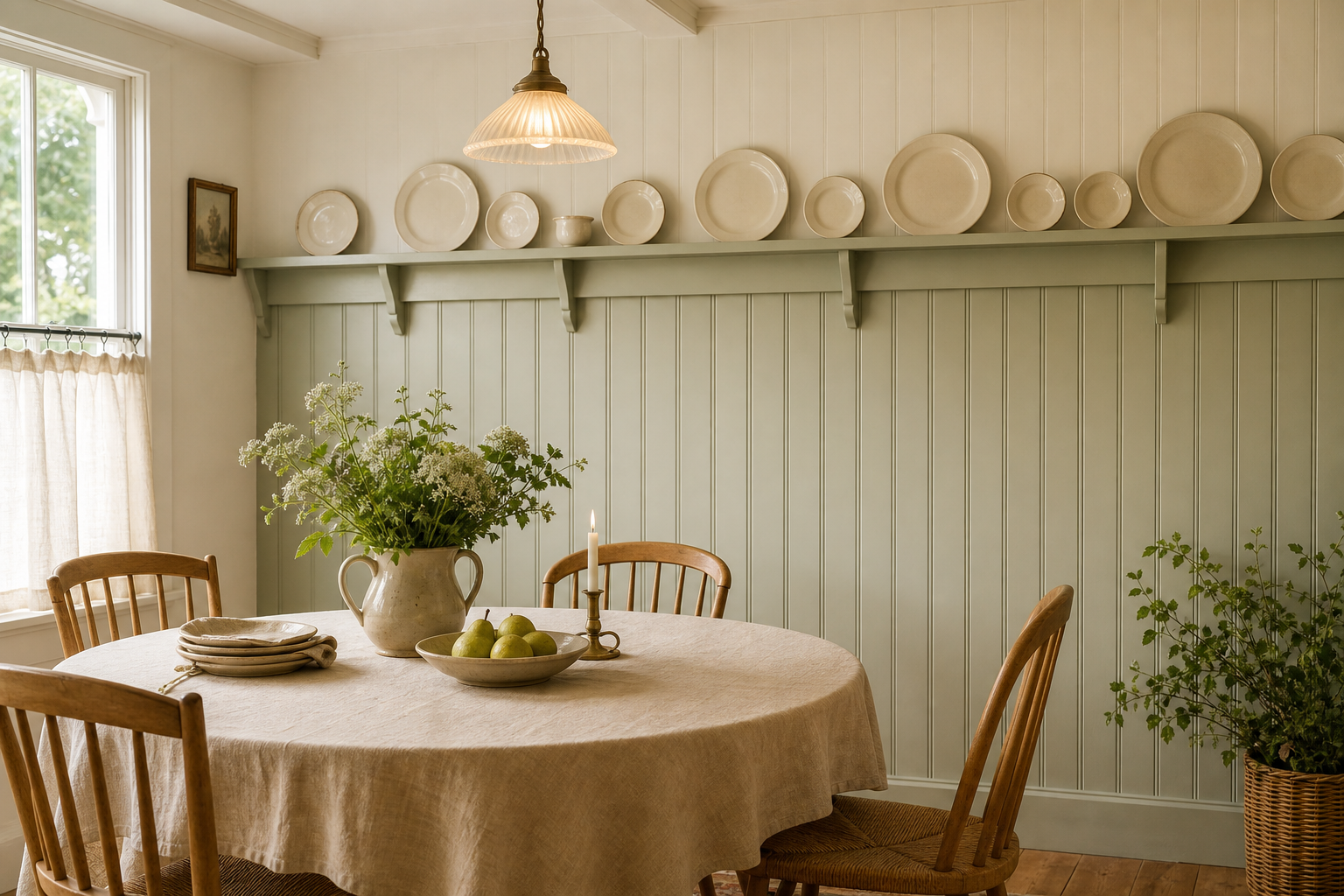

A continuous plate rail gives this dining room its cottage identity before any table setting is noticed. Pale plates of several sizes form a loose sequence above muted green vertical paneling, while small dark brackets establish a measured lower rhythm. The round table, timber-toned chairs, gathered window shade, and broad pendant sit below that display line. What works is the distinction between an architectural rail and a deliberately edited collection.
The Rail Draws One Continuous Line Around the Dining Wall
The rail runs across the wall as one continuous horizontal line, so it immediately organizes the dining room. The plates sit above the vertical wall paneling like a quiet collection rather than scattered decoration. That is why the room feels charming but not messy. The rail gives the plates a defined place.
The ledge runs beyond the table width and reads as part of the wall rather than a shelf installed only above furniture. Its consistent height also unifies the window side with the longer paneled elevation.
The display alternates larger plates with smaller plates and bowls. That variation keeps the wall from feeling stiff while still preserving a calm repetition. Because the plates share a similar cream tone, the different sizes add movement without introducing visual noise.
Large plates establish anchors, with smaller pieces inserted between them and visible wall left at every edge. The related cottage plate-wall article studies a freer arrangement; this room gains order from a single supporting ledge.
Vertical Paneling Gives the Collection a Quiet Base
The vertical wall paneling below the rail gives the wall a vertical rhythm that balances the horizontal shelf. Its pale sage color adds softness behind the cream plates. A plain wall would still work, but the vertical wall paneling makes the dining room feel more built-in and cottage-like.
The muted green field ends at the rail, and the upper wall remains pale. That two-part elevation lets the plates overlap a calm background while the lower grooves provide enough texture to ground chairs and plants.
Dark Brackets Mark the Display at Useful Intervals
The round table softens the long straight line of the rail. Its tablecloth adds a relaxed fabric layer below the structured wall. This contrast is important: orderly display above, softer everyday dining below.
The Round Table Breaks the Wall's Long Geometry
The pendant hangs near the plate rail and casts warm light over the table. Its fluted shade feels compatible with the cottage wall details. It also gives the dining area a central point, so the rail does not have to do all the visual work.
A circular tabletop prevents the room from becoming a stack of horizontal bands. Its fabric cover falls softly between timber-toned chair backs, making the center feel hospitable without adding another wall pattern.
The cafe curtain at the window keeps the left side soft and domestic. It relates to the fabric tablecloth and prevents the dining room from feeling too hard. The daylight from that window also helps the cream plates read clearly.
Window Light Keeps Pale Plates Distinct
Start with one sturdy rail at a consistent height. The display should be easy to read as a single line from across the room. Use plates in related tones and vary the scale. A few larger plates, smaller plates and one pitcher can create enough rhythm.
Building a Collection Without Crowding the Ledge
I would avoid mixing too many bright plate colors on this wall. The soft cottage palette is what keeps the display calm. I would also avoid placing large art directly below the rail. The vertical wall paneling should remain a quiet base.
Start with rail height and the largest plate, then compose outward with unequal gaps. Filling every available centimeter or adding framed art above the same ledge would weaken the readable silhouette of each object.
The pendant hangs below the plate line and over the table center, linking wall display to dining use without covering any plate silhouette. Its pale shade adds volume while remaining tonally quiet.
A large leafy plant occupies the wall end and softens the last plate grouping. Its irregular outline prevents the repeated ledge and panel grooves from becoming overly formal.
The collected plates stay above seated eye level and never overlap chair backs, so display and dining remain separate visual bands across the compact room.