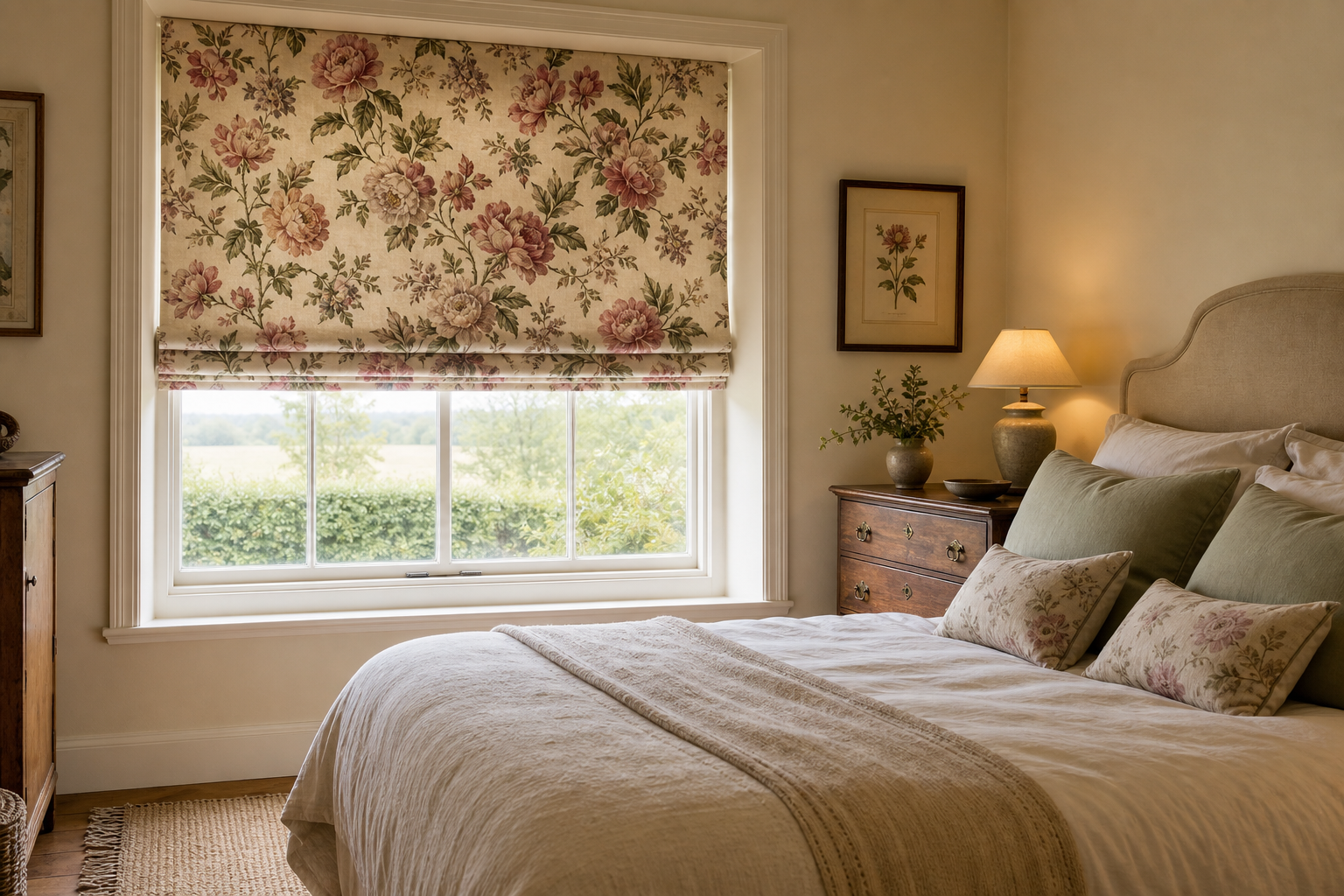

The floral Roman shade behaves like a framed textile panel rather than background window dressing. Its red, green, and cream pattern fills the recessed opening, while crisp pale casing contains the motif and keeps the surrounding wall quiet. The bed uses subdued layers, muted green cushions, and a curved headboard; timber-toned bedside furniture, botanical art, and warm lamps reinforce the country mood without repeating the same print.
The Shade Converts the Window Into a Patterned Panel
The shade is the largest patterned surface in the bedroom, and it sits in the brightest part of the composition. That combination makes it the natural focal point. Because the fabric is gathered into a Roman fold rather than hanging as full curtains, the pattern feels framed and controlled. The window treatment becomes architectural.
The shade occupies nearly the full window reveal and is broad enough to register from the doorway. Because the pattern is concentrated in one rectangle, it supplies character without making the entire bed wall visually restless.
Pale Casing Gives the Floral Motif a Firm Boundary
The white window casing creates a clean border around the floral fabric. That frame is essential because it prevents the print from bleeding visually into the warm wall color. A strong patterned shade needs this kind of edge. Without it, the bedroom could feel softer but less composed.
A pale border remains visible on all sides and separates the print from the warm wall. The floral-curtain bedroom guide combines pattern across more than one textile; this room reserves it for the framed window plane.
Roman Folds Control Fabric Volume at the Top
The bed uses cream fabric bedding and a softly curved upholstered headboard. Those choices let the shade remain the primary decorative gesture. The restraint is not bland. The rumpled fabric and textured cover add enough surface interest to keep the bed from looking unfinished.
Gathered folds collect above the clear lower glass, preserving garden light and a view through the bottom of the window. The photograph supports this relationship but not the shade's fabric content or operating mechanism.
Muted Bedding Allows One Print to Lead
The muted green pillows pick up the leafy tones in the floral fabric. That connection makes the bedding feel related to the window without copying it exactly. This is one of the safest ways to use pattern in a bedroom: repeat color, not the entire motif.
Green Cushions Pull a Minor Color Into the Bed
The wood nightstand gives the corner weight and age. Its darker tone balances the bright window and stops the room from becoming too pale. The visible drawers and brass pulls also suit the English country mood, where furniture should feel collected rather than newly matched.
Muted green appears in small cushions rather than a matching coverlet. This selective repetition draws a color from the shade into the sleeping area while cream and taupe bedding continue to provide visual rest.
Bedside Furniture Grounds the Softer Textiles
The table lamp adds warmth beside the bed while daylight comes through the window. That two-source light condition makes the room feel usable at different times of day. The lamp shade is simple, which is the right decision. A patterned shade on the lamp would compete with the Roman shade.
Warm Lamps Balance Strong Daylight
The framed botanical print echoes the floral theme in a smaller and more contained way. It reinforces the country character without asking for equal attention. Its placement above the nightstand also helps bridge the tall window and the lower bed line.
Using Floral Pattern Without Covering Every Surface
Choose the Roman shade fabric first, because it will control the palette. A dusty rose and muted green floral works well when the walls and bedding stay warm and quiet. After that, repeat one or two colors from the print in pillows, a small artwork or a vase. Keep the largest nearby surfaces plain.
Choose one pattern with several quiet supporting tones, then repeat only one of those colors elsewhere. Additional floral wallpaper, a patterned rug, or matching bed curtains would remove the disciplined framing that gives this window its authority.
The bedside lamps sit lower than the shade midpoint, creating warm lateral pools while the window remains the brightest plane. This hierarchy keeps patterned fabric crisp during the day and gently modeled after dark.
Framed botanical art remains small and offset from the window, echoing subject matter without repeating the shade motif. Pale wall between picture and casing prevents a decorative cluster.