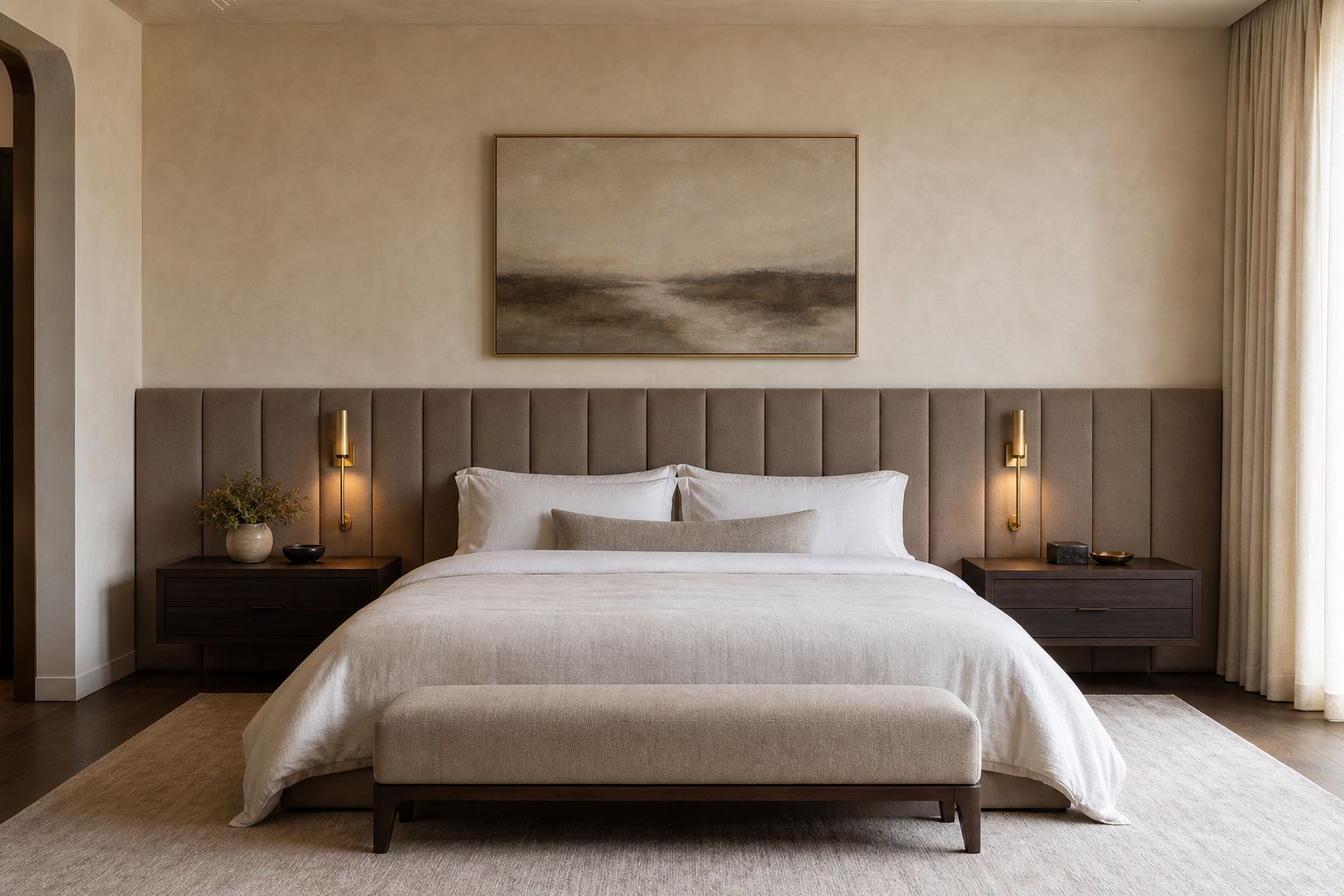

A channeled upholstered panel extends across almost the entire bed wall, joining the bed, both nightstands, and paired sconces within one continuous horizontal field. Its muted taupe tone and fine vertical divisions create depth without a loud pattern. Pale bedding, a single artwork, dark bedside volumes, narrow warm-metal lights, and side curtains form distinct layers. Luxury comes from integrated scale rather than decorative quantity.
The Headboard Claims the Complete Bed Wall
The upholstered panel runs across the full bed wall, so it becomes the room's main architectural line. It frames the bed, nightstands and sconces inside one continuous surface. That width is what gives the bedroom a quiet luxury feeling. The wall feels designed before any styling is added.
The panel begins beyond both nightstands and stops before the side curtains, so it reads as a designed wall zone rather than an oversized conventional headboard.
The headboard is divided into narrow vertical panels, giving the taupe fabric a subtle rhythm. Those channels add detail without introducing pattern. Because the paneling stays tonal, the wall has depth while remaining calm.
The vertical fabric-panel bedroom study emphasizes vertical enclosure. This room stays lower and wider, using fine channels to link bedside elements.
The Bed Sits Inside Rather Than in Front of the Composition
The warm-metal sconces are mounted directly on the upholstered wall, which makes lighting part of the headboard system. Their warm glow emphasizes the fabric texture. Their slim vertical shape also echoes the headboard channels, so the lighting feels integrated rather than decorative.
The mattress and pillows overlap only the center portion, leaving long upholstered wings visible. That exposed width is essential to the wall-to-wall effect.
Dark Nightstands Mark the Panel Ends
The dark wood nightstands sit low and wide, grounding the upholstered wall. Their contrast keeps the taupe and ivory palette from becoming too pale. Because they are simple blocks, they support the headboard's clean geometry rather than competing with it.
Paired Sconces Create Narrow Pools of Light
The large neutral artwork sits above the bed and inside the visual field created by the headboard. It gives the upper pale wall a quiet center. Its muted tones are important because the art adds scale without stealing attention from the upholstered panel.
Slim sconces sit above the nightstands and remain within the panel height. Their warm points add function without requiring large lamps that would conceal the channels.
One Artwork Protects the Upholstered Field
The upholstered bench at the foot of the bed repeats the soft material language of the headboard. It gives the lower half of the room a finished edge. Its low profile keeps the bed wall dominant while adding a practical landing place.
Pale Bedding Separates Bed From Headboard
Start with the full wall width, not just the mattress width. The headboard should feel like a fitted architectural panel rather than an oversized bed accessory. Place sconces and nightstands in relation to the panel seams, then keep bedding simple so the wall remains the main gesture.
Proportioning a Wall Panel Around All Bedside Functions
I would avoid a busy patterned duvet in this room. The headboard's quiet scale needs calm bedding to stay elegant. I would also avoid mismatched bedside lamps, because the wall-mounted sconces already create the correct symmetry.
Coordinate bed width, nightstand edges, outlet positions, and panel joints in one elevation. A panel ending at the mattress would lose the integrated quiet-luxury effect.
Nightstands sit entirely within the upholstered span and align under the outer channel groups. Their dark tone gives the long panel clear endpoints.
The artwork stays above the bed center and narrower than the mattress, leaving channels exposed at both sides.
Curtains begin beyond the upholstered panel edges and soften the transition from designed bed wall to exterior glazing.
The channeled panel is darker than the wall above but lighter than the nightstands, creating a middle tonal layer behind the bed. This graduation lets the long upholstered field feel substantial without reading as a dark feature wall.
Bedside drawers project slightly from the panel and remain low enough for the sconces to occupy clear vertical strips above. Their compact width protects the broad upholstered wings that make the headboard feel genuinely integrated.