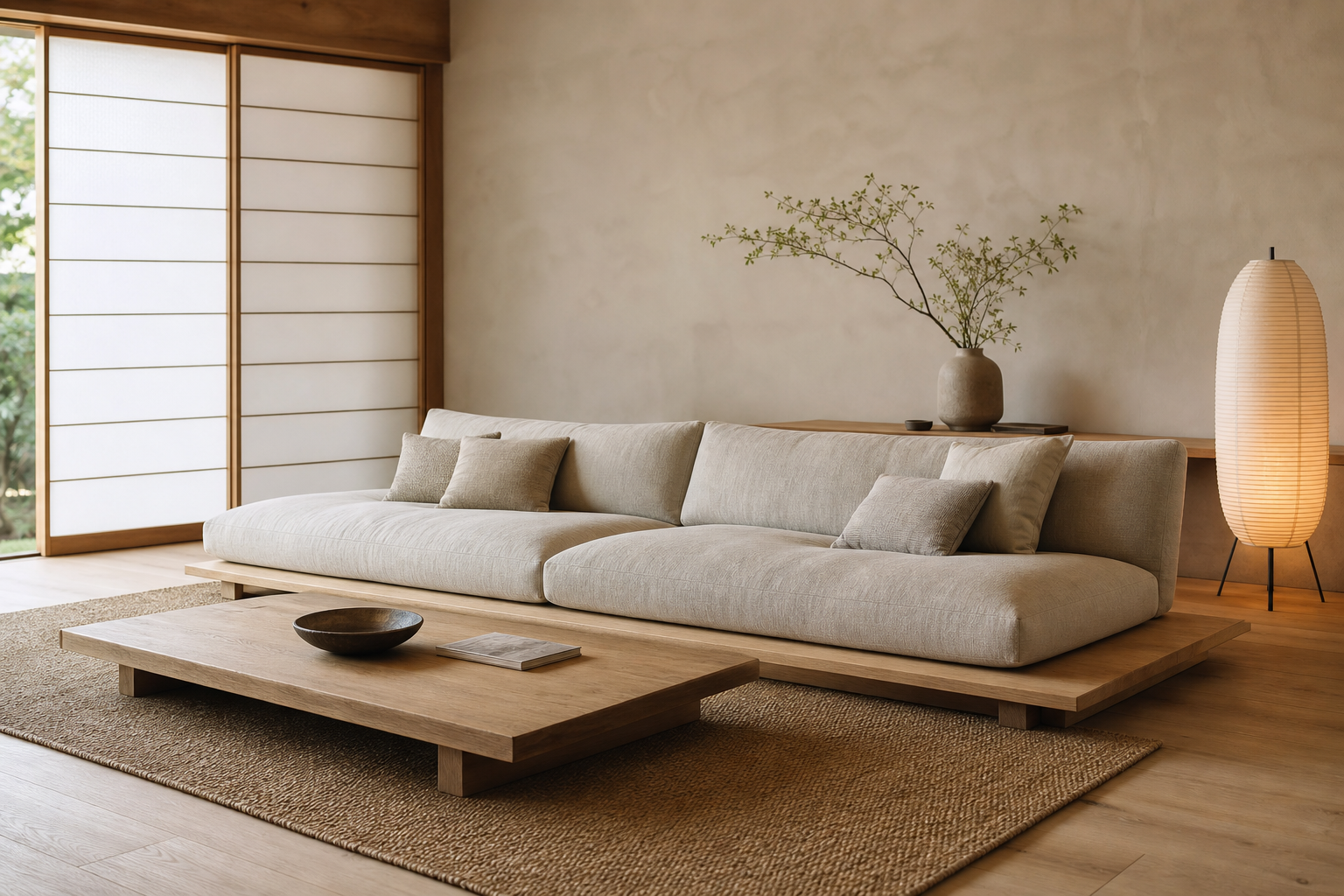

The sofa sits on a broad visible timber-toned platform that extends beyond its pale cushions, making construction and proportion part of the room's visual identity. A matching low rectangular table, textured rug, slatted window screen, glowing oval floor lamp, pale wall, and sparse branches reinforce the same horizontal calm. The room works because every supporting element respects the sofa's low center of gravity.
The Timber Platform Makes the Sofa's Low Profile Explicit
The sofa is long, broad and close to the floor, so it becomes the main horizontal anchor. Its light timber-toned base makes the low profile clear instead of hidden. That proportion is what gives the living room its Japandi calm. The room feels grounded before any accessories are considered.
The platform projects visibly beneath the seat and beyond the end cushion, so it reads as a deliberate base rather than hidden sofa legs.
The visible wood platform extends beyond the cushions, giving the sofa an architectural edge. It reads as a built element rather than a soft object floating in the room. The base also connects the sofa to the pale oak floor, which makes the whole seating zone feel continuous.
The Japandi floor-cushion living-room guide takes seating even closer to the ground. This room retains a structured sofa while preserving a similarly low visual horizon.
Pale Cushions Keep the Heavy Horizontal Light
The coffee table sits at a height that respects the sofa cushions. That alignment keeps the seating area comfortable and visually coherent. A taller table would break the calm horizontal relationship that makes this room work.
Seat backs remain below the strongest window divisions, allowing daylight and the slatted screen to stay visible above. The cushions use tonal variation instead of pattern.
The panel on the left filters daylight and introduces a quiet grid. It gives the room a Japanese-inspired reference without adding decoration. Its pale frame relates to the sofa base and coffee table, reinforcing the wood palette.
A Textured Rug Defines the Shared Low Zone
The glowing oval floor lamp adds a vertical glow near the sofa edge. Its soft cylindrical form balances the long low seat without becoming heavy. Because the lantern is made of paper, it belongs to the same light and natural vocabulary as the rest of the room.
The rug extends past both sofa and table and creates a complete soft field over the pale floor. Its texture is visible, but fiber is not claimed.
The Slatted Screen Filters the Window Edge
The woven rug defines the seating zone and adds texture under the low furniture. It also prevents the wood-on-wood relationship from feeling too flat. Its muted color keeps the focus on proportion rather than pattern.
Start by choosing a sofa height that works with your coffee table. The two pieces should feel like part of the same low plane. Keep surrounding pieces simple and natural: light timber-toned, fabric, paper, plaster and woven texture are enough to build the Japandi mood.
Planning a Living Room Around a Lower Eye Line
I would avoid tall side tables beside this sofa. The design depends on preserving a low horizontal line. I would also avoid a busy rug pattern because the room's strength comes from quiet texture and proportion.
Choose table and lighting heights after fixing the platform. Tall side furniture or a conventional high coffee table would fracture the deliberately low composition.
A single low bowl rests on the table and protects its broad timber-toned surface. Sparse styling reinforces the room's lower visual horizon.
The oval lamp rises at the sofa end and supplies one soft vertical counterpoint without requiring a tall side table.
The sofa back uses three broad cushion zones rather than many narrow pillows, matching the platform's measured scale. Their low, slightly angled profiles support relaxed seating while leaving the pale wall and branch silhouette visible above.
Floor and wall remain close in tone, so the timber platform creates the clearest boundary between architecture and upholstery. That warm line is visible along the front and side, making the sofa construction understandable from the room entrance.
The front platform rail extends beyond the cushion edge and reads almost like a shallow ledge. Keeping it bare preserves the sofa's horizontal silhouette and avoids turning a structural detail into an improvised display surface.