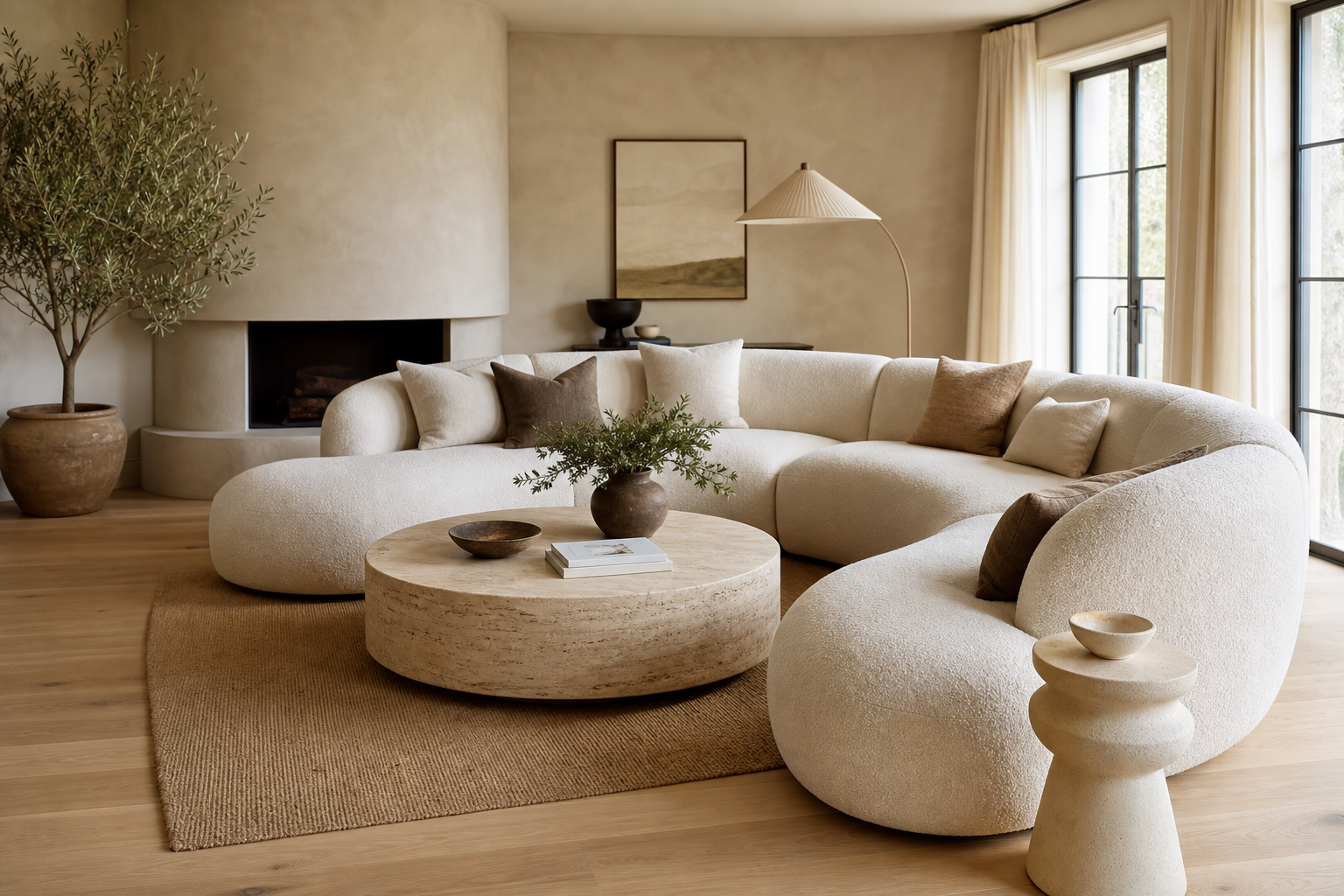

One continuous curved sofa organizes almost the entire seating area. Its pale upholstered arc wraps around a low circular table, forming an inward-looking conversation zone while leaving the window side open. A textured round rug reinforces that center; the pale fireplace block, tall dark-framed glazing, compact side tables, artwork, and greenery remain peripheral. The room feels generous because one large element resolves several seats without producing a field of unrelated furniture.
The Sofa Draws the Complete Conversation Arc
The sofa wraps around the coffee table in a clear arc, so the seating area feels gathered rather than lined up against a wall. That curve is the room's main planning decision. Because the sofa is large and low, it creates a generous lounge zone without needing several separate chairs. The layout feels calm because one piece does most of the organizing.
The sofa bends through more than a shallow bow and creates a near-enclosed center around the table. Its open ends face the circulation side, so the curve gathers people without becoming a barrier at the room's entrance.
A Continuous Curve Replaces Several Separate Chairs
The light-toned coffee table repeats the sofa's rounded language. A square table would interrupt the flow, but the round form keeps movement around the seating area easy. Its stone texture also gives the soft upholstery a firm center, which prevents the room from becoming too pillowy.
The earlier curved-hearth living-room analysis puts the primary curve into the architecture. Here, upholstery carries that role, allowing the fireplace to remain rectilinear and visually quieter.
The Round Table Occupies the Sofa's Natural Center
The pale fireplace block is substantial, but it sits behind the seating arc rather than competing with it. Its soft surface and rounded corner echo the sofa without copying it. That restraint is important. The fireplace gives the living room architectural weight while allowing the sofa to remain the defining feature.
The table is compact relative to the full sofa arc and leaves a visible ring of rug between its edge and the seats. This spacing keeps the center reachable while preventing a large solid top from filling the inward curve.
A Circular Rug Makes the Seating Geometry Explicit
The woven rug sits under the sofa and coffee table, holding the curved arrangement together as one zone. Its rectangular outline gives the rounded furniture a stable base. The texture matters as much as the size. The rug adds warmth between the upholstery, stone and oak floor.
Low Upholstery Preserves the Window Wall
The windows bring soft light across the sofa's fabric, making the curved silhouette easier to read. The linen curtains also soften the black window frames. Natural light is doing practical work here: it keeps the ivory sofa from feeling heavy and gives depth to the plaster wall.
The low back crosses the window zone below the strongest mullions, retaining tall garden views and daylight. Pale upholstery further reduces contrast against the bright glazing, even though its exact fabric cannot be established.
The Fireplace Remains a Secondary Architectural Block
The small ceramic side table sits outside the sofa curve, giving the end seat a useful surface without crowding the central coffee table. Its sculptural shape belongs to the same organic vocabulary, but its smaller scale keeps it from competing with the sofa.
Small Edge Tables Avoid Breaking the Main Curve
Start by measuring the circulation around the sofa. A curved piece needs enough open floor around the arc so it feels intentional, not squeezed into a rectangular plan. Choose a coffee table that follows the geometry. Round stone, soft-edge wood or a large oval table will usually work better than a sharp rectangular piece.
Planning Clearance Around a Wraparound Seat
I would avoid placing another large curved chair directly opposite the sofa. The room already has a clear gesture, and repeating it too aggressively would feel forced. I would also avoid a busy patterned rug here. The sofa shape and pale fireplace block already provide enough visual interest.
Mark the sofa's outer sweep and both entry points before selecting the central table. Extra lounge chairs inside the arc or a rectangular table would interrupt the continuous geometry that gives this plan its ease.
A rounded ottoman-like seat occupies one outer end of the sofa but stays outside the central table ring. Its separate curve extends flexibility without weakening the main wraparound silhouette.
The fireplace opening stays dark and low within a broad pale block, offering a distant counterpoint to the table center. It never competes with the sofa's larger sweep.