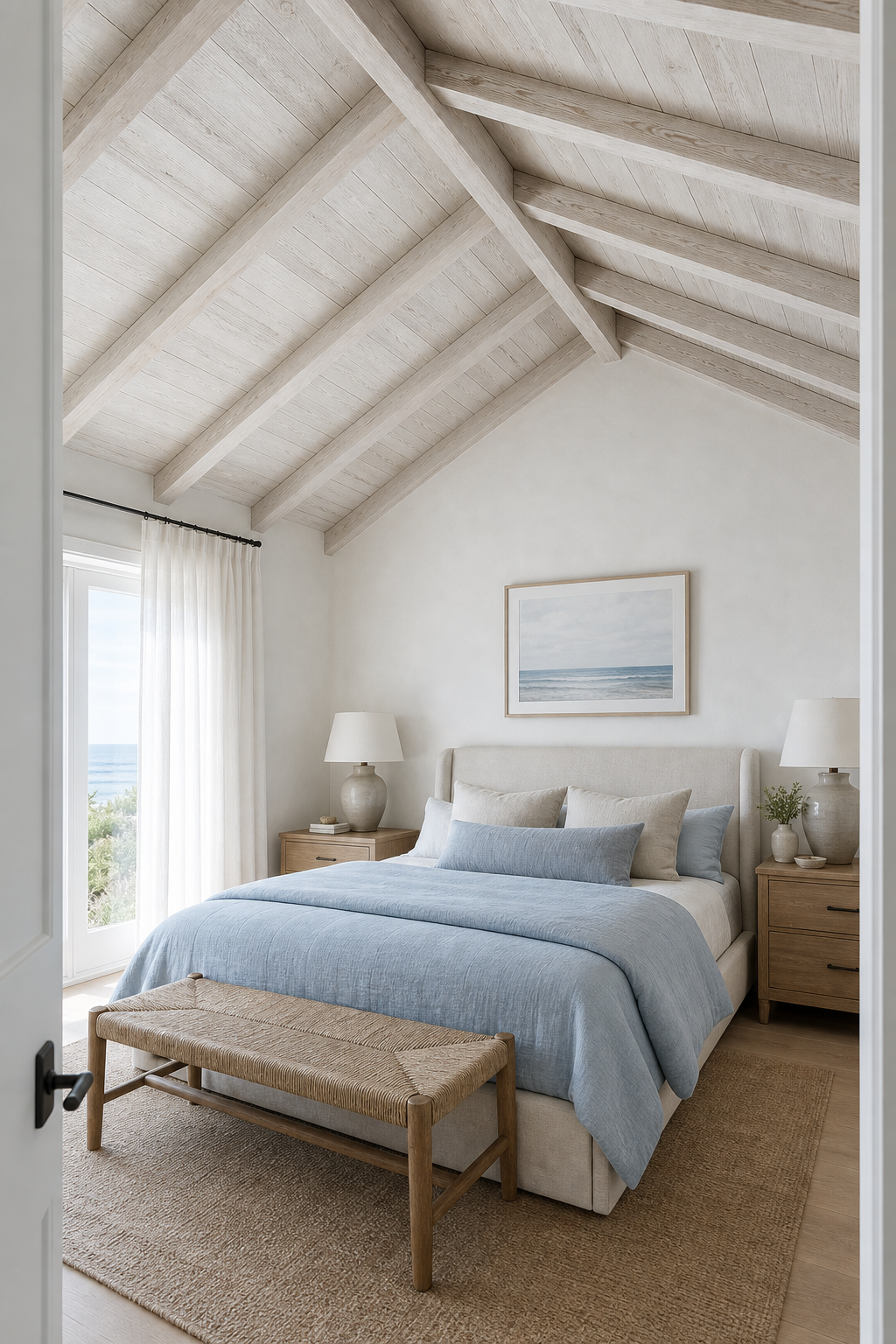

The pitched ceiling supplies most of this bedroom's coastal character. Pale planks and exposed rafters run from the near wall toward the bed, creating depth through shadow while retaining a bright upper field. Below, the bed remains low and quiet, with pale blue bedding, a restrained headboard, an open-frame bench, and one framed seascape. Side daylight reveals the overhead texture without requiring a dark beam contrast.
The Pitched Ceiling Gives the Bedroom Its Volume
The ceiling fills the upper half of the view, so it becomes the bedroom's strongest design feature. Its pale finish keeps the pitched form light rather than cabin-like. The planks still show plank texture, which is important. The room gains texture overhead without losing the breezy quality expected in a coastal bedroom.
The roof slopes upward across the room and remains visible from wall to wall. That broad exposure makes ceiling structure the primary event rather than a decorative detail glimpsed above a conventional flat bedroom.
The exposed beams repeat across the ceiling and guide the eye toward the bed wall. That rhythm gives the room structure without needing a busy wall treatment. Because the beams are also pale, they create shadow and depth without harsh contrast. The effect is architectural but still soft.
Repeated Rafters Direct the Eye Toward the Bed
The bed has a simple upholstered headboard and sits below the ceiling without competing with it. That lower profile allows the pitched roof line to remain dominant. A taller or darker headboard would change the balance. Here, the bed supports the ceiling by staying calm and horizontal.
Rafters cross the planks at regular intervals and create a measured sequence toward the rear wall. The channel-tufted bed-wall study builds vertical identity behind the bed; this room transfers emphasis entirely overhead.
A Low Headboard Protects the Roof Geometry
The pale blue bedding brings in a clear coastal note without using themed decoration. Its color relates to the ocean artwork and the daylight at the window. The relaxed fabric texture is relaxed, which works well under the more structured ceiling. The room feels edited but not stiff.
The headboard stays below the lower roof line and leaves a pale wall band before the ceiling begins. This separation prevents bed and rafters from visually colliding, allowing both horizontal and pitched geometries to remain clear.
Blue Bedding Concentrates Color Below Eye Level
The open-frame bench at the foot of the bed introduces a sandy, tactile texture. It anchors the lower part of the room while the ceiling carries the upper architecture. Its open frame also keeps the foot of the bed from feeling heavy. That matters in a room where the ceiling already has strong presence.
The Open-Frame Bench Grounds the Foot of the Bed
The daylight from the left side reveals the grain in the whitewashed boards. Without that light, the ceiling could read as a flat pale surface. The sheer curtains soften the brightness and keep the coastal feeling natural rather than stark.
The bench introduces an open timber-toned frame and woven-looking seat at floor level. Its light footprint balances the strong ceiling without creating a solid mass across the circulation zone at the bed's foot.
Side Daylight Reveals Plank and Rafter Shadow
Start with the overhead finish. Use pale wood planks or a whitewashed treatment that still allows grain to show through. Then keep the bedroom palette quiet: warm white walls, light wood furniture, linen bedding and one restrained blue accent. The ceiling should remain the main character.
Keeping Coastal Character Architectural
I would avoid a dark ceiling fan in this room. It would cut across the pale beam rhythm and pull attention away from the woodwork. I would also avoid heavy patterned bedding. The ceiling already provides the texture, so the bed should stay soft and simple.
Avoid heavy patterned bedding, a dark ceiling fan, or tall case furniture that would cut through the pale roof rhythm. One muted blue textile family and a small seascape are enough to connect the architecture to a coastal atmosphere.
A small framed work on the side wall remains below the pitched ceiling line and outside the bed center. This restraint protects the rafters' direction and keeps artwork from becoming a competing upper-wall feature.
The bench and bedside pieces remain pale enough that ceiling shadows, rather than furniture contrast, describe most of the room's depth.