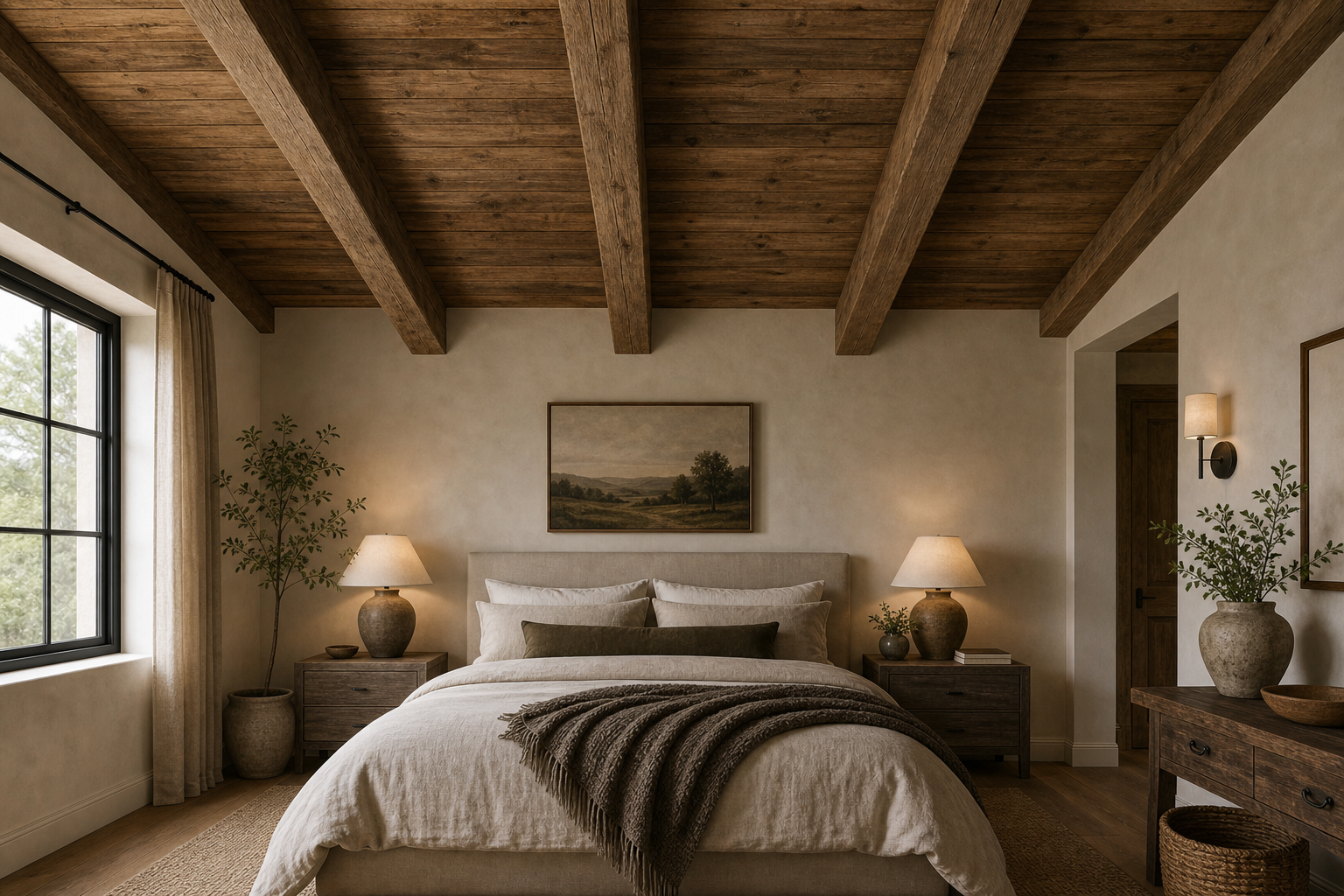

The ceiling is the room's strongest architectural decision. Dark timber-toned planks run lengthwise above the bed, crossed by broad exposed beams that descend visibly below the ceiling plane. Their weight creates a sheltered upper volume, while pale walls, light bedding, and a generous window prevent the bedroom from feeling compressed.
Furniture follows the ceiling's geometry. The bed is centered between two beam lines, paired nightstands and lamps establish symmetry below, and a framed landscape aligns with the headboard. At the right, a wide opening and low console loosen the composition so the room retains a modern, open circulation edge.
Planks Form a Continuous Dark Overhead Field
Narrow boards run across the full visible ceiling with consistent joints and warm tonal variation. Their direction draws the eye from foreground toward the headboard wall. The field is uninterrupted by bright fixtures, allowing grain and joints to provide the detail.
Wood species and construction are not verifiable. The visible effect comes from continuity: one deep-toned plane caps the room and contrasts with broad pale walls below.
Exposed Beams Give the Ceiling Depth
Five substantial beams cross the plank direction and project lower into the room. Their rougher edges and lighter worn highlights distinguish them from the boards between. Repeated spacing creates a clear structural rhythm above the bed.
The beams are visually heavy, so the room wisely avoids a hanging pendant. Their own pattern supplies enough ceiling articulation without another suspended focal point.
The Bed Aligns with the Ceiling Rhythm
A pale upholstered bed sits on the central wall beneath the broadest open bay between beams. Its low rectangular headboard remains well below the ceiling, leaving pale wall as a buffer between soft furniture and dark timber.
This alignment stabilizes the room. An off-center bed would make the repeated beams feel accidental in relation to the principal furniture.
Paired Nightstands Establish a Lower Datum
Matching dark timber-toned nightstands flank the bed with broad drawers and short legs. Ceramic lamps rise to equal heights, creating a warm horizontal line below the landscape artwork. Small bowls, books, and plants vary each side subtly.
The furniture's deeper tone links floor and ceiling, while pale shades keep the bedside zone from becoming another dark band.
Pale Bedding Reflects Light Upward
White and oatmeal bedding, layered pillows, a dark lumbar cushion, and a deep textured throw create a broad light surface through the room's center. The throw introduces ceiling color at bed level without covering the entire duvet.
Textile fibers are uncertain, but the tonal relationship is clear. A pale bed returns window and lamp light toward the dark overhead plane.
The Window Prevents the Timber from Feeling Enclosed
A large black-framed window occupies much of the left wall and reaches close to the beam line. Full-height pale curtains soften its edges while garden light spreads across ceiling, wall, and bed. A potted tree fills the corner without covering the glazing.
The dark frame connects to the ceiling and nightstands, making the bright opening part of the palette rather than a disconnected void.
Artwork and Side Console Extend the Earthy Palette
A muted landscape hangs centrally above the headboard with brown, green, and gray tones. At the right, a dark timber console holds a large branch vessel and shallow bowl, with a woven basket below. These elements repeat the room's natural shapes at the perimeter.
The console remains low enough that it does not compete with the ceiling. Its placement also leaves the nearby opening unobstructed.
Modern Simplicity Keeps the Rustic Ceiling Credible
Walls remain largely undecorated, bedding is restrained, and furniture uses simple rectilinear forms. This editing gives the weathered-looking ceiling enough room to carry the rustic character without turning every object into a themed counterpart.
For a similar bedroom, preserve one continuous plank field, repeat beams evenly, and center major furniture on that rhythm. Balance the dark upper plane with pale walls, broad bedding, and generous daylight. The room works because the ceiling is dramatic while the lower composition stays disciplined.
The beam ends remain visible where they meet the pale side walls, making their depth easier to understand. No crown molding hides that junction. This honest termination strengthens the rustic character, while the precise spacing and otherwise clean wall planes keep the ceiling compatible with the room's modern simplicity.