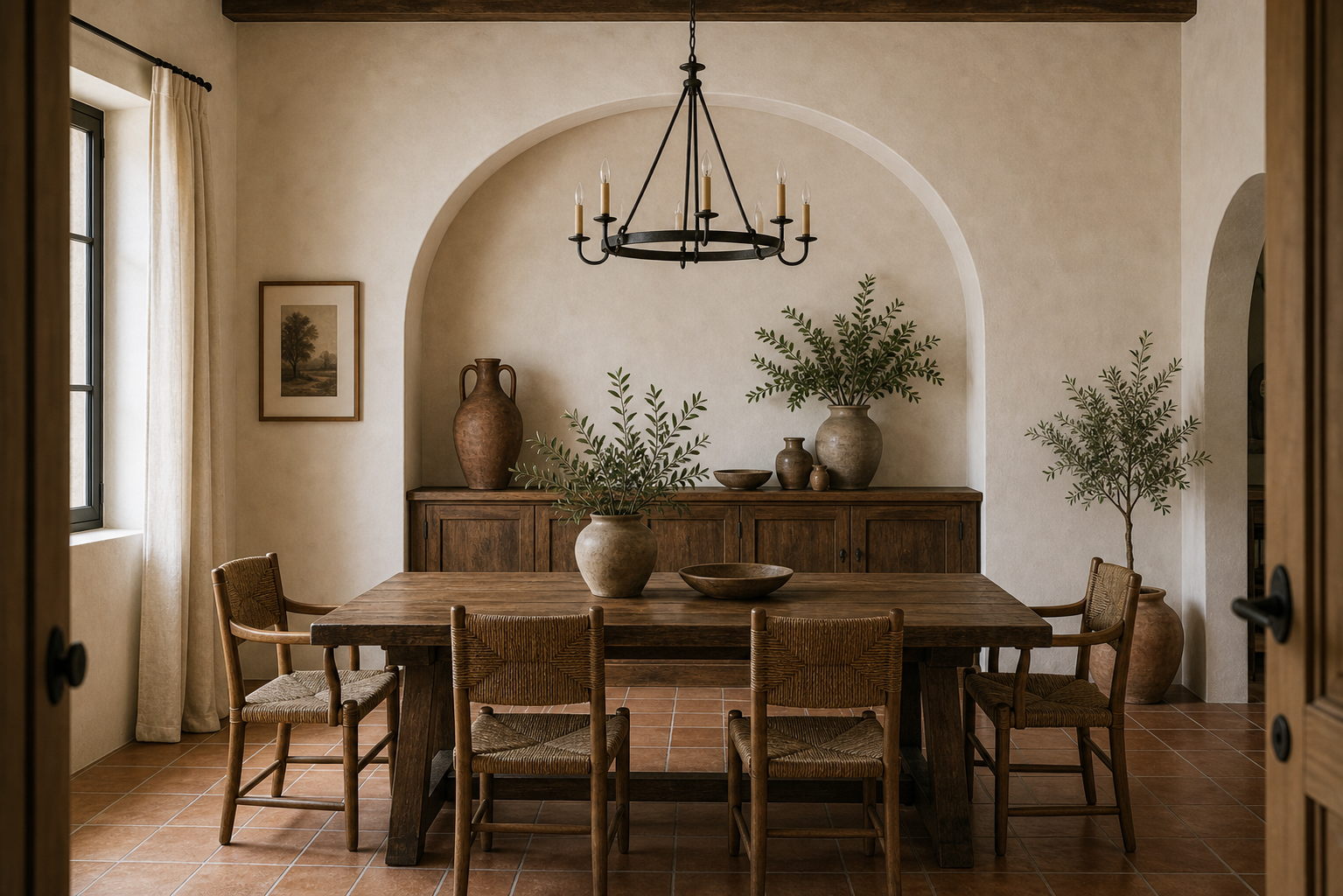

The arched niche gives the sideboard wall the depth of a shallow room within the dining room. Its broad plaster curve frames a dark cabinet, large vessels, and branches, creating a quiet background to the timber table and woven chairs in front. A black chandelier marks the dining center, while warm floor tile and pale curtains support the Mediterranean character without competing with the arch.
The Arch Creates a Room Within the Wall
The plaster arch is the first element the eye reads because it occupies the full back wall and rises above the sideboard. That scale gives the dining room a permanent focal point. The niche behaves like architecture, not like a decorative object added after the room was furnished.
The recess begins at floor level and reaches well above the cabinet, leaving plaster visible around every object. This generous inner margin makes the curve legible and prevents the niche from becoming a tightly packed display alcove.
The wood sideboard sits directly inside the arch, making the recessed wall useful. It turns the niche into a service and display area for the dining room while keeping the main table surface clear.
The sideboard spans most of the lower width but stops before both curved returns. Its dark timber tone anchors the pale cavity and provides a stable base for vessels without requiring shelves across the upper arch.
Ceramics Occupy the Niche at Different Heights
The ceramic vessels have enough weight and texture to hold the niche without overwhelming it. Their clay and stone tones connect to the plaster and terracotta floor, which keeps the display quiet and Mediterranean rather than styled for contrast.
The Table Aligns With the Arched Center
The rustic wood table sits parallel to the niche wall, so the room has a clear front-to-back axis. That alignment helps the arched feature feel connected to the dining experience instead of isolated behind the furniture.
The table's long center line points directly toward the niche, connecting eating and storage zones in one view. Chairs remain below the cabinet top, so the arch and branch arrangement stay visible from the approach.
The iron chandelier adds a dark circular shape above the table. It balances the pale plaster and gives the room a strong central point, while the arched niche remains the architectural backdrop.
An Iron Chandelier Marks the Dining Axis
The terracotta floor gives the room warmth and a handmade Mediterranean base. Its grid also grounds the heavy wood table and woven chairs, preventing the plaster walls from feeling too pale.
The linen curtains at the side window soften the plaster and filter daylight into the dining room. They keep the hard materials from becoming severe, especially beside the iron chandelier and terracotta floor.
Using a Niche as Architecture Rather Than Display
Start by treating the niche as the dining room's service wall, not just a display recess. Place a sideboard inside or below it, then use a small number of ceramic vessels, branches and bowls. The arch should still read as the main design decision.
The stronger table focus in this modern organic dining-room study places furniture first. Here, the wall recess establishes the hierarchy, and table, chandelier, and chair spacing align themselves to that architectural center.
Pale curtains frame a tall side window and soften the transition from dining wall to exterior light. The warm floor units continue under both table and niche, preventing the recessed sideboard from feeling like a separate room finish. A large branch vessel rises inside the arch but stops well below its crown, reinforcing height while leaving the curved plaster boundary fully visible.
The chandelier hangs in front of the arch but below its crown, allowing the dark arms to register against pale plaster without bisecting the curved top. Its circular arrangement corresponds with the dining table center rather than the sideboard. This layered alignment gives architecture, storage, and dining light separate depths while preserving one shared axis through the room. The sideboard doors and drawers remain simple broad rectangles, providing a useful counterpoint to the curved niche and branching foliage. Woven chair backs introduce a smaller repeated rhythm in the foreground, while the tabletop stays largely open. These three scales keep the dining view layered without repeating the arch shape in every object.