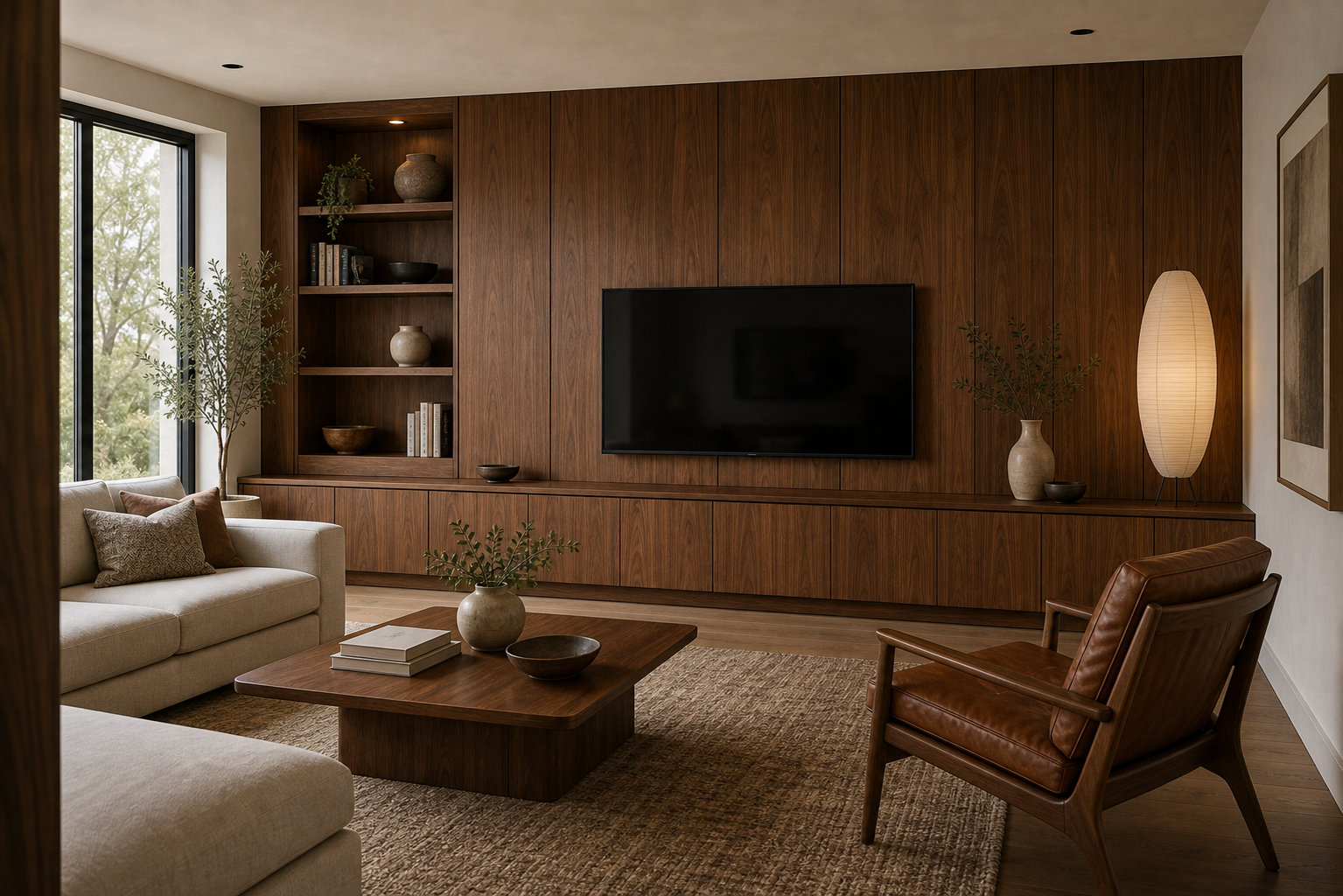

The television is absorbed into a full timber-toned wall rather than mounted as an isolated black rectangle. Vertical panels extend across the center, low cabinets create a long base, and an open shelf tower occupies the left side. The screen sits slightly off-center within this larger composition, balanced by a glowing oval wall light on the right. Low seating and an oval coffee table keep the furniture below the media wall's main horizontal line.
The Built-In Wall Absorbs the Television
The walnut wall is the strongest element because it covers the full back plane with continuous grain and vertical rhythm. That scale makes the media zone feel permanent. The television becomes one part of a larger wall system instead of a black rectangle floating on plaster.
The built-in spans nearly the full room width and reaches the ceiling, giving the dark screen enough surrounding mass to feel proportionate. It also eliminates a patchwork of separate console, shelf, and wall finishes behind the equipment.
The vertical wood panels give the wall structure and height. They also reduce the visual dominance of the screen. The eye reads the wood first, then the TV, which is exactly what makes the wall feel designed.
Low Cabinets Establish the Long Base Line
The long low cabinet grounds the entire wall and gives the room a strong horizontal line. Its length is important because it connects the TV, open shelves and decorative objects into one composition.
A continuous cabinet band runs below both screen and shelving, unifying the asymmetrical upper elements. Its recessed base creates a shadow at floor level and stops the broad joinery from appearing as one immovable timber block.
Open Shelves Relieve the Timber Plane
The shelf bay on the left gives the walnut wall a useful pause. Books, ceramics and a plant add depth without making the media wall feel cluttered. The shelves keep the built-in from reading as one flat sheet of cabinetry.
The shelf tower uses uneven object spacing and integrated warm light, introducing depth beside the flatter screen zone. Books and vessels remain sparse enough that the shelving supports the room rather than becoming a competing display wall.
An Oval Wall Light Balances the Screen
The cream sofa and cognac leather chair sit low enough to keep attention on the media wall. Their warm tones echo the walnut without matching it too closely, which gives the room depth instead of a single brown note.
The paper floor lamp introduces a tall soft shape beside the wood wall. Its glow and texture balance the heavier walnut panels, adding atmosphere without interrupting the built-in composition.
The Coffee Table and Rug Form a Softer Center
The woven rug defines the seating area, while the wood coffee table repeats the mid-century material language at a lower level. Together, they connect the furniture to the media wall so the room reads as one planned arrangement.
Designing a Media Wall Beyond a TV Mount
Start with the wall system rather than the TV size alone. Use continuous walnut or walnut-look panels, a long low cabinet and one open shelf area if display is needed. Keep hardware subtle so the wood grain stays in control.
The lighter storage strategy in this modern organic living-room built-in guide emphasizes open niches. This room gives more area to closed panels, which better absorbs a large screen and strengthens the mid-century horizontal base.
A warm brown lounge chair angles toward the low table and pale sofa, creating a conversation group that does not face the screen in a rigid row. The textured rug extends beneath all three elements and softens the broad timber wall. This furniture arrangement allows the media wall to support both viewing and social use, an important distinction when a television occupies the most visible elevation.
The oval wall light on the right emits a warm diffuse glow and balances the more detailed shelf tower on the left. Its soft outline also relates to the coffee table below, introducing curvature across two heights. Because the light is integrated into the media composition rather than placed on a separate floor stand in front of it, the cabinet line and circulation around the seating remain unobstructed. The television remains surrounded by broad uninterrupted timber fields, so the screen reads as one dark component within the joinery rather than the only object on an otherwise blank wall.