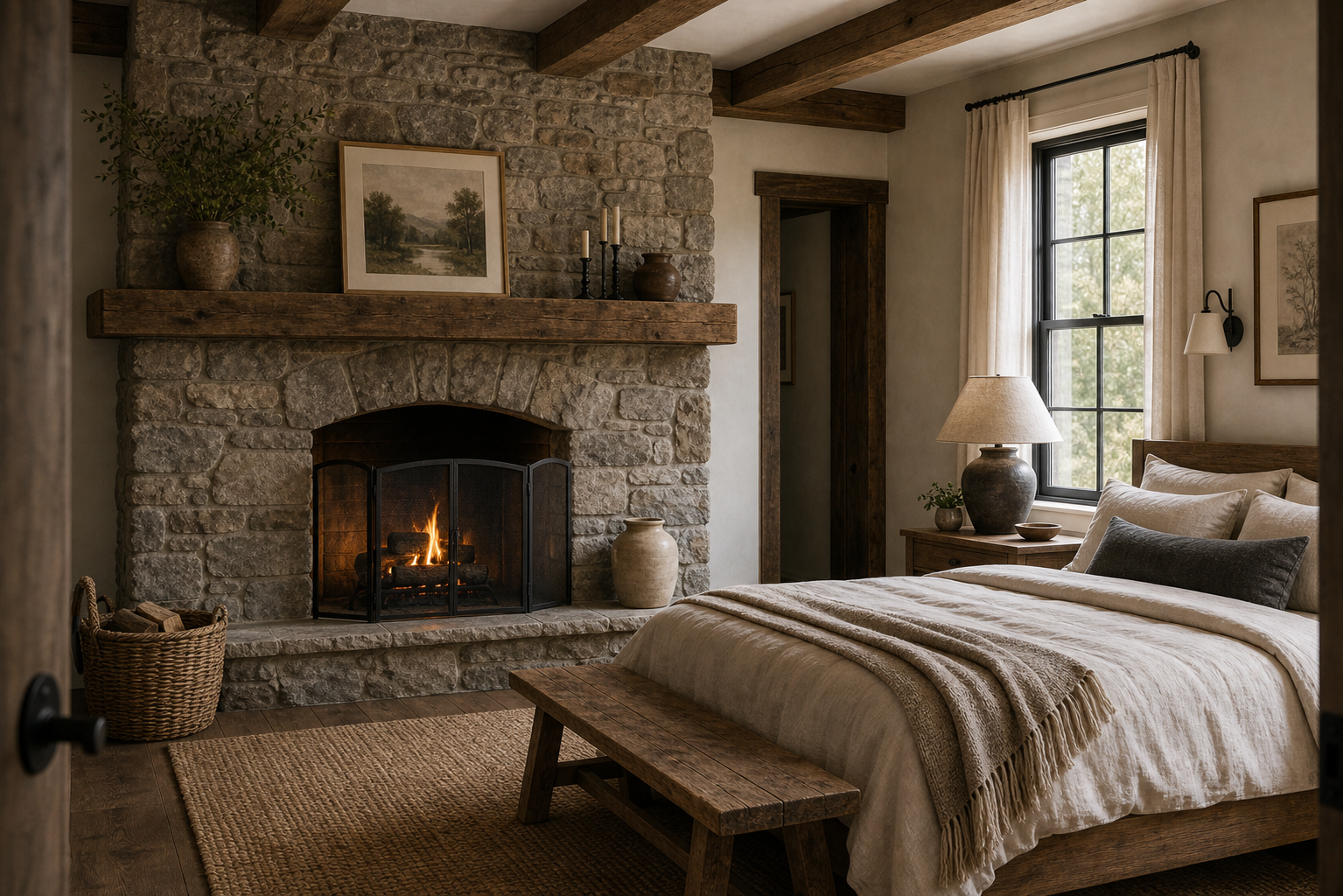

The fireplace occupies the full left side of the bed wall and gives this bedroom the weight of a small lodge interior. Irregular stone rises around a dark arched firebox and supports a thick timber-toned mantel. The upholstered bed sits beside rather than directly in front of it, preserving both hearth and window access. Pale layered bedding, a low bench, and a broad rug soften the masonry without disguising its scale.
The Fireplace Gives the Bedroom Architectural Weight
The fireplace is the strongest feature because its rough stone surface has more texture and weight than anything else in the room. That weight is useful in a bedroom. It gives the space a sense of shelter and permanence, which softer furniture alone could not create.
Stone continues from the firebox to the ceiling, making the fireplace a wall rather than a decorative surround. Its broad face can therefore balance the bed and window without additional cabinetry or artwork competing at the same scale.
The bed sits to the side rather than covering the fireplace wall. That placement lets the masonry stay visible from the doorway, while the bed still feels connected to the warmth and character of the room.
The bed's left edge stops before the hearth projection, leaving a visible strip of floor and a safe-looking route between the two zones. Exact clearances cannot be confirmed, but the separation is visually explicit and central to the layout.
Irregular Masonry Creates Depth and Shadow
The exposed ceiling beams repeat the natural weight of the stone in a warmer material. Together, stone and wood create the room's rustic structure. The beams also draw the eye across the ceiling, balancing the fireplace's vertical mass.
The Heavy Mantel Establishes a Horizontal Datum
The ivory pale layered bedding keeps the bed soft and quiet beside the rough masonry. That contrast is essential. Without linen, the stone and wood could make the room feel too hard; without stone, the linen could feel too plain.
The black fireplace screen gives the stone opening a clear edge. Its dark finish also connects to the shadow lines in the room, adding definition without introducing another decorative material.
Dark beams cross overhead and relate to the mantel below, connecting fireplace and ceiling into one structural language. Their spacing also brings the upper volume down toward the bed, making the room feel sheltered rather than cavernous.
Pale Bedding Softens the Stone Boundary
The woven rug creates a softer platform around the bed zone. It keeps the lower half of the room warm and tactile, which matters when the fireplace and beams already carry so much architectural weight.
Start by deciding how the bed will relate to the fireplace. If the stone is the room's best feature, avoid blocking it. Use a low bed, pale layered bedding, a simple bench and natural fiber texture so the fireplace keeps its authority while the room stays comfortable.
Balancing Fire, Sleep, and Circulation
I would not paint the fireplace stone. The natural variation is what gives the bedroom its rustic depth. I would also avoid oversized bedside furniture. The lower and quieter the furniture stays, the better the fireplace reads.
The more polished hearth in this modern organic brick-fireplace study organizes a living room around seating. Here, the offset relationship is more important: the fireplace supports the bedroom without blocking approach to the bed.
The window and bedside table occupy the right side of the room, providing daylight and a domestic scale opposite the heavy hearth. A framed work rests on the mantel, but it remains small relative to the masonry field. This restraint is important: the stone already supplies irregular texture and a strong silhouette, so oversized art or additional shelves would dilute the fireplace's role as the architectural counterweight to the bed.
A low upholstered bench crosses the foot of the bed and stays well below the firebox mantel, providing a practical transition between sleeping zone and open floor. Its rectangular top echoes the mantel without repeating the irregular masonry. The bench and rug also keep bare circulation away from the immediate bed edge, while the fireplace side remains visually open and free of tall furniture. The firebox opening remains below bed-head height, keeping flame and sleeping plane connected at a human scale rather than pushing the hearth visually above the room's main furniture.