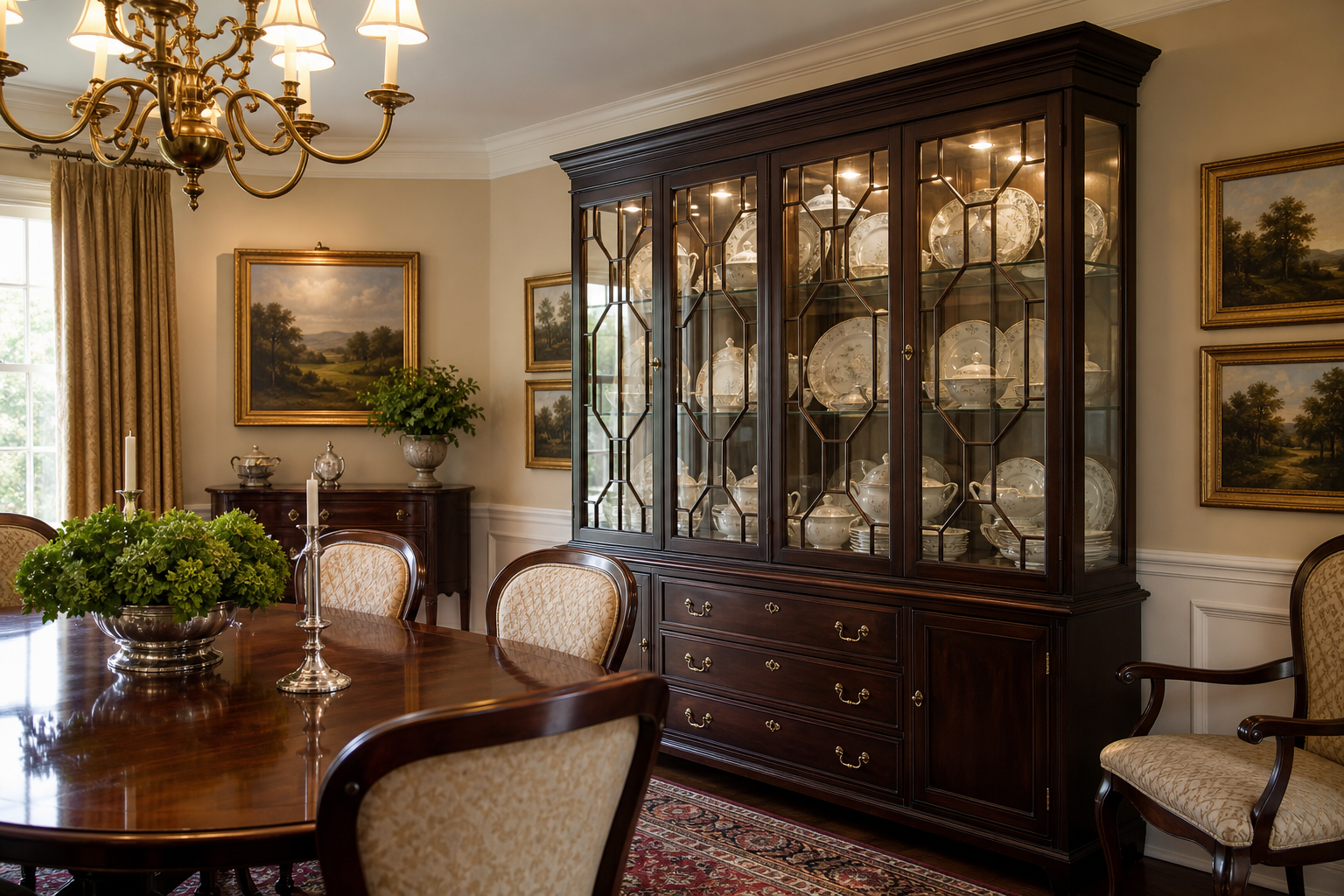

The tall freestanding dark cabinet functions as the dining room's principal wall architecture. Glazed upper doors reveal pale tableware within a gridded frame, while drawers and closed lower doors create a visually solid base. A round polished table, curved chairs, chandelier, framed landscapes, patterned rug, and tall curtains reinforce the traditional setting. Display remains disciplined because transparent and concealed storage occupy separate levels.
The Freestanding Cabinet Gives the Dining Wall Full-Height Weight
The freestanding cabinet is the tallest and most detailed piece in the dining room. Its dark wood frame, glass doors and pale tableware display make it the natural focal point. Because this freestanding piece sits against the wall rather than floating in the room, it gives the dining area a stable backdrop.
The cabinet rises above chair height and spans enough wall to read as architecture, yet leaves framed art and pale wall visible at both sides.
The glass doors reveal the pale tableware while keeping the display contained. That is why the cabinet feels formal rather than cluttered. The mullion pattern also adds architectural detail, turning the stored dishes into a layered wall feature.
The glass-front china-cabinet article examines the same storage family. This image is differentiated by a taller central display, mirrored-looking depth, and a broad bank of lower drawers.
A Dark Frame Makes Pale Tableware Read Clearly
The white pale tableware stands out against the dark wood interior. That contrast makes the dishes readable even from across the table. The repeated plates and bowls create rhythm, which is essential for display storage to feel intentional.
Plates and vessels are grouped by shelf with dark gaps around them. Their exact composition is not claimed; the visible contrast is what makes the collection orderly.
Drawers Create a Solid Base Below the Glass
The polished dark timber-toned table reflects chandelier light and relates to the cabinet finish. It keeps the center of the room connected to the storage wall. Because the table is lower and simpler, it supports the cabinet without competing with its vertical presence.
The Round Table Softens the Cabinet's Rectangular Grid
The warm-metal chandelier brings a formal dining-room note and balances the height of the china cabinet. Its warm light also catches the glass and pale tableware. That glow makes the display feel used for entertaining rather than stored away.
The circular tabletop creates a calm foreground against repeated cabinet rectangles. Curved chair backs continue that softer geometry without blocking the lower drawers.
A Chandelier Holds the Room Center Away From the Wall
The patterned rug brings muted red and deep tones under the dining table. It connects the upholstered chairs to the dark cabinet. A plain floor would make the cabinet feel more isolated; the rug ties the room together.
Framed Art Extends the Traditional Composition
Choose a cabinet with enough height and depth to feel like a dining-room anchor. The display should look deliberate, not squeezed into shallow storage. Group pale tableware by color and shape. Repetition is what makes glass-front storage look elegant.
Balancing a Freestanding Display Cabinet With Visual Restraint
I would avoid filling every shelf with unrelated pieces. The pale tableware looks stronger because the display is fairly consistent. I would also avoid placing tall centerpieces on the table that block the cabinet view.
Plan shelf spacing around the objects actually shown and preserve closed capacity below. Filling every glazed bay or adding open shelves beside the cabinet would weaken its formal hierarchy.
Interior cabinet lighting gives the pale objects depth against dark backing, although fixture type and temperature cannot be confirmed.
The rug extends beneath dining chairs and creates a softer central field separate from the tall display wall.
Chair backs remain below the cabinet's glazed doors, allowing the displayed collection to stay visible during use.
The cabinet crown projects slightly beyond the glazed frame and gives the tall piece a finished upper boundary. At the lower level, repeated drawer pulls create a finer rhythm that never competes with the broad door grid above.
Landscape paintings occupy the lighter wall beside the cabinet rather than filling its interior sightlines. Their warm frames connect display storage to the wider traditional room while preserving a distinct wall field around the dark furniture.
The cabinet is centered on its wall but the surrounding room is not staged as a rigid mirror image. This lets the storage read as a composed architectural anchor while chairs, artwork, and circulation retain the ease expected around a working dining table.